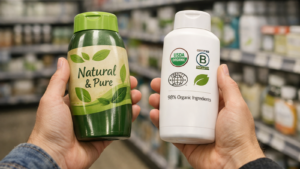
Modern consumer behaviour has shifted dramatically towards environmental consciousness, with millions seeking sustainable alternatives to conventional goods. Daily routines shape much of our footprint, so understanding what eco-friendly products actually represent becomes essential.
Many households want goods built from safer materials, produced with lower emissions, and designed to last longer, yet identifying authentic sustainable alternatives can feel challenging. Confusion around terminology, vague marketing, and inconsistent standards makes mindful purchasing harder than it should be.
This introduction aims to simplify that journey. By exploring what eco-friendly products are, how they are defined, which features matter most, and the key benefits they offer, you gain clarity that supports confident decision-making. Readers will discover practical insights, clear explanations, and real examples that help filter out greenwashing while guiding everyday choices toward meaningful environmental impact. After reading, you will know exactly how to recognise, select, and integrate products that align with genuine eco-conscious living.
Eco-Friendly Product Definition
Eco-friendly products, often called environmentally friendly products or green consumer goods, refer to items designed, produced, used, and disposed of with significantly lower environmental impact than conventional options. Sustainable product definition frameworks usually consider resource extraction, manufacturing processes, transport, usage, waste output, and end-of-life pathways.
Eco-friendly products typically rely on recyclable materials, renewable resource products, compostable materials, biodegradable packaging, or non-toxic substances. Many responsible brands also emphasise low-carbon products, energy-efficient production methods, and minimal pollution across the supply chain. Understanding what is an eco-friendly product helps customers identify items supported by reliable eco labels or global eco-friendly certification schemes.
What Makes a Product Eco-Friendly?
Several key factors determine whether goods qualify as eco-responsible brands:
Material Selection: Products utilising organic, renewable, recycled, or biodegradable materials significantly reduce environmental footprint compared to conventional alternatives. Natural eco products avoid synthetic chemicals and petroleum-based substances.
Manufacturing Processes: Eco-friendly manufacturing prioritizes energy efficiency, water conservation, and waste reduction. Production facilities may use renewable energy sources, implement closed-loop systems, and minimise chemical usage.
Packaging Considerations: Eco-friendly packaging employs minimal, recyclable, compostable, or reusable materials. Many eco-smart products eliminate unnecessary packaging, reducing waste destined for landfills.
Durability and Longevity: Well-constructed items lasting years rather than months reduce consumption cycles and resource depletion. Quality craftsmanship directly correlates with environmental sustainability.
End-of-Life Impact: Truly sustainable lifestyle essentials consider disposal, offering biodegradable, recyclable, or compostable options that won’t persist in ecosystems for centuries.
Features of Eco-Friendly Products
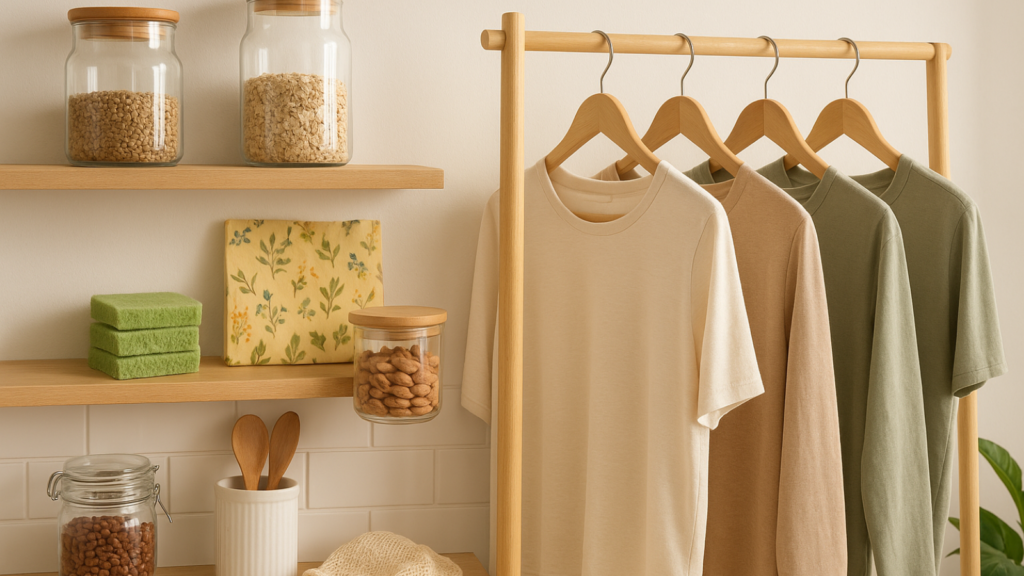
Sustainable product features vary across industries, yet several shared qualities help customers evaluate greener options. Understanding these attributes provides clarity while shopping responsibly.
Essential Sustainable Product Features
Identifying characteristics of eco-friendly products empowers conscious consumers to make informed purchasing decisions. Here are critical features distinguishing genuine green alternatives from conventional goods:
Non-Toxic Composition
Non-toxic eco-products exclude harmful chemicals, heavy metals, and synthetic substances that damage human health and ecosystems. These goods utilise natural, plant-based ingredients and toxin-free product formulas that ensure safety throughout their lifecycle.
Renewable Materials
Renewable products examples include items crafted from bamboo, cork, organic cotton, hemp, and sustainably harvested wood. Such materials regenerate naturally, ensuring continuous availability without depleting finite resources.
Recyclable and Reusable Design
Products designed for multiple uses or easy recycling demonstrate commitment to circular economy principles. Reusable products reduce single-use consumption patterns, whilst recyclable materials can transform into new goods after initial use ends.
Biodegradable Components
Biodegradable product examples break down naturally through biological processes, returning nutrients to soil without leaving persistent residues. Compostable materials decompose even faster, creating nutrient-rich humus for gardens.
Energy Efficiency
Energy-efficient products consume less electricity or fuel during operation, reducing carbon emissions and resource consumption. These low-carbon products might include LED lighting, efficient appliances, or solar-powered devices.
Minimal Water Usage
Water-conscious manufacturing and product operation preserve precious freshwater resources. Products requiring minimal water during production or use contribute significantly to environmental conservation.
Eco-Friendly Product Attributes That Matter
Beyond basic features, additional eco-friendly product attributes distinguish exceptional sustainable options:
- Locally Sourced Materials: Reducing transportation distances lowers carbon footprint
- Fair Trade Certification: Ensuring ethical labour practices and community support
- Carbon Neutral Production: Offsetting emissions through verified carbon credit programmes
- Cradle-to-Cradle Design: Planning for complete product lifecycle from creation to decomposition
- Multi-Functionality: Serving multiple purposes reduces overall consumption needs
- Minimal Chemical Processing: Preserving natural material properties whilst avoiding pollution
Types of Eco-Friendly Products Across Categories
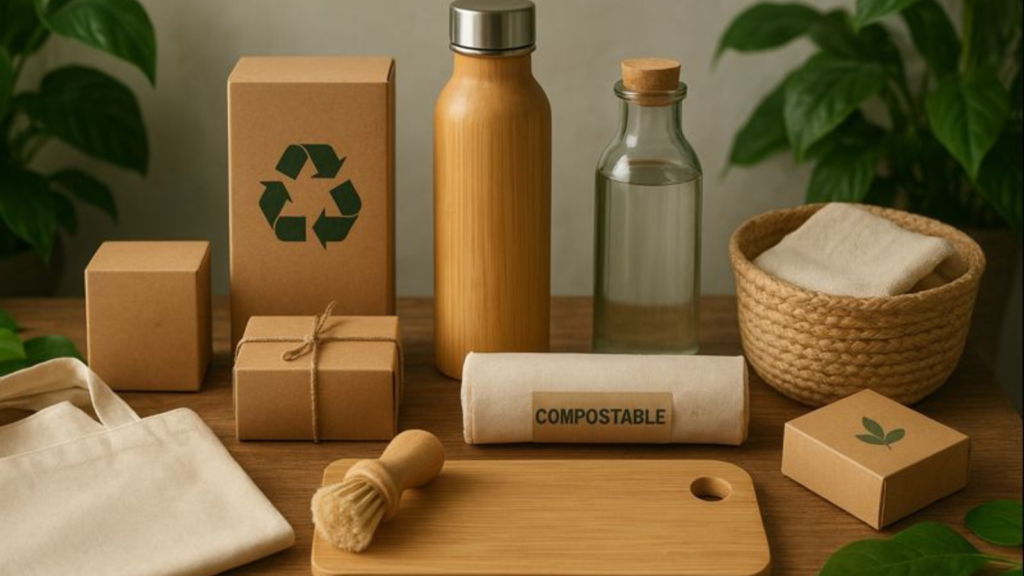
Daily life includes numerous sustainable choices that simplify eco-conscious routines. Many households adopt refill systems for cleaning solutions, plastic-free grooming tools, or renewable fibre textiles that support long-term durability.
Comprehensive Eco-Friendly Product List
Understanding different categories helps consumers identify sustainable alternatives across all lifestyle areas:
Sustainable Home Products
Natural household products transform living spaces into environmentally responsible environments. These include:
- Eco-Friendly Cleaning Items: Plant-based detergents, vinegar solutions, baking soda cleaners, and biodegradable soaps that eliminate harsh chemicals whilst maintaining cleanliness
- Organic Bedding: Chemical-free cotton, linen, or bamboo sheets promoting healthier sleep without pesticide residues
- Energy-Efficient Appliances: Refrigerators, washing machines, and dishwashers bearing energy certifications
- LED Lighting: Long-lasting, low-energy bulbs reducing electricity consumption
- Sustainable Furniture: Reclaimed wood pieces, bamboo furnishings, or items crafted from recycled materials
Eco-Friendly Personal Care Items
Sustainable daily use items for personal grooming prioritise health and environmental safety:
- Natural Soap Bars: Palm-oil-free, plastic-free alternatives to liquid soaps
- Bamboo Toothbrushes: Biodegradable replacements for plastic versions
- Organic Skincare: Plant-based moisturisers, cleansers, and treatments without synthetic chemicals
- Reusable Cotton Rounds: Washable alternatives to disposable cotton pads
- Solid Shampoo Bars: Zero-waste hair care eliminating plastic bottles
Zero Waste Products for Daily Living
Low waste products minimise packaging and encourage reusability:
- Stainless Steel Water Bottles: Durable alternatives to single-use plastic
- Cloth Shopping Bags: Reusable carriers replacing plastic bags
- Beeswax Food Wraps: Natural, washable alternatives to cling film
- Glass Food Storage: Chemical-free containers eliminating plastic exposure
- Menstrual Cups: Reusable period care reducing waste dramatically
Eco-Friendly Lifestyle Products
Green living products extend sustainability beyond home essentials:
- Organic Clothing: Pesticide-free textiles supporting skin health and environmental protection
- Sustainable Footwear: Shoes crafted from recycled materials, organic fabrics, or plant-based leather alternatives
- Solar Chargers: Renewable-energy devices for electronics
- Reusable Coffee Cups: Eliminating disposable cup waste from daily caffeine rituals
- Eco-Friendly Toys: Natural wood or organic fabric playthings for children
Benefits of Eco-Friendly Products
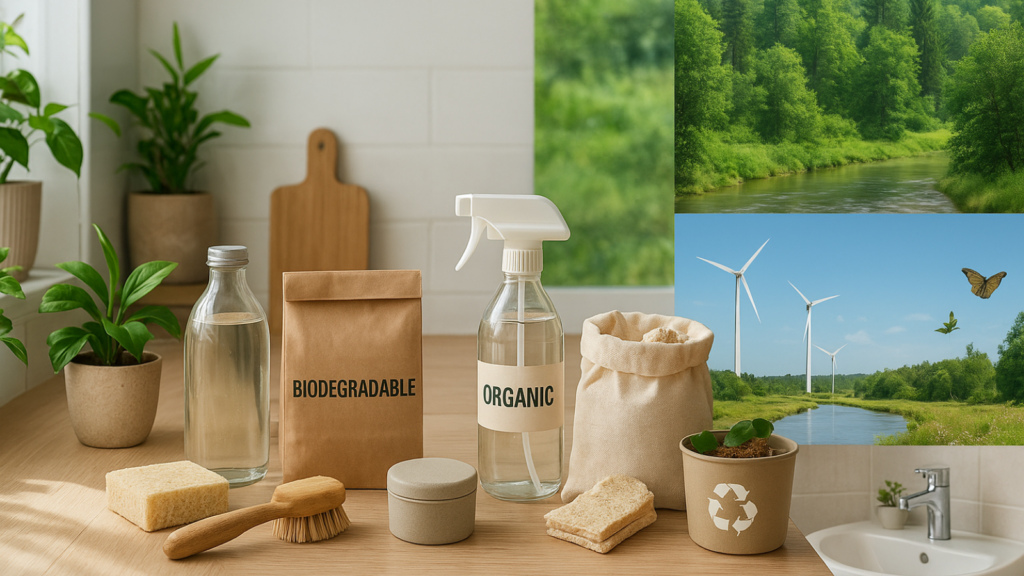
Sustainable goods offer benefits beyond lower emissions or waste reduction. Health improvements often emerge due to reduced chemical exposure, especially in kitchens, bathrooms, and laundry areas.
Advantages of Eco-Friendly Products for Environmental Health
Sustainable product benefits extend far beyond individual households, creating positive impacts across global ecosystems:
Reduced Pollution and Waste
Eco-friendly product benefits include dramatically decreased pollution levels. Biodegradable packaging breaks down naturally rather than accumulating in landfills or oceans. Non-toxic formulations prevent chemical contamination of waterways and soil.
Conservation of Natural Resources
Renewable materials and recycled content preserve finite resources like petroleum, metals, and forests. Energy efficient products reduce demand on power grids, often fuelled by fossil fuels. Water-conscious goods protect increasingly scarce freshwater supplies.
Lower Carbon Footprint
Climate friendly products generate fewer greenhouse gas emissions during manufacturing, transportation, and use. Choosing local, sustainable goods reduces overall carbon footprint significantly, helping combat climate change.
Protection of Biodiversity
Organic farming methods, sustainable forestry practices, and chemical-free production protect wildlife habitats and species diversity. Eco safe products prevent ecosystem disruption caused by toxic runoff and habitat destruction.
Waste Reduction Benefits
Zero waste products and reusable alternatives dramatically decrease landfill contributions. Compostable materials transform waste into valuable nutrients, completing natural cycles rather than creating persistent pollution.
Personal Benefits for Eco-Conscious Consumers
Beyond environmental advantages, individuals gain numerous personal benefits:
Health and Safety Improvements
Toxin free products eliminate exposure to harmful chemicals found in conventional goods. Natural household products reduce indoor air pollution, whilst organic personal care items protect skin from synthetic irritants. Families experience fewer allergic reactions and respiratory issues.
Cost Savings Over Time
Despite potentially higher initial costs, durable goods and reusable products save money long-term. Energy efficient products lower utility bills, whilst quality construction eliminates frequent replacement expenses. Concentrated natural cleaners often prove more economical than conventional alternatives.
Quality and Performance
Sustainable earth friendly solutions frequently outperform conventional counterparts. Natural materials offer superior breathability, durability, and functionality. Eco-friendly innovations incorporate cutting-edge technology delivering excellent results without environmental compromise.
Alignment with Personal Values
Eco-conscious shopping allows consumers to vote with wallets, supporting companies prioritising environmental stewardship. This alignment between purchases and principles provides psychological satisfaction and sense of purpose.
Supporting Ethical Businesses
Choosing eco-responsible brands often means supporting fair labour practices, community development, and transparent supply chains. These purchases contribute to positive social change alongside environmental protection.
Eco-Friendly Certification and Standards: Identifying Authentic Products
Navigating green labelling can feel confusing, so credible certification schemes help consumers verify environmental responsibility. Strong standards evaluate resource sourcing, energy use, ingredient safety, disposal pathways, and social ethics.
Understanding Eco-Labels and Green Product Standards
Navigating eco-friendly product standards requires familiarity with certification programmes verifying sustainability claims:
Major Certification Programmes
- Energy Star: Identifies energy efficient products exceeding government efficiency standards
- Fair Trade Certified: Ensures ethical labour practices and community investment
- Forest Stewardship Council (FSC): Verifies wood products from sustainably managed forests
- USDA Organic: Confirms organic agricultural practices without synthetic pesticides
- Cradle to Cradle Certified: Assesses products across five sustainability categories
- EU Ecolabel: European standard covering environmental impact throughout product lifecycle
- B Corporation: Certifies companies meeting rigorous social and environmental standards
- Leaping Bunny: Verifies cruelty-free products with no animal testing
Interpreting Eco-Friendly Certification Labels
When evaluating eco-certified items, consider:
- Third-Party Verification: Independent organisations provide more reliable validation than self-certification
- Specific Standards: Understanding what each certification actually measures prevents misinterpretation
- Scope of Certification: Some labels apply to entire companies, others to individual products
- Regular Auditing: Legitimate programmes require periodic recertification ensuring ongoing compliance
Avoiding Greenwashing: Critical Evaluation Tips
Not all “green” claims withstand scrutiny. Eco-mindful products require discerning evaluation:
- Vague Language: Terms like “natural” or “eco-friendly” without specific certification mean little
- Misleading Imagery: Green packaging colours and nature imagery don’t guarantee sustainability
- Hidden Trade-offs: Products highlighting one eco-attribute whilst concealing others
- Irrelevant Claims: Boasting about legally required practices as special achievements
- Lack of Transparency: Refusing to disclose ingredient lists or manufacturing details
Examples of Eco-Friendly Products: Practical Sustainable Alternatives
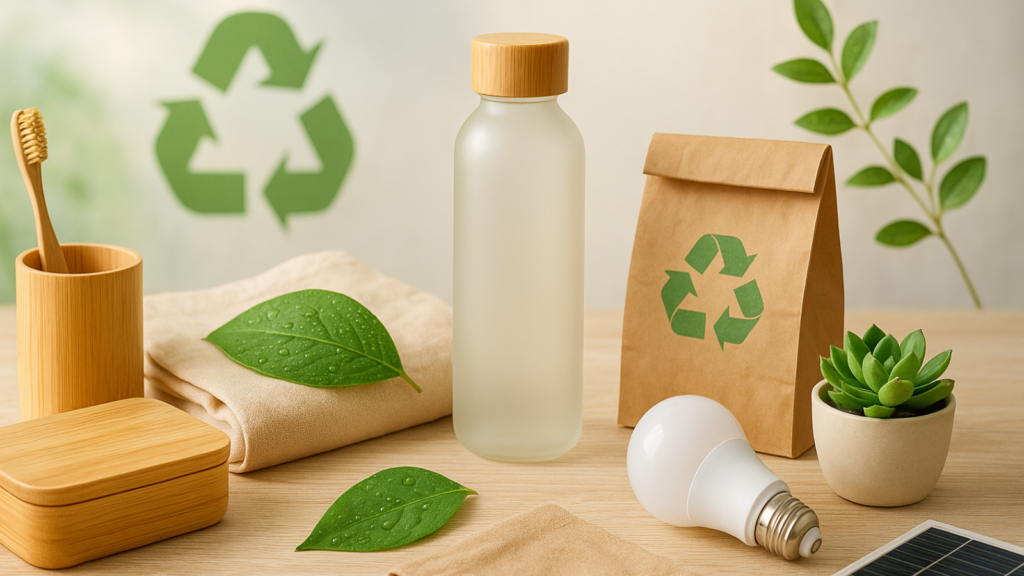
Practical alternatives exist across nearly every product category. Kitchen cupboards often contain glass storage containers, compostable sponges, or plant-wax wraps instead of single-use plastics. Clothing shelves now feature garments made from organic cotton, Tencel, or recycled polyester.
Real-World Sustainable Consumer Products
Concrete examples help visualise how sustainable alternatives integrate into daily routines:
Kitchen and Dining
- Bamboo Cutlery Sets: Replacing plastic utensils for packed lunches
- Stainless Steel Straws: Eliminating single-use plastic straws
- Compostable Sponges: Plant-based alternatives to synthetic scrubbers
- Glass Milk Bottles: Traditional containers making sustainable comebacks
- Silicone Baking Mats: Reusable alternatives to disposable parchment paper
Bathroom Essentials
- Refillable Deodorant Containers: Reducing packaging waste through refill systems
- Konjac Sponges: Natural, biodegradable facial cleansing tools
- Safety Razors: Durable metal razors eliminating disposable plastic versions
- Soap Nuts: Natural laundry detergent alternative from tree berries
- Bamboo Cotton Buds: Biodegradable ear care products
Office and Stationery
- Recycled Paper Notebooks: Post-consumer waste transformed into quality paper
- Refillable Fountain Pens: Reducing disposable pen waste
- Plant-Based Ink Products: Non-toxic writing implements
- Cardboard File Organisers: Sustainable desk organisation solutions
- Solar-Powered Calculators: Eliminating battery waste
Outdoor and Travel
- Organic Cotton Tote Bags: Versatile, durable carry-alls
- Stainless Steel Lunch Boxes: Plastic-free food transport
- Beeswax Sandwich Wraps: Natural food preservation
- Bamboo Utensil Travel Sets: Portable cutlery for on-the-go meals
- Solar Phone Chargers: Renewable energy for mobile devices
Eco-Friendly Materials: Building Blocks of Sustainable Products
Materials influence environmental impact more than nearly any other factor. Renewable fibres such as hemp, cork, and bamboo regenerate quickly without heavy chemical inputs. Recycled metals and reclaimed plastics support circularity by giving discarded items new life.
Common Sustainable Materials and Their Properties
Understanding eco-friendly materials helps consumers recognize quality sustainable goods:
Natural Plant-Based Materials
Bamboo: Fast-growing, renewable resource requiring minimal water and no pesticides. Naturally antibacterial properties make bamboo ideal for kitchen items, textiles, and construction.
Organic Cotton: Grown without synthetic pesticides or fertilisers, protecting farmer health and soil quality. Soft, breathable fabric suitable for clothing, bedding, and personal care items.
Hemp: Incredibly durable fibre requiring little water and no pesticides. Versatile material for textiles, paper, building materials, and bioplastics.
Cork: Harvested from tree bark without harming trees, regenerating every nine years. Naturally waterproof, antimicrobial material ideal for flooring, accessories, and packaging.
Jute: Biodegradable, high-strength fibre for bags, rugs, and packaging materials.
Recycled and Upcycled Materials
Recycled Plastic: Post-consumer plastic transformed into new products, diverting waste from landfills. Used for outdoor furniture, clothing, and accessories.
Reclaimed Wood: Salvaged timber from old buildings, barns, or fallen trees. Unique character and reduced environmental impact compared to new lumber.
Recycled Metal: Aluminium, steel, and copper requiring significantly less energy to process than virgin materials.
Recycled Glass: Infinitely recyclable material for containers, tiles, and decorative items.
Biodegradable and Compostable Options
PLA (Polylactic Acid): Plant-based bioplastic from corn or sugarcane, compostable under proper conditions.
Mushroom Packaging: Mycelium-based material growing into desired shapes, completely compostable.
Seaweed-Based Materials: Ocean-sourced alternatives for packaging and textiles.
Cellulose: Plant-derived material for packaging, textiles, and household items.
Eco-Friendly Market Trends: Future of Sustainable Consumer Products
Market trends point toward rapid expansion of earth-friendly design. Demand for refill stations rises across major retailers, enabling packaging-free shopping. Many brands experiment with biodegradable electronics casings, algae-based textiles, and carbon-negative building materials.
Emerging Eco-Friendly Innovations
Sustainability sector continues evolving with exciting developments:
Advanced Material Science
Researchers develop innovative materials from unexpected sources like food waste, algae, and even carbon dioxide. These next-generation eco-safe materials promise superior performance with minimal environmental impact.
Circular Economy Models
Businesses increasingly adopt circular approaches where products return to manufacturers for recycling or remanufacturing. Such systems eliminate waste concepts entirely, treating materials as perpetual resources.
Digital Product Passports
Technology enabling consumers to trace complete product histories from material sourcing through manufacturing to disposal. Blockchain-based systems ensure transparency and accountability.
Regenerative Practices
Moving beyond “doing less harm” toward actively improving environments. Regenerative agriculture, for example, enhances soil health whilst producing crops.
Packaging Innovations
Edible packaging, dissolvable materials, and plant-based films revolutionise how goods reach consumers. These innovations could eliminate packaging waste entirely within coming decades.
Conclusion: Embracing Sustainable Living Through Conscious Choices
Understanding what are eco-friendly products empowers consumers to make purchasing decisions aligned with environmental values. From recognising key features of eco-friendly products to identifying legitimate eco-friendly certification programmes, knowledge enables meaningful action.
Benefits of eco-friendly products extend far beyond individual households, creating ripple effects throughout global ecosystems. Each sustainable purchase represents investment in healthier planet for future generations. Whether selecting natural household products, eco-safe packaging, or energy efficient products, every choice matters.
Frequently Asked Questions
1. What Are Eco-Friendly Products?
Eco-friendly products are products that minimise environmental harm through responsible sourcing, efficient manufacturing, safe ingredients, recyclable or compostable materials, and low-impact disposal pathways. Such goods support cleaner air, healthier ecosystems, and more sustainable lifestyles.
2. How Do I Know If a Product Is Truly Eco-Friendly?
Authentic sustainable goods often carry credible certifications, transparent supply-chain information, and clear ingredient lists. Independent labels such as FSC, Fairtrade, and organic accreditations help verify environmental commitments. Brands that provide lifecycle data, carbon reporting, and packaging details generally offer trustworthy choices.
3. Why Should Households Choose Eco-Friendly Alternatives?
Sustainable goods reduce waste, conserve resources, support ethical manufacturing, and lower chemical exposure. These products often last longer, saving money over time while lowering environmental impact.
4. Are Eco-Friendly Products More Expensive?
Initial costs can be slightly higher, yet long-term value usually outweighs the difference. Durable construction, refill systems, and reduced energy usage often lead to savings across several years. Many eco-conscious shoppers view these purchases as investments in healthier homes and a cleaner planet.
5. What Materials Are Considered Eco-Friendly?
Common sustainable materials include organic cotton, bamboo fibre, hemp, cork, recycled metals, reclaimed plastics, plant-based biopolymers, and compostable packaging. Such materials reduce extraction, limit pollution, and support circular systems.
6. Do Eco-Friendly Products Work as Well as Conventional Options?
Most high-quality eco alternatives perform as effectively as conventional goods. Modern formulations for cleaners, personal care items, and household essentials often match or surpass traditional products due to advanced research and improved natural ingredients.
7. Are Biodegradable Products Always Better for the Environment?
Biodegradable products help reduce waste, yet effectiveness depends on correct disposal. Some materials require industrial composting or specific conditions to break down. Understanding disposal instructions ensures the item decomposes safely and responsibly.
8. What Is the Difference Between Sustainable and Eco-Friendly?
Eco-friendly refers to lower environmental impact during production, use, or disposal. Sustainability covers broader principles, including resource efficiency, ethical labour, long-term durability, and overall planetary health. Many items qualify as both, though sustainability often includes social responsibility.
9. Can Eco-Friendly Goods Support a Zero-Waste Lifestyle?
Yes. Reusable containers, refillable personal care items, cloth produce bags, long-lasting tools, and compostable materials help reduce household waste significantly. Zero-waste routines become easier when homes rely on durable, repairable, or refill-friendly products.
10. What Trends Shape the Future of Eco-Friendly Consumer Products?
Upcoming trends include circular manufacturing models, plastic-free packaging innovations, carbon-neutral production, algae-based textiles, refill stations, smart environmental labelling, and stronger regulations. These developments encourage brands to design goods that meet higher sustainability expectations.
What Are Eco-Friendly Products: Definitions, Features, and Benefits

Modern consumer behaviour has shifted dramatically towards environmental consciousness, with millions seeking sustainable alternatives to conventional goods. Daily routines shape much of our footprint, so understanding what eco-friendly products actually represent becomes essential.
Many households want goods built from safer materials, produced with lower emissions, and designed to last longer, yet identifying authentic sustainable alternatives can feel challenging. Confusion around terminology, vague marketing, and inconsistent standards makes mindful purchasing harder than it should be.
This introduction aims to simplify that journey. By exploring what eco-friendly products are, how they are defined, which features matter most, and the key benefits they offer, you gain clarity that supports confident decision-making. Readers will discover practical insights, clear explanations, and real examples that help filter out greenwashing while guiding everyday choices toward meaningful environmental impact. After reading, you will know exactly how to recognise, select, and integrate products that align with genuine eco-conscious living.
Eco-Friendly Product Definition
Eco-friendly products, often called environmentally friendly products or green consumer goods, refer to items designed, produced, used, and disposed of with significantly lower environmental impact than conventional options. Sustainable product definition frameworks usually consider resource extraction, manufacturing processes, transport, usage, waste output, and end-of-life pathways.
Eco-friendly products typically rely on recyclable materials, renewable resource products, compostable materials, biodegradable packaging, or non-toxic substances. Many responsible brands also emphasise low-carbon products, energy-efficient production methods, and minimal pollution across the supply chain. Understanding what is an eco-friendly product helps customers identify items supported by reliable eco labels or global eco-friendly certification schemes.
What Makes a Product Eco-Friendly?
Several key factors determine whether goods qualify as eco-responsible brands:
Material Selection: Products utilising organic, renewable, recycled, or biodegradable materials significantly reduce environmental footprint compared to conventional alternatives. Natural eco products avoid synthetic chemicals and petroleum-based substances.
Manufacturing Processes: Eco-friendly manufacturing prioritizes energy efficiency, water conservation, and waste reduction. Production facilities may use renewable energy sources, implement closed-loop systems, and minimise chemical usage.
Packaging Considerations: Eco-friendly packaging employs minimal, recyclable, compostable, or reusable materials. Many eco-smart products eliminate unnecessary packaging, reducing waste destined for landfills.
Durability and Longevity: Well-constructed items lasting years rather than months reduce consumption cycles and resource depletion. Quality craftsmanship directly correlates with environmental sustainability.
End-of-Life Impact: Truly sustainable lifestyle essentials consider disposal, offering biodegradable, recyclable, or compostable options that won’t persist in ecosystems for centuries.
Features of Eco-Friendly Products
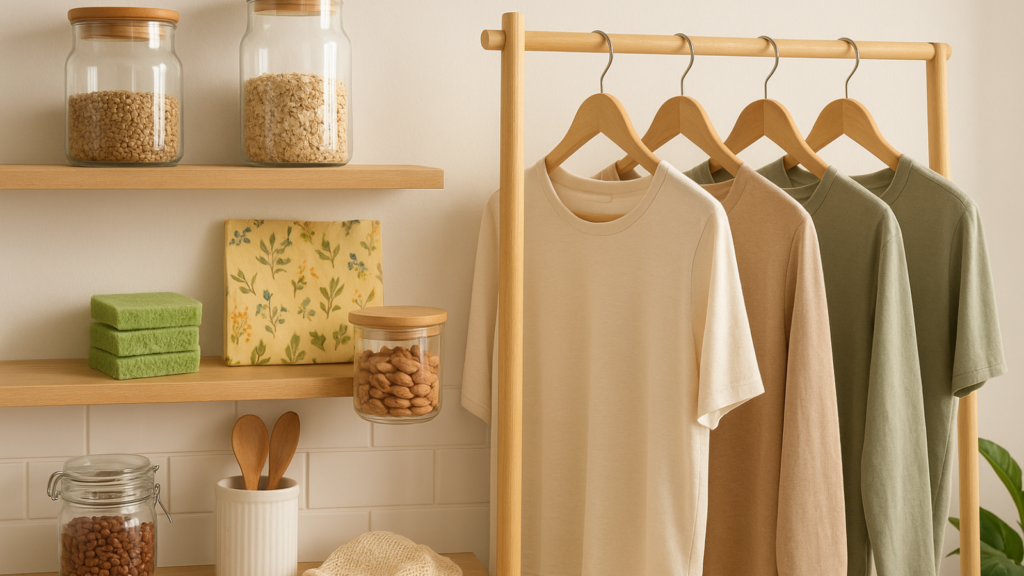
Sustainable product features vary across industries, yet several shared qualities help customers evaluate greener options. Understanding these attributes provides clarity while shopping responsibly.
Essential Sustainable Product Features
Identifying characteristics of eco-friendly products empowers conscious consumers to make informed purchasing decisions. Here are critical features distinguishing genuine green alternatives from conventional goods:
Non-Toxic Composition
Non-toxic eco-products exclude harmful chemicals, heavy metals, and synthetic substances that damage human health and ecosystems. These goods utilise natural, plant-based ingredients and toxin-free product formulas that ensure safety throughout their lifecycle.
Renewable Materials
Renewable products examples include items crafted from bamboo, cork, organic cotton, hemp, and sustainably harvested wood. Such materials regenerate naturally, ensuring continuous availability without depleting finite resources.
Recyclable and Reusable Design
Products designed for multiple uses or easy recycling demonstrate commitment to circular economy principles. Reusable products reduce single-use consumption patterns, whilst recyclable materials can transform into new goods after initial use ends.
Biodegradable Components
Biodegradable product examples break down naturally through biological processes, returning nutrients to soil without leaving persistent residues. Compostable materials decompose even faster, creating nutrient-rich humus for gardens.
Energy Efficiency
Energy-efficient products consume less electricity or fuel during operation, reducing carbon emissions and resource consumption. These low-carbon products might include LED lighting, efficient appliances, or solar-powered devices.
Minimal Water Usage
Water-conscious manufacturing and product operation preserve precious freshwater resources. Products requiring minimal water during production or use contribute significantly to environmental conservation.
Eco-Friendly Product Attributes That Matter
Beyond basic features, additional eco-friendly product attributes distinguish exceptional sustainable options:
- Locally Sourced Materials: Reducing transportation distances lowers carbon footprint
- Fair Trade Certification: Ensuring ethical labour practices and community support
- Carbon Neutral Production: Offsetting emissions through verified carbon credit programmes
- Cradle-to-Cradle Design: Planning for complete product lifecycle from creation to decomposition
- Multi-Functionality: Serving multiple purposes reduces overall consumption needs
- Minimal Chemical Processing: Preserving natural material properties whilst avoiding pollution
Types of Eco-Friendly Products Across Categories
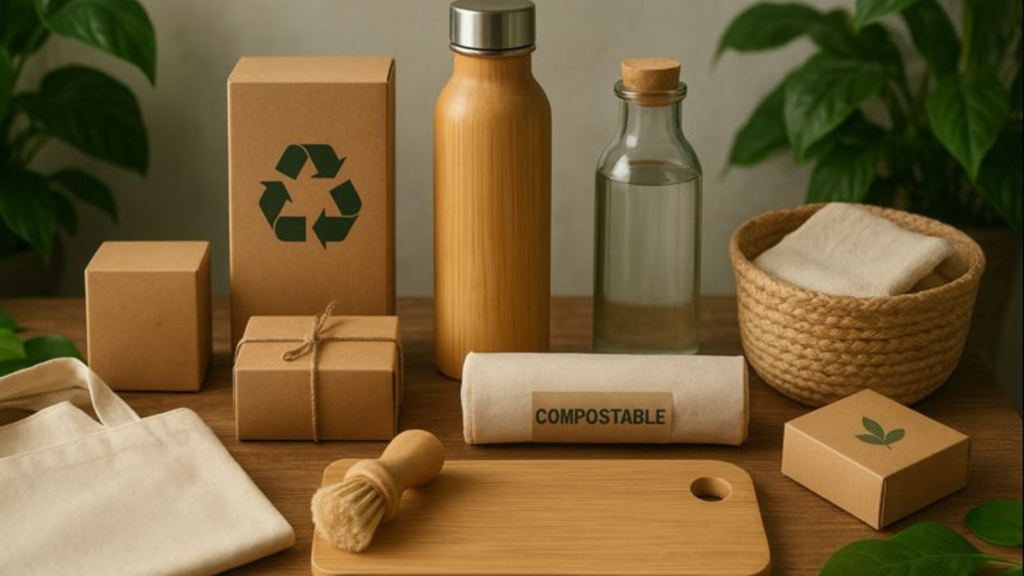
Daily life includes numerous sustainable choices that simplify eco-conscious routines. Many households adopt refill systems for cleaning solutions, plastic-free grooming tools, or renewable fibre textiles that support long-term durability.
Comprehensive Eco-Friendly Product List
Understanding different categories helps consumers identify sustainable alternatives across all lifestyle areas:
Sustainable Home Products
Natural household products transform living spaces into environmentally responsible environments. These include:
- Eco-Friendly Cleaning Items: Plant-based detergents, vinegar solutions, baking soda cleaners, and biodegradable soaps that eliminate harsh chemicals whilst maintaining cleanliness
- Organic Bedding: Chemical-free cotton, linen, or bamboo sheets promoting healthier sleep without pesticide residues
- Energy-Efficient Appliances: Refrigerators, washing machines, and dishwashers bearing energy certifications
- LED Lighting: Long-lasting, low-energy bulbs reducing electricity consumption
- Sustainable Furniture: Reclaimed wood pieces, bamboo furnishings, or items crafted from recycled materials
Eco-Friendly Personal Care Items
Sustainable daily use items for personal grooming prioritise health and environmental safety:
- Natural Soap Bars: Palm-oil-free, plastic-free alternatives to liquid soaps
- Bamboo Toothbrushes: Biodegradable replacements for plastic versions
- Organic Skincare: Plant-based moisturisers, cleansers, and treatments without synthetic chemicals
- Reusable Cotton Rounds: Washable alternatives to disposable cotton pads
- Solid Shampoo Bars: Zero-waste hair care eliminating plastic bottles
Zero Waste Products for Daily Living
Low waste products minimise packaging and encourage reusability:
- Stainless Steel Water Bottles: Durable alternatives to single-use plastic
- Cloth Shopping Bags: Reusable carriers replacing plastic bags
- Beeswax Food Wraps: Natural, washable alternatives to cling film
- Glass Food Storage: Chemical-free containers eliminating plastic exposure
- Menstrual Cups: Reusable period care reducing waste dramatically
Eco-Friendly Lifestyle Products
Green living products extend sustainability beyond home essentials:
- Organic Clothing: Pesticide-free textiles supporting skin health and environmental protection
- Sustainable Footwear: Shoes crafted from recycled materials, organic fabrics, or plant-based leather alternatives
- Solar Chargers: Renewable-energy devices for electronics
- Reusable Coffee Cups: Eliminating disposable cup waste from daily caffeine rituals
- Eco-Friendly Toys: Natural wood or organic fabric playthings for children
Benefits of Eco-Friendly Products
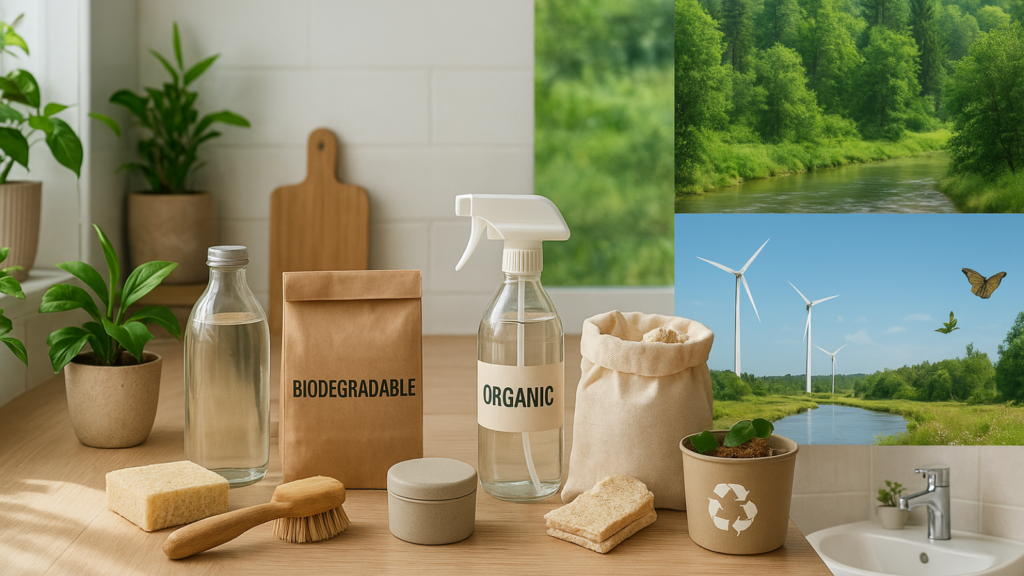
Sustainable goods offer benefits beyond lower emissions or waste reduction. Health improvements often emerge due to reduced chemical exposure, especially in kitchens, bathrooms, and laundry areas.
Advantages of Eco-Friendly Products for Environmental Health
Sustainable product benefits extend far beyond individual households, creating positive impacts across global ecosystems:
Reduced Pollution and Waste
Eco-friendly product benefits include dramatically decreased pollution levels. Biodegradable packaging breaks down naturally rather than accumulating in landfills or oceans. Non-toxic formulations prevent chemical contamination of waterways and soil.
Conservation of Natural Resources
Renewable materials and recycled content preserve finite resources like petroleum, metals, and forests. Energy efficient products reduce demand on power grids, often fuelled by fossil fuels. Water-conscious goods protect increasingly scarce freshwater supplies.
Lower Carbon Footprint
Climate friendly products generate fewer greenhouse gas emissions during manufacturing, transportation, and use. Choosing local, sustainable goods reduces overall carbon footprint significantly, helping combat climate change.
Protection of Biodiversity
Organic farming methods, sustainable forestry practices, and chemical-free production protect wildlife habitats and species diversity. Eco safe products prevent ecosystem disruption caused by toxic runoff and habitat destruction.
Waste Reduction Benefits
Zero waste products and reusable alternatives dramatically decrease landfill contributions. Compostable materials transform waste into valuable nutrients, completing natural cycles rather than creating persistent pollution.
Personal Benefits for Eco-Conscious Consumers
Beyond environmental advantages, individuals gain numerous personal benefits:
Health and Safety Improvements
Toxin free products eliminate exposure to harmful chemicals found in conventional goods. Natural household products reduce indoor air pollution, whilst organic personal care items protect skin from synthetic irritants. Families experience fewer allergic reactions and respiratory issues.
Cost Savings Over Time
Despite potentially higher initial costs, durable goods and reusable products save money long-term. Energy efficient products lower utility bills, whilst quality construction eliminates frequent replacement expenses. Concentrated natural cleaners often prove more economical than conventional alternatives.
Quality and Performance
Sustainable earth friendly solutions frequently outperform conventional counterparts. Natural materials offer superior breathability, durability, and functionality. Eco-friendly innovations incorporate cutting-edge technology delivering excellent results without environmental compromise.
Alignment with Personal Values
Eco-conscious shopping allows consumers to vote with wallets, supporting companies prioritising environmental stewardship. This alignment between purchases and principles provides psychological satisfaction and sense of purpose.
Supporting Ethical Businesses
Choosing eco-responsible brands often means supporting fair labour practices, community development, and transparent supply chains. These purchases contribute to positive social change alongside environmental protection.
Eco-Friendly Certification and Standards: Identifying Authentic Products
Navigating green labelling can feel confusing, so credible certification schemes help consumers verify environmental responsibility. Strong standards evaluate resource sourcing, energy use, ingredient safety, disposal pathways, and social ethics.
Understanding Eco-Labels and Green Product Standards
Navigating eco-friendly product standards requires familiarity with certification programmes verifying sustainability claims:
Major Certification Programmes
- Energy Star: Identifies energy efficient products exceeding government efficiency standards
- Fair Trade Certified: Ensures ethical labour practices and community investment
- Forest Stewardship Council (FSC): Verifies wood products from sustainably managed forests
- USDA Organic: Confirms organic agricultural practices without synthetic pesticides
- Cradle to Cradle Certified: Assesses products across five sustainability categories
- EU Ecolabel: European standard covering environmental impact throughout product lifecycle
- B Corporation: Certifies companies meeting rigorous social and environmental standards
- Leaping Bunny: Verifies cruelty-free products with no animal testing
Interpreting Eco-Friendly Certification Labels
When evaluating eco-certified items, consider:
- Third-Party Verification: Independent organisations provide more reliable validation than self-certification
- Specific Standards: Understanding what each certification actually measures prevents misinterpretation
- Scope of Certification: Some labels apply to entire companies, others to individual products
- Regular Auditing: Legitimate programmes require periodic recertification ensuring ongoing compliance
Avoiding Greenwashing: Critical Evaluation Tips
Not all “green” claims withstand scrutiny. Eco-mindful products require discerning evaluation:
- Vague Language: Terms like “natural” or “eco-friendly” without specific certification mean little
- Misleading Imagery: Green packaging colours and nature imagery don’t guarantee sustainability
- Hidden Trade-offs: Products highlighting one eco-attribute whilst concealing others
- Irrelevant Claims: Boasting about legally required practices as special achievements
- Lack of Transparency: Refusing to disclose ingredient lists or manufacturing details
Examples of Eco-Friendly Products: Practical Sustainable Alternatives
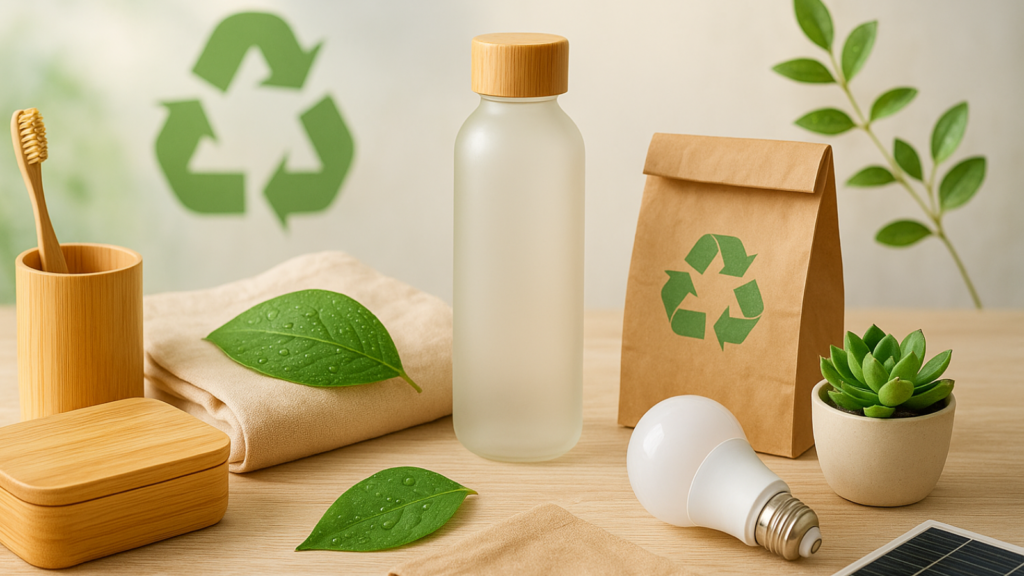
Practical alternatives exist across nearly every product category. Kitchen cupboards often contain glass storage containers, compostable sponges, or plant-wax wraps instead of single-use plastics. Clothing shelves now feature garments made from organic cotton, Tencel, or recycled polyester.
Real-World Sustainable Consumer Products
Concrete examples help visualise how sustainable alternatives integrate into daily routines:
Kitchen and Dining
- Bamboo Cutlery Sets: Replacing plastic utensils for packed lunches
- Stainless Steel Straws: Eliminating single-use plastic straws
- Compostable Sponges: Plant-based alternatives to synthetic scrubbers
- Glass Milk Bottles: Traditional containers making sustainable comebacks
- Silicone Baking Mats: Reusable alternatives to disposable parchment paper
Bathroom Essentials
- Refillable Deodorant Containers: Reducing packaging waste through refill systems
- Konjac Sponges: Natural, biodegradable facial cleansing tools
- Safety Razors: Durable metal razors eliminating disposable plastic versions
- Soap Nuts: Natural laundry detergent alternative from tree berries
- Bamboo Cotton Buds: Biodegradable ear care products
Office and Stationery
- Recycled Paper Notebooks: Post-consumer waste transformed into quality paper
- Refillable Fountain Pens: Reducing disposable pen waste
- Plant-Based Ink Products: Non-toxic writing implements
- Cardboard File Organisers: Sustainable desk organisation solutions
- Solar-Powered Calculators: Eliminating battery waste
Outdoor and Travel
- Organic Cotton Tote Bags: Versatile, durable carry-alls
- Stainless Steel Lunch Boxes: Plastic-free food transport
- Beeswax Sandwich Wraps: Natural food preservation
- Bamboo Utensil Travel Sets: Portable cutlery for on-the-go meals
- Solar Phone Chargers: Renewable energy for mobile devices
Eco-Friendly Materials: Building Blocks of Sustainable Products
Materials influence environmental impact more than nearly any other factor. Renewable fibres such as hemp, cork, and bamboo regenerate quickly without heavy chemical inputs. Recycled metals and reclaimed plastics support circularity by giving discarded items new life.
Common Sustainable Materials and Their Properties
Understanding eco-friendly materials helps consumers recognize quality sustainable goods:
Natural Plant-Based Materials
Bamboo: Fast-growing, renewable resource requiring minimal water and no pesticides. Naturally antibacterial properties make bamboo ideal for kitchen items, textiles, and construction.
Organic Cotton: Grown without synthetic pesticides or fertilisers, protecting farmer health and soil quality. Soft, breathable fabric suitable for clothing, bedding, and personal care items.
Hemp: Incredibly durable fibre requiring little water and no pesticides. Versatile material for textiles, paper, building materials, and bioplastics.
Cork: Harvested from tree bark without harming trees, regenerating every nine years. Naturally waterproof, antimicrobial material ideal for flooring, accessories, and packaging.
Jute: Biodegradable, high-strength fibre for bags, rugs, and packaging materials.
Recycled and Upcycled Materials
Recycled Plastic: Post-consumer plastic transformed into new products, diverting waste from landfills. Used for outdoor furniture, clothing, and accessories.
Reclaimed Wood: Salvaged timber from old buildings, barns, or fallen trees. Unique character and reduced environmental impact compared to new lumber.
Recycled Metal: Aluminium, steel, and copper requiring significantly less energy to process than virgin materials.
Recycled Glass: Infinitely recyclable material for containers, tiles, and decorative items.
Biodegradable and Compostable Options
PLA (Polylactic Acid): Plant-based bioplastic from corn or sugarcane, compostable under proper conditions.
Mushroom Packaging: Mycelium-based material growing into desired shapes, completely compostable.
Seaweed-Based Materials: Ocean-sourced alternatives for packaging and textiles.
Cellulose: Plant-derived material for packaging, textiles, and household items.
Eco-Friendly Market Trends: Future of Sustainable Consumer Products
Market trends point toward rapid expansion of earth-friendly design. Demand for refill stations rises across major retailers, enabling packaging-free shopping. Many brands experiment with biodegradable electronics casings, algae-based textiles, and carbon-negative building materials.
Emerging Eco-Friendly Innovations
Sustainability sector continues evolving with exciting developments:
Advanced Material Science
Researchers develop innovative materials from unexpected sources like food waste, algae, and even carbon dioxide. These next-generation eco-safe materials promise superior performance with minimal environmental impact.
Circular Economy Models
Businesses increasingly adopt circular approaches where products return to manufacturers for recycling or remanufacturing. Such systems eliminate waste concepts entirely, treating materials as perpetual resources.
Digital Product Passports
Technology enabling consumers to trace complete product histories from material sourcing through manufacturing to disposal. Blockchain-based systems ensure transparency and accountability.
Regenerative Practices
Moving beyond “doing less harm” toward actively improving environments. Regenerative agriculture, for example, enhances soil health whilst producing crops.
Packaging Innovations
Edible packaging, dissolvable materials, and plant-based films revolutionise how goods reach consumers. These innovations could eliminate packaging waste entirely within coming decades.
Conclusion: Embracing Sustainable Living Through Conscious Choices
Understanding what are eco-friendly products empowers consumers to make purchasing decisions aligned with environmental values. From recognising key features of eco-friendly products to identifying legitimate eco-friendly certification programmes, knowledge enables meaningful action.
Benefits of eco-friendly products extend far beyond individual households, creating ripple effects throughout global ecosystems. Each sustainable purchase represents investment in healthier planet for future generations. Whether selecting natural household products, eco-safe packaging, or energy efficient products, every choice matters.
Frequently Asked Questions
1. What Are Eco-Friendly Products?
Eco-friendly products are products that minimise environmental harm through responsible sourcing, efficient manufacturing, safe ingredients, recyclable or compostable materials, and low-impact disposal pathways. Such goods support cleaner air, healthier ecosystems, and more sustainable lifestyles.
2. How Do I Know If a Product Is Truly Eco-Friendly?
Authentic sustainable goods often carry credible certifications, transparent supply-chain information, and clear ingredient lists. Independent labels such as FSC, Fairtrade, and organic accreditations help verify environmental commitments. Brands that provide lifecycle data, carbon reporting, and packaging details generally offer trustworthy choices.
3. Why Should Households Choose Eco-Friendly Alternatives?
Sustainable goods reduce waste, conserve resources, support ethical manufacturing, and lower chemical exposure. These products often last longer, saving money over time while lowering environmental impact.
4. Are Eco-Friendly Products More Expensive?
Initial costs can be slightly higher, yet long-term value usually outweighs the difference. Durable construction, refill systems, and reduced energy usage often lead to savings across several years. Many eco-conscious shoppers view these purchases as investments in healthier homes and a cleaner planet.
5. What Materials Are Considered Eco-Friendly?
Common sustainable materials include organic cotton, bamboo fibre, hemp, cork, recycled metals, reclaimed plastics, plant-based biopolymers, and compostable packaging. Such materials reduce extraction, limit pollution, and support circular systems.
6. Do Eco-Friendly Products Work as Well as Conventional Options?
Most high-quality eco alternatives perform as effectively as conventional goods. Modern formulations for cleaners, personal care items, and household essentials often match or surpass traditional products due to advanced research and improved natural ingredients.
7. Are Biodegradable Products Always Better for the Environment?
Biodegradable products help reduce waste, yet effectiveness depends on correct disposal. Some materials require industrial composting or specific conditions to break down. Understanding disposal instructions ensures the item decomposes safely and responsibly.
8. What Is the Difference Between Sustainable and Eco-Friendly?
Eco-friendly refers to lower environmental impact during production, use, or disposal. Sustainability covers broader principles, including resource efficiency, ethical labour, long-term durability, and overall planetary health. Many items qualify as both, though sustainability often includes social responsibility.
9. Can Eco-Friendly Goods Support a Zero-Waste Lifestyle?
Yes. Reusable containers, refillable personal care items, cloth produce bags, long-lasting tools, and compostable materials help reduce household waste significantly. Zero-waste routines become easier when homes rely on durable, repairable, or refill-friendly products.
10. What Trends Shape the Future of Eco-Friendly Consumer Products?
Upcoming trends include circular manufacturing models, plastic-free packaging innovations, carbon-neutral production, algae-based textiles, refill stations, smart environmental labelling, and stronger regulations. These developments encourage brands to design goods that meet higher sustainability expectations.