Winter wardrobes have traditionally relied on resource-intensive fabrics that damage our planet. Eco-conscious consumers face a critical challenge as temperatures drop: staying warm while minimizing environmental harm. Sustainable materials now offer viable solutions for cold-weather protection without compromising ecological values.
Modern innovations in textile technology demonstrate that warmth need not come at the expense of Earth. From recycled polyester insulation to plant-based alternatives, today’s eco-friendly winter clothing combines performance with environmental responsibility. Understanding these materials empowers consumers to make informed choices that align with their values while maintaining comfort during harsh weather conditions.
Understanding Eco-Friendly Materials in Winter Clothing
Sustainable winter fabrics represent more than marketing buzzwords. These materials undergo rigorous evaluation against environmental, ethical, performance standards that conventional textiles often fail to meet.
What Makes a Material Eco-Friendly in Cold-Weather Apparel?
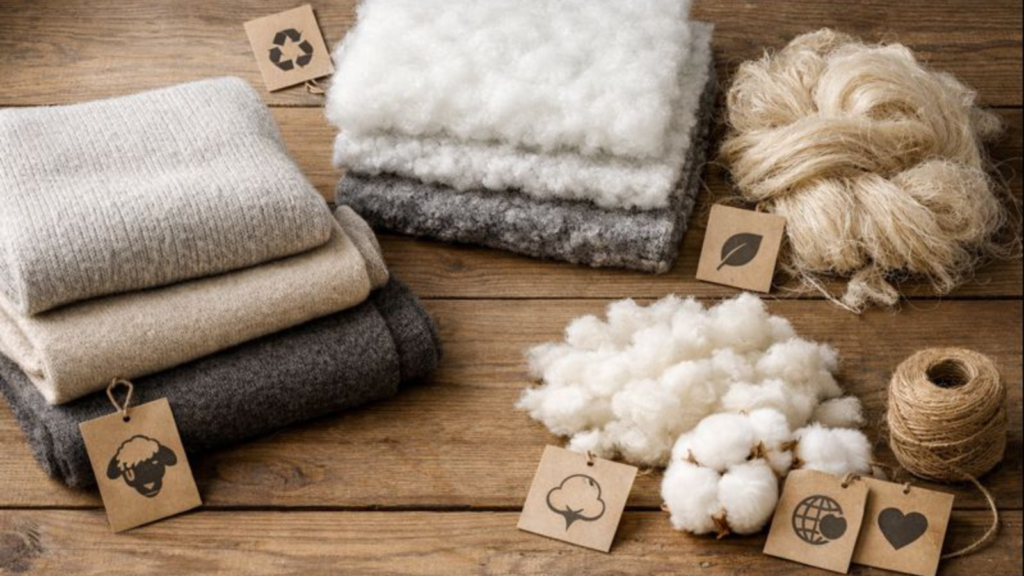
Eco-friendly winter materials distinguish themselves through multiple sustainability criteria. Production processes must minimize water consumption, chemical usage, carbon emissions, while prioritizing renewable or recycled resources. Materials qualify as sustainable when cultivation or manufacturing reduces environmental degradation compared to conventional alternatives.
Biodegradability represents another crucial factor. Natural fibres that decompose safely after garment disposal prevent long-term pollution. Recycled synthetic materials demonstrate eco-friendliness by diverting waste from landfills, despite their non-biodegradable nature.
Ethical sourcing considerations extend beyond environmental metrics. Sustainable winter fabrics must ensure fair labour practices, animal welfare standards, transparent supply chains. Certifications verify that materials meet rigorous ecological benchmarks throughout their lifecycle, from raw material extraction to finished garment production.
Energy efficiency during manufacturing significantly impacts overall sustainability. Materials requiring less energy for processing, dyeing, finishing naturally rank higher on environmental scorecards. Water scarcity concerns make low-water production methods increasingly valuable for winter textile manufacturing.
Natural vs. Synthetic Sustainable Materials: Key Differences
Natural sustainable fibres originate from renewable biological sources, plants, animals, or microorganisms. Organic cotton, hemp, wool from ethically managed farms exemplify natural options that biodegrade without leaving toxic residues. Growing cycles replenish supplies annually or seasonally, creating closed-loop systems that nature manages effectively.
Synthetic sustainable materials typically derive from recycled plastics or innovative bio-based polymers. Recycled polyester transforms discarded bottles into insulating fibres that retain warmth remarkably well. Unlike virgin synthetics dependent on petroleum extraction, recycled variants reduce fossil fuel consumption while addressing plastic waste.
Durability often favours synthetics, which resist moisture, abrasion, repeated washing better than natural counterparts. Natural fibres offer superior breathability, biodegradability, comfort against skin. Performance trade-offs require careful evaluation based on intended use, climate conditions, personal priorities.
Production impacts vary significantly between categories. Natural fibre cultivation demands substantial water, land resources, particularly for conventional cotton. Synthetic recycling processes require energy-intensive collection, sorting, reprocessing operations. Neither category claims absolute superiority, context determines which choice proves more sustainable.
Blended fabrics attempt to capture advantages from both categories. Combining natural fibres with recycled synthetics creates textiles that balance performance, environmental responsibility, cost-effectiveness. Such innovations represent evolving solutions to complex sustainability challenges within winter clothing.
Common Environmental Impacts of Traditional Winter Fabrics
Conventional down insulation raises significant ethical, environmental concerns. Duck or goose feathers often come from farms with questionable animal welfare practices, including live-plucking. Processing down requires chemical treatments that contaminate waterways, while transportation from production centres generates substantial carbon emissions.
Virgin polyester jackets rely entirely on petroleum derivatives. Extracting crude oil damages ecosystems, contributes to climate change through greenhouse gas emissions. Manufacturing virgin polyester demands enormous energy inputs, releases microplastics during washing that pollute oceans, harm marine life.
Standard wool production frequently involves intensive farming practices with high methane emissions from livestock. Overgrazing degrades pastureland, reduces biodiversity. Chemical treatments for preventing moth damage, shrinkage introduce toxins into ecosystems. Mulesing, a painful procedure used on sheep, raises additional ethical objections.
Acrylic, commonly used for winter knitwear, represents one of the worst environmental offenders in textiles. Production generates highly toxic wastewater, emits carcinogenic compounds. Acrylic garments shed vast quantities of microplastic fibres during washing, persisting in environments for centuries.
Dyeing, finishing traditional winter fabrics consumes massive water volumes, introduces heavy metals, toxic chemicals into water systems. Conventional textile production ranks among the most polluting sectors in manufacturing, second only to oil industries in environmental damage.
Why Sustainability Matters More in Winter Clothing Than Other Apparel
Winter garments typically contain heavier materials, thicker insulation, more complex construction than lighter seasonal clothing. Producing bulky coats, insulated jackets requires substantially greater resource inputs, more fabric, filling, energy for manufacturing. Environmental costs multiply proportionally with garment weight, material volume.
Durability expectations differ markedly for winter wear. Quality winter coats should last years, even decades, making sustainable material choices especially consequential. Poorly made conventional garments ending up in landfills represent wasted resources at massive scales due to their size, material complexity.
Heating buildings accounts for significant residential energy consumption globally. Well-designed sustainable winter clothing reduces reliance on artificial heating, lowering household carbon footprints. Materials that effectively regulate body temperature enable lower thermostat settings without comfort sacrifice.
Cold-weather accessories multiply environmental impacts. Hats, gloves, scarves, base layers, outerwear layers accumulate rapidly in wardrobes. Choosing eco-friendly materials across entire winter collections creates cumulative sustainability benefits far exceeding single garment decisions.
Synthetic insulation alternatives frequently rely on petrochemicals, making winter clothing particularly vulnerable to fossil fuel dependence. Transitioning winter wardrobes toward sustainable materials directly confronts climate change by reducing petroleum demand, associated emissions.
Types of Eco-Friendly Materials Used in Winter Wear
Diverse sustainable materials now populate winter clothing markets. Each material category offers distinct advantages for cold-weather protection while minimizing environmental harm.
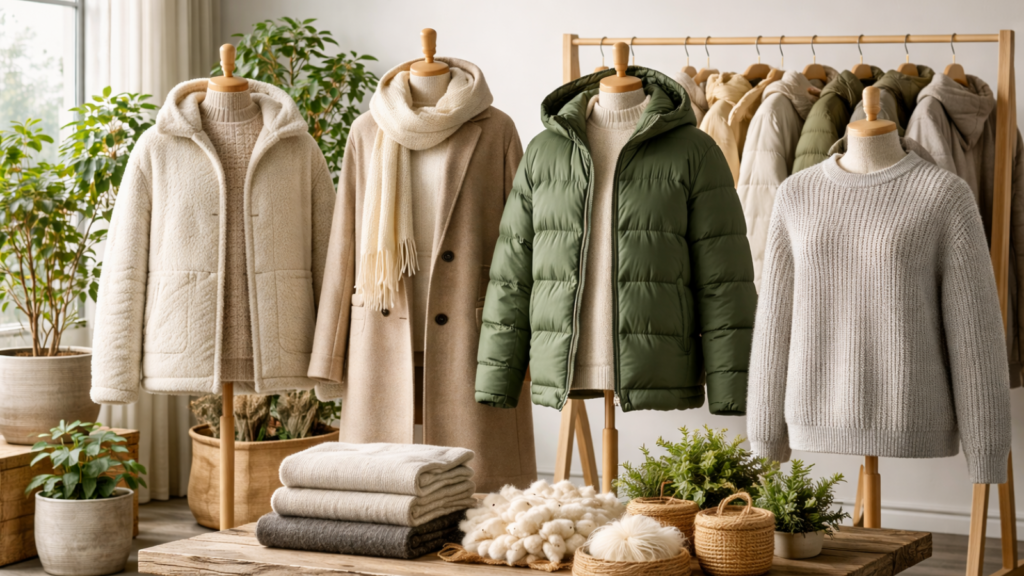
Organic and Renewable Fibers Used for Warmth
Organic merino wool delivers exceptional warmth-to-weight ratios while providing natural temperature regulation. Unlike conventional wool, organic certification ensures sheep graze on pesticide-free pastures, receive humane treatment throughout their lives. Fine fibres of merino resist itchiness, making garments comfortable directly against skin during extended winter wear.
Hemp fabrics offer remarkable sustainability credentials alongside surprising winter suitability. Cultivation requires minimal water, no pesticides, actually improves soil health through nitrogen fixation. Hollow fibres of hemp trap air effectively, creating insulation while maintaining breathability that prevents overheating during active pursuits.
Organic cotton flannel, grown without synthetic fertilizers or pesticides, provides soft, comfortable base layers. Cotton lacks inherent warmth of wool, yet organic cultivation eliminates devastating environmental impacts associated with conventional cotton farming. Brushed finishes enhance insulating properties by creating air pockets within fabric structure.
Lyocell, marketed as Tencel, derives from sustainably harvested wood pulp through closed-loop processing. Manufacturing captures, reuses over 99% of solvents, minimizing chemical waste. Smooth fibres of lyocell wick moisture effectively while providing moderate insulation suitable for mid-layer garments.
Alpaca fibre surpasses sheep wool in warmth, softness, hypoallergenic properties. Alpacas require less food, water than sheep, cause minimal pasture damage due to soft foot pads. Small-scale alpaca farming in South American highlands maintains traditional practices while supporting rural communities economically.
Recycled Materials in Insulated Jackets and Coats
Recycled polyester insulation transforms post-consumer plastic bottles into high-performance winter fill. Collection programmes gather bottles from waste streams, then clean, melt, extrude them into fibres matching the insulating capabilities of virgin polyester. Each jacket diverts approximately 20 to 60 bottles from landfills or oceans.
Recycled down reclaims feathers from old bedding, jackets through careful washing, sanitisation processes. Suppliers sort, grade reclaimed down to meet quality standards comparable to virgin alternatives. This approach preserves the exceptional warmth of down while reducing demand for new feather production, associated animal welfare concerns.
Recycled nylon, particularly Econyl made from fishing nets, industrial plastic waste, creates durable outer shells for winter jackets. Ocean cleanup initiatives supply raw materials, addressing marine pollution while producing technical fabrics. Recycled nylon matches the strength, weather resistance, abrasion tolerance of virgin material.
Recycled wool emerges from post-industrial textile scraps or reclaimed garments. Mechanical recycling pulls apart wool fabrics, re-spins fibres into new yarns without chemical processing. Blending recycled wool with small virgin fibre percentages maintains strength, softness for quality knitwear.
PrimaLoft Bio insulation incorporates recycled content while featuring enhanced biodegradability. Special fibres break down more readily in landfill conditions compared to standard polyester, despite their synthetic nature. This innovation addresses end-of-life concerns while maintaining excellent warmth, water resistance.
Innovative Bio-Based and Plant-Derived Winter Fabrics
Kapok, harvested from seed pods of rainforest trees, provides buoyant, lightweight insulation. Hollow fibres trap air exceptionally well, creating warmth without weight. Cultivation of kapok requires no irrigation, fertilizers, pesticides, as trees grow naturally in tropical forests. Harvesting does not harm trees, allowing sustainable repeated collection.
Mushroom leather, or mycelium-based materials, offers leather alternatives for gloves, trim, accessories. Mycelium grows from fungal root structures in controlled environments, develops into supple, durable material within weeks. Production consumes minimal resources compared to animal leather, plastic alternatives.
Cork fabric, extracted from Mediterranean cork oak bark, creates water-resistant, insulating material for jacket panels, accessories. Trees regenerate bark every 9 years (108 months) without damage, sequestering carbon throughout long lifespans. The cellular structure of cork provides natural insulation, antimicrobial properties.
Qmonos, synthesized spider silk protein, represents emerging bio-fabrication technology. Microorganisms engineered to produce spider silk proteins yield fibres with extraordinary strength-to-weight ratios. Such innovations point toward future winter textile possibilities, though currently expensive, limited in production.
Seaweed-based fibres, extracted from fast-growing kelp, offer mineral-rich textiles with skin-nourishing properties. Cultivation of seaweed improves ocean health by absorbing excess nutrients, carbon dioxide. Processing creates soft fibres suitable for base layers, though currently limited in commercial availability.
Animal-Free and Ethical Alternatives to Wool and Down
PrimaLoft synthetic insulation mimics the loft, warmth of down through ultra-fine microfibers that trap air efficiently. Synthetic insulation maintains warmth when wet, dries quickly, costs less, unlike down. Recycled versions reduce petroleum dependence while delivering reliable cold-weather performance.
Recycled PET (Polyethylene Terephthalate) fleece provides lightweight warmth for mid-layers without animal involvement. Modern fleece fabrics incorporate finishes reducing microplastic shedding during washing. Comfortable, affordable, easy to care for, fleece remains popular among outdoor enthusiasts seeking vegan options.
Aerogel insulation, originally developed for aerospace applications, offers extraordinary warmth in minimal thickness. Silica-based aerogel contains up to 99% air trapped in nanoporous structure. Small amounts provide exceptional insulation for extreme cold conditions without bulk, though expensive.
3M Thinsulate synthetic insulation uses microfibers finer than human hair to trap body heat effectively. Manufacturing incorporates recycled content, reducing virgin material demand. Thin, compressible yet warm, Thinsulate works well for gloves, boots, sleek urban jackets.
Plant-based Sorona insulation, partially derived from corn sugars, combines bio-content with performance characteristics. Innovation from DuPont reduces petroleum dependence by 37% compared to traditional nylon insulation. Soft, resilient fibres resist compression while maintaining loft, warmth over time.
Performance of Sustainable Materials in Cold and Extreme Weather
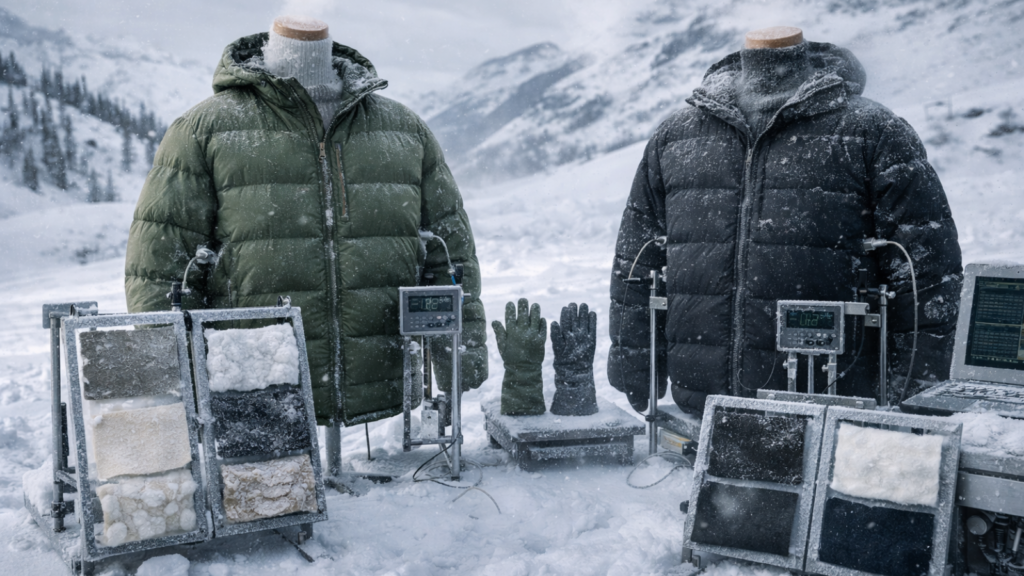
Eco-friendly materials must prove themselves under genuine winter conditions. Testing reveals how sustainable fabrics compare to conventional options across multiple performance metrics.
How Eco-Friendly Materials Provide Insulation and Heat Retention
Insulation effectiveness depends primarily on the ability of material to trap stationary air layers. Natural fibres like wool contain crimps, scales creating three-dimensional structure full of tiny air pockets. Low thermal conductivity of air prevents heat transfer away from body, maintaining warmth even in sub-zero temperatures (below 0°C or 32°F).
Recycled synthetic insulations achieve similar effects through different mechanisms. Ultra-fine fibres create dense webs that capture air in microscopic spaces. High loft-to-weight ratios mean minimal material weight provides maximum air-trapping volume. This efficiency allows lightweight garments to deliver substantial warmth.
Down alternatives using recycled polyester employ cluster structures mimicking the geometry of natural down. Branching fibre shapes interlock, preventing compression while maintaining loft. Water-resistant treatments enable synthetic fills to retain insulating properties when exposed to moisture, addressing the primary weakness of down.
Hemp, though seemingly lightweight, creates effective insulation through hollow fibre construction. These natural tubes filled with air contribute to thermal regulation while allowing breathability. Layering hemp garments builds insulation progressively without excessive bulk or weight.
Sustainable insulation often incorporates phase-change materials that absorb, release heat based on temperature fluctuations. These technologies stabilize microclimate between skin and clothing, preventing both overheating during activity and chilling during rest periods.
Breathability, Moisture Control, and Comfort in Winter Conditions
Hygroscopic properties of wool allow absorption of up to 30% of fibre weight in moisture without feeling damp. Wool absorbs moisture vapor from perspiration, generating exothermic reactions that actually release heat, enhancing warmth. Simultaneously, outer surfaces wick moisture away, maintaining comfort during variable activity levels.
Synthetic eco-fabrics achieve breathability through engineered porosity. Microscopic pores permit water vapor escape while blocking liquid water entry. Durable water repellent treatments on recycled polyester shells bead rainwater, snow melt on exterior surfaces while allowing internal moisture vapour transmission.
Lyocell excels at moisture management through fibrils that wick perspiration rapidly away from skin. Smooth fibre surfaces prevent bacterial growth, reducing odours during extended wear. This becomes particularly valuable for base layers worn continuously throughout winter days.
The naturally porous structure of hemp provides breathability without sacrificing wind resistance. Air permeability allows moisture vapor escape while preventing cold wind penetration when woven appropriately. This balance makes hemp suitable for outer layers in moderate winter conditions.
Temperature regulation distinguishes quality sustainable winter clothing from conventional alternatives. Materials that breathe effectively prevent sweat accumulation that later chills wearers. Comfort during transitions between indoor heating, outdoor cold depends heavily on the ability of fabric to moderate microclimate.
Durability and Longevity of Sustainable Winter Clothing
High-quality organic wool garments often outlast synthetic alternatives through decades of use. Wool fibres naturally resist tearing, retain shape despite repeated wear, washing cycles. Proper care allows wool sweaters, coats to serve multiple generations, maximizing environmental amortization of material investment.
Recycled polyester insulation maintains loft, warmth through hundreds of compressions, expansions. Technical construction prevents fibre migration, cold spots developing over time. Many outdoor brands offer lifetime warranties on recycled insulation products, demonstrating confidence in durability.
Hemp fabrics actually soften, strengthen with age, repeated washing. Hemp maintains structural integrity admirably through long fibres, unlike cotton that weakens gradually. Vintage hemp garments often remain fully functional after years of regular use, validating claims of material longevity.
Repair-friendly designs enhance the lifespan of sustainable winter clothing significantly. Brands increasingly incorporate reinforcement points, replaceable components, accessible construction enabling home repairs. Mending worn areas, replacing zippers extends garment life far beyond typical disposal timelines.
Proper storage during off-seasons preserves material integrity. Natural fibres benefit from breathable storage bags, cedar blocks preventing moth damage. Synthetic insulation requires loose storage rather than compression, maintaining loft between winter seasons. Care practices dramatically influence whether garments last years or decades.
Comparing Performance: Eco-Friendly vs. Conventional Winter Fabrics
Warmth-to-weight ratios now favour many sustainable options. Premium recycled down matches or exceeds the insulating efficiency of conventional down while addressing ethical concerns. Synthetic alternatives, though slightly heavier, provide reliable performance at lower price points, making winter warmth accessible across income levels.
Water resistance comparisons reveal nuanced differences. Virgin polyester jackets traditionally held advantages in extreme wet conditions, but recycled alternatives now match performance through advanced treatments. Wool naturally resists light precipitation while sustainable DWR (Durable Water Repellent) treatments add weather protection without fluorocarbons.
Breathability tests demonstrate inherent advantages of natural fibres. Wool, hemp, lyocell regulate moisture vapor transmission more effectively than most synthetics. Modern recycled technical fabrics incorporate membrane technologies that approach the breathability of natural materials while adding waterproofing.
Durability testing shows minimal performance gaps between sustainable, conventional materials when quality remains comparable. Construction quality, design choices influence longevity more than sustainable versus conventional material origins. Well-made recycled garments outlast poorly constructed virgin material products consistently.
Comfort assessments increasingly favour eco-friendly options. The soft hand feel of natural fibres, temperature regulation capabilities enhance wearing experience. Brands investing in sustainable materials typically prioritize overall quality, resulting in superior comfort compared to fast-fashion conventional alternatives.
Environmental and Social Benefits of Eco-Friendly Winter Clothing
Choosing sustainable winter materials creates ripple effects beyond personal wardrobes. Environmental, social improvements accumulate across entire supply chains, communities, ecosystems.
Reducing Carbon Footprint Through Sustainable Fabric Choices
Organic cotton production eliminates synthetic fertilizers, pesticides responsible for significant greenhouse gas emissions. Manufacturing these agricultural chemicals requires enormous energy inputs, primarily from fossil fuels. Organic practices sequester more carbon in healthy soil compared to depleted conventional farmland.
Recycled polyester cuts carbon emissions by approximately 75% compared to virgin polyester production. Avoiding petroleum extraction, refining, polymerization saves massive energy expenditures. Transportation remains a factor, but overall lifecycle emissions drop dramatically through recycling processes.
Wool from regeneratively managed pastures actually captures atmospheric carbon. Well-managed grazing stimulates grass growth, increases soil organic matter, promoting carbon sequestration. Sheep flocks on healthy pastures achieve carbon-neutral or even carbon-negative production when accounting for land management benefits.
Local or regional textile production reduces transportation emissions substantially. Sourcing materials, manufacturing garments closer to end markets eliminates carbon costs of transcontinental shipping. Supporting regional textile industries builds resilience while cutting environmental impacts.
Extending garment lifespans through durability, repairability provides perhaps the greatest carbon savings. Manufacturing replacement clothing generates far more emissions than maintaining, repairing existing items. Every additional year of use reduces annualized carbon footprint significantly.
Water, Energy, and Waste Savings in Winter Apparel Production
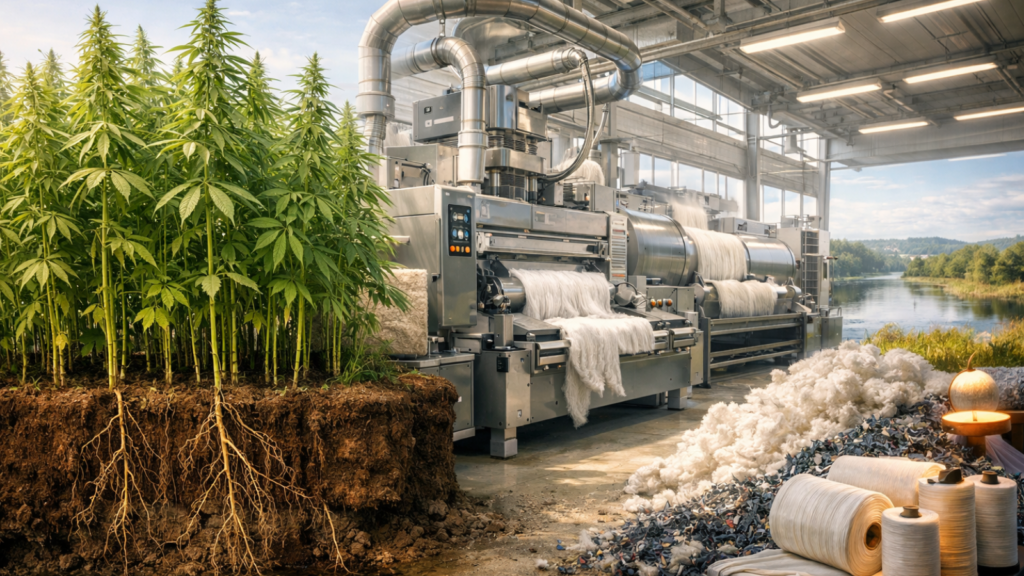
Cultivation of hemp requires roughly half the water of cotton while producing 250% more fibre per hectare (2.5 acres). Deep root systems access groundwater, reducing irrigation demands. This water efficiency becomes critical as freshwater scarcity threatens agricultural regions globally.
Closed-loop lyocell production recycles processing solvents continuously, minimizing water pollution. Conventional rayon manufacturing discharges toxic effluents into waterways, contaminating drinking water sources. The cleaner process of lyocell protects aquatic ecosystems while producing comparable fabrics.
Recycling polyester uses 59% less energy than creating virgin material from petroleum. Energy savings multiply across entire supply chains, extraction, refining, polymerization all become unnecessary. Lower energy consumption translates directly to reduced fossil fuel burning, associated emissions.
Waterless dyeing technologies, increasingly adopted for sustainable textiles, eliminate most water consumption in colour application. Traditional dyeing processes discharge heated, chemically contaminated water into rivers, lakes. Innovative methods use supercritical CO2 (Carbon Dioxide) or digital printing, drastically reducing water impacts.
Waste reduction through circular design prevents textile scraps from landfills. Pattern optimization minimizes cutting waste, while post-consumer recycling programmes reclaim worn garments for fibre reclamation. Zero-waste design approaches eliminate manufacturing waste entirely through creative pattern engineering.
Ethical Labor and Animal Welfare in Sustainable Winter Fashion
Fair Trade certification ensures living wages, safe working conditions for textile workers. Many sustainable brands undergo third-party audits verifying ethical labour practices throughout supply chains. Transparency allows consumers to support companies treating workers with dignity, respect.
Responsible Wool Standard (RWS) prohibits mulesing, ensures humane sheep treatment. Certified farms provide adequate nutrition, veterinary care, shelter for livestock. Shearing practices follow animal welfare guidelines, preventing injury, stress during fibre collection.
Cruelty-free down certification guarantees feathers come only from birds processed for meat, never live-plucked. Supply chain traceability prevents mixing certified down with material from questionable sources. Several certification programmes maintain rigorous animal welfare requirements, though standards vary.
Artisan cooperatives producing sustainable winter accessories provide fair compensation, preserve traditional skills. Supporting handcrafted goods empowers small-scale producers, particularly women in developing regions. Economic opportunities through ethical fashion combat poverty while maintaining cultural heritage.
Unionized manufacturing facilities producing eco-friendly winter clothing offer workers collective bargaining rights, job security. Union representation protects against exploitation, ensures voices in workplace decisions. Supporting unionized production strengthens labour movements globally.
How Eco-Friendly Winter Clothing Supports Circular Fashion
Design for disassembly enables end-of-life recycling by avoiding mixed materials difficult to separate. Using mechanical fasteners instead of permanent adhesives allows components to be removed, sorted for appropriate recycling streams. Mono-material construction simplifies recycling processes significantly.
Take-back programmes from brands facilitate garment collection when products reach end of useful life. Companies accepting worn clothing for recycling or refurbishment close loops, taking responsibility beyond point of sale. These initiatives divert textiles from landfills while providing recycling feedstock.
Rental, sharing platforms extend garment utility by serving multiple users sequentially. Occasional winter gear needs, ski jackets, formal coats, suit rental models perfectly. Shared access reduces per-person consumption while ensuring appropriate cold-weather protection when needed.
Repair services, spare parts availability combat disposable culture. Brands offering free or subsidized repairs encourage customers to maintain garments rather than replace them. Accessible spare parts, buttons, zippers, snaps, enable home repairs extending usable life substantially.
Material innovation toward complete biodegradability creates true circularity for natural fibres. Garments return nutrients to soil rather than persisting as waste when they finally reach irreparable states. Development of synthetic materials targets improved recyclability, reducing virgin resource demands across cycles.
Choosing and Using Eco-Friendly Winter Clothing as a Beginner
Navigating sustainable winter clothing markets requires knowledge, discernment. Practical guidance helps eco-conscious consumers make confident purchasing, care decisions.
How to Identify Truly Sustainable Winter Clothing Brands
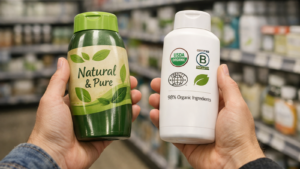
Transparency of brand regarding supply chains signals genuine sustainability commitment. Companies providing detailed information about material sourcing, manufacturing locations, labour conditions demonstrate accountability. Vague claims without specifics often indicate greenwashing rather than authentic environmental responsibility.
B Corporation certification verifies companies meet rigorous social, environmental performance standards. Third-party assessment covers governance, workers, community, environmental impacts. B Corp status indicates holistic sustainability approach beyond marketing rhetoric.
Direct brand communication reveals commitment depth. Contacting companies with specific questions about materials, certifications, practices tests responsiveness, knowledge. Genuinely sustainable brands welcome inquiries, provide detailed answers rather than defensive, evasive responses.
Material composition labels require careful examination. Marketing language like “eco” or “sustainable” means nothing without concrete details. Look for specific content percentages, “80% recycled polyester” or “100% organic cotton”, rather than ambiguous environmental buzzwords.
Customer reviews, third-party investigations provide unfiltered insights. Independent journalists, sustainability advocates evaluate actual practices of brands versus marketing claims. Research beyond company websites reveals fuller pictures of environmental, social performance.
Certifications and Labels to Look for When Buying Winter Wear
Global Organic Textile Standard (GOTS) certification guarantees organic fibre content, prohibits toxic chemicals throughout processing. GOTS verifies environmental, social criteria from harvesting through manufacturing, labelling. Look for labels specifying organic content percentages alongside GOTS certification numbers.
The bluesign® system certification ensures chemical inputs meet strict safety, environmental standards. Certified textiles eliminate harmful substances before entering manufacturing processes. Bluesign approval indicates comprehensive environmental management across entire production chain.
Responsible Down Standard (RDS) certification verifies down, feather sourcing meets animal welfare requirements. Traceability systems track materials from farm through finished product, preventing mixing with uncertified sources. RDS prohibits force-feeding, live-plucking across certified supply chains.
Fair Trade Certified™ textiles guarantee living wages, safe conditions, environmental protections. Premium payments support community development projects in production regions. Fair Trade labels demonstrate commitment to social justice alongside environmental sustainability.
OEKO-TEX® Standard 100 certifies textiles free from harmful chemicals. Testing occurs at product level, ensuring finished garments meet safety criteria. This becomes particularly important for base layers, items worn directly against skin for extended periods.
Cost, Accessibility, and Global Availability of Eco-Friendly Options
Premium pricing reflects true production costs often externalized in conventional fashion. Sustainable materials, ethical labour, environmental protections increase manufacturing expenses. Durability, quality construction make price-per-wear competitive with cheaper alternatives requiring frequent replacement.
Growing demand drives increasing availability across price points. Mainstream retailers now stock sustainable lines alongside conventional offerings. Competition encourages affordability improvements as production scales increase, supply chains optimize.
Second-hand markets provide accessible entry points to sustainable winter clothing. Quality garments from previous seasons offer excellent performance at fraction of original prices. Thrift stores, online resale platforms stock gently used sustainable brands increasingly.
Regional variations affect availability significantly. Urban areas, progressive markets offer wider selections than rural or developing regions. Online shopping bridges geographic gaps, though shipping emissions require consideration in overall sustainability calculations.
Budget-conscious consumers prioritize purchases strategically. Investing in high-quality sustainable outerwear while accepting conventional base layers balances affordability with environmental progress. Gradually replacing wardrobe items as they wear out prevents financial strain while improving sustainability over time.
Caring for Sustainable Winter Clothing to Extend Its Lifespan
Washing less frequently reduces water, energy consumption while preserving fabric integrity. Spot cleaning addresses isolated stains without full washing. Airing garments between wears eliminates odours naturally, particularly with the antimicrobial properties of wool.
Cold water washing protects colours, fibres while cutting energy use dramatically. Modern detergents clean effectively in cold water. Hot water shrinks natural fibres, degrades elastics, sets stains rather than removing them.
Guppy Friend bags or similar tools capture microfibers during washing, preventing ocean pollution. Filling bags loosely allows proper agitation. Collected fibres dispose of appropriately rather than entering waterways.
Air drying extends garment life while eliminating dryer energy consumption. Sunlight naturally sanitizes, deodorizes fabrics. Drying racks, outdoor clotheslines provide zero-energy alternatives to the heat damage of machine drying.
Proper storage prevents damage during off-seasons. Clean garments before storage, as dirt, oils attract pests. Cedar blocks, lavender sachets deter moths naturally without toxic mothballs. Breathable cotton storage bags allow air circulation while protecting from dust.
Minor repairs address issues before they worsen. Sewing loose buttons, mending small tears immediately prevents further damage. Basic sewing skills enable most repairs at home, though professional services handle complex alterations.
Conclusion
Sustainable materials revolutionize winter clothing by proving environmental responsibility need not compromise warmth, comfort, performance. From recycled insulations to organic natural fibres, innovations demonstrate that protecting ourselves from cold while protecting Earth remains entirely achievable.
Eco-conscious consumers wield significant power through purchasing decisions. Supporting brands committed to sustainability, ethical production, circular fashion accelerates industry transformation. Each winter coat, sweater, accessory chosen with environmental awareness contributes to collective momentum toward regenerative fashion systems.
Challenges of winter demand appropriate gear, yet meeting those needs sustainably benefits present, future generations. Choosing eco-friendly materials for winter clothing represents practical environmental action with immediate personal rewards, comfort, quality, knowing our warmth does not cost the health of Earth.
Frequently Asked Questions
What makes winter clothing materials truly eco-friendly?
Materials qualify as eco-friendly when production minimizes environmental damage through reduced water, energy, chemical use. Certification standards verify organic cultivation, recycled content, ethical manufacturing, animal welfare. Biodegradability or recyclability ensures materials do not persist as pollution indefinitely.
Sustainable winter clothing keeps wearers as warm as conventional options?
Yes, sustainable winter clothing keeps wearers as warm as conventional options. Recycled insulations match the warmth of virgin materials while organic wool, down alternatives provide excellent heat retention. Performance depends more on quality, design than sustainable versus conventional origins. Many eco-friendly materials actually excel at temperature regulation, moisture management.
Why does eco-friendly winter clothing cost more?
Sustainable materials, ethical labour, environmental protections increase production costs that conventional fashion externalizes through pollution, exploitation. Superior durability, construction quality deliver better long-term value. Price-per-wear often favours sustainable investment despite higher initial costs.
How do consumers verify sustainability claims are not greenwashing?
Look for third-party certifications like GOTS, Fair Trade, bluesign® rather than trusting marketing language alone. Research transparency of brand, supply chain disclosure, B Corp status. Independent investigations by journalists, advocacy groups reveal actual practices beyond company claims.
Are plant-based materials better than recycled synthetics?
Neither category claims universal superiority. Natural fibres offer biodegradability, breathability, renewable sourcing. Recycled synthetics provide durability, water resistance, address plastic waste. Optimal choice depends on specific use cases, personal priorities, local environmental conditions.
Will eco-friendly winter gear last as long as traditional clothing?
Yes, eco-friendly winter gear will last as long as traditional clothing. Quality sustainable garments often outlast conventional alternatives through superior construction, materials. Wool naturally resists damage while recycled technical fabrics maintain performance through years. Durability correlates more with manufacturing quality than material sustainability categorization.
Where do consumers find affordable sustainable winter clothing?
Second-hand markets offer excellent values on quality sustainable brands. Mainstream retailers increasingly stock affordable eco-friendly lines. Strategic purchasing, investing in sustainable outerwear while accepting conventional basics, balances budget constraints with environmental progress.
How do wearers care for sustainable winter materials?
Wash less frequently using cold water, line dry when possible, spot clean minor stains. Use microfiber-catching bags for synthetics, store natural fibres with moth deterrents. Repair minor damage promptly. Proper care dramatically extends lifespan, maximizing sustainability benefits.
Vegans find warm winter clothing without animal products?
Yes, vegans find warm winter clothing without animal products. Numerous excellent alternatives exist. Recycled synthetic insulations, plant-based materials like hemp, kapok, innovative fabrics provide warmth without animal involvement. Performance matches or exceeds animal-derived materials across most winter conditions.
What represents the most sustainable winter clothing choice overall?
Garments already owned represent the most sustainable options, wear existing items completely before replacing. Prioritize durability, repairability, appropriate performance for needs when purchasing. Material sustainability matters less than longevity, reduced consumption overall.