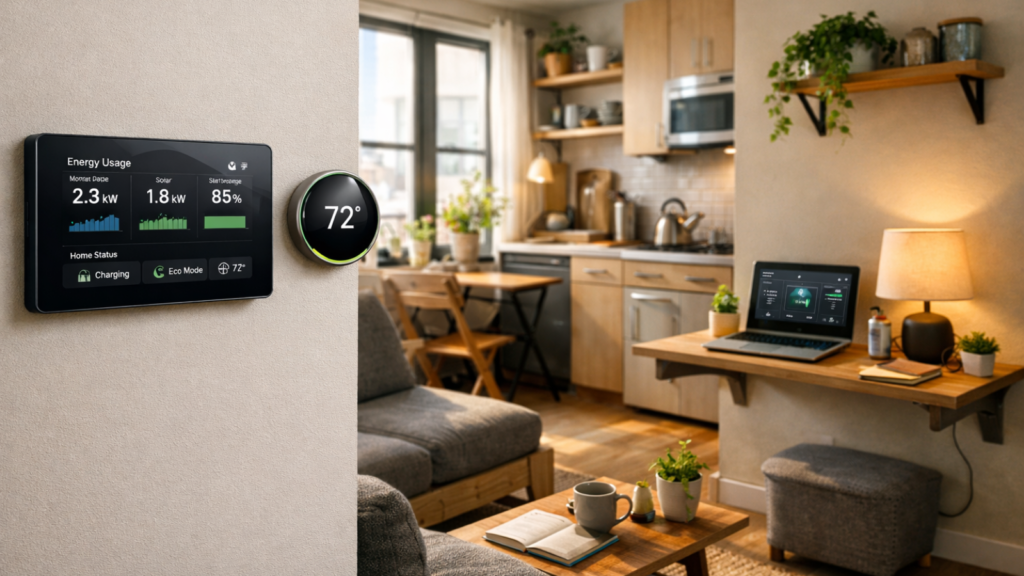
Living sustainably in compact spaces presents unique challenges. Small homes and apartments demand thoughtful choices in selecting devices that conserve energy, reduce waste, and maximise limited square footage. Modern technology offers innovative solutions that combine intelligence with environmental responsibility, making green living accessible even in tight quarters.
Eco-conscious consumers now have access to sophisticated devices that monitor consumption, automate efficiency, and significantly reduce carbon footprints. These smart innovations transform how we interact with our living spaces while protecting planetary resources.
This comprehensive guide explores 9 essential smart eco-friendly products specifically designed for small homes and apartments. Each device delivers measurable environmental benefits while enhancing comfort, convenience, and long-term cost savings.
Why Smart Eco-Friendly Products Matter for Compact Living
Compact dwellings typically consume less energy than larger houses, yet inefficiencies can still accumulate quickly. Every watt wasted in smaller spaces contributes disproportionately to utility bills and environmental impact. Smart technology bridges this gap by providing precise control over energy usage, water consumption, and resource management.
Research indicates that households using intelligent energy management systems reduce consumption by 10% to 30% annually. For apartment dwellers and small homeowners, such reductions translate into substantial savings while supporting global sustainability efforts.
Beyond financial benefits, smart eco-friendly devices offer convenience tailored to modern lifestyles. Automated systems adapt to routines, learn preferences, and optimise performance without constant manual intervention. This hands-off approach makes sustainable living effortless rather than burdensome.
1. Smart Thermostat
Product Description
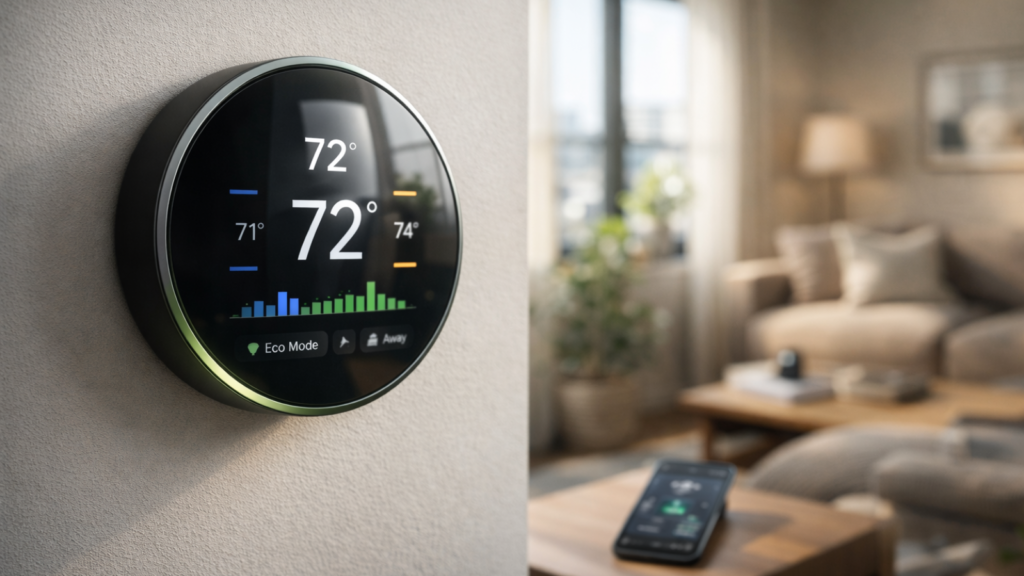
Smart thermostats represent revolutionary climate control technology that learns occupancy patterns, adjusts temperatures automatically, and provides remote management through smartphone applications. Unlike traditional programmable thermostats, intelligent models utilise sensors, algorithms, and connectivity to optimise heating and cooling based on actual usage rather than fixed schedules.
Leading models feature touch screens, voice control integration, and compatibility with virtual assistants. Installation typically requires basic electrical knowledge, though professional services remain available for complex systems.
Eco-Friendly Features
Smart thermostats dramatically reduce heating and cooling waste by detecting empty spaces. Occupancy sensors prevent unnecessary climate control during absences, while geofencing technology adjusts settings based on smartphone locations. Learning algorithms identify patterns over weeks, creating optimised schedules that maintain comfort while minimising energy expenditure.
Many models provide detailed energy reports, revealing consumption trends and suggesting further improvements. This transparency empowers users to make informed decisions about temperature preferences versus environmental impact.
Benefits for Small Spaces
Compact apartments heat and cool quickly, making precise temperature control particularly valuable. Smart thermostats prevent overshooting target temperatures, which commonly occurs with manual systems. Zonal control capabilities allow different temperature settings for various rooms, though single-zone systems still deliver substantial benefits in studio or one-bedroom layouts.
Remote access proves especially useful for apartment dwellers with irregular schedules. Adjusting climate settings from anywhere prevents wasted energy in cases where plans change unexpectedly. Annual savings typically range from £130 to £260 depending on existing system efficiency and climate zone.
Tips for Optimal Use
Position sensors away from direct sunlight, drafts, or heat sources to ensure accurate readings. Programme schedules reflecting actual routines rather than aspirational ones honest programming delivers better results than theoretical perfection. Enable learning modes during initial weeks to establish baseline patterns.
Regular maintenance includes cleaning sensors quarterly and updating firmware whenever manufacturers release improvements. Experiment with temperature setbacks during sleep hours; reducing temperatures by 2 degrees to 3 degrees overnight often goes unnoticed while saving considerable energy.
Recommended Products
Nest Learning Thermostat remains popular for intuitive interfaces and robust learning capabilities. Ecobee models include remote sensors valuable for multi-room apartments. Tado systems excel in European markets with strong radiator valve compatibility. Budget-conscious consumers might explore Hive or Honeywell options delivering core functionality at lower price points.
2. Smart Plugs (Wi-Fi Smart Plugs)
Product Description
Wi-Fi (Wireless Fidelity) smart plugs transform ordinary appliances into connected devices controllable via smartphone apps or voice commands. These compact adapters fit between wall sockets and device plugs, adding remote control, scheduling, and monitoring capabilities to lamps, fans, coffee makers, or virtually any electrical item.
Modern smart plugs require no hubs, connecting directly to home Wi-Fi networks. Setup processes typically complete within minutes through manufacturer apps. Compact designs accommodate multiple plugs on standard outlet strips without blocking adjacent sockets.
Eco-Friendly Features
Phantom power drain energy consumed by devices in standby mode accounts for 5% to 10% of residential electricity usage. Smart plugs eliminate this waste by completely cutting power to devices not in use. Scheduling functions ensure appliances run only during necessary hours, preventing accidental overnight operation.
Energy monitoring capabilities reveal which devices consume excessive power, identifying candidates for replacement or reduced usage. Real-time tracking raises awareness about consumption habits, encouraging mindful usage patterns.
Benefits for Small Spaces
Small apartments often lack sufficient outlets, leading to continuous device connections. Smart plugs enable selective activation, allowing single outlets to serve multiple purposes throughout days. Voice control proves particularly convenient in compact spaces where reaching switches might require navigating tight quarters.
Creating automated routines enhances both efficiency and ambiance. Programme lamps to illuminate before arriving home, reducing reliance on overhead lighting that heats spaces unnecessarily. Schedule window fans during cooler evening hours, minimising air conditioning demands.
Tips for Optimal Use
Prioritise plugs for devices drawing significant standby power. These include televisions, gaming consoles, desktop computers, printers, and audio equipment. Avoid using smart plugs with heat-generating appliances like space heaters or irons, as continuous monitoring increases fire risks.
Group related devices under single routines for simplified management. Create “leaving home” routines that deactivate entertainment systems, chargers, and unnecessary lighting simultaneously. Review energy monitoring data monthly to identify new opportunities for reduction.
Recommended Products
TP-Link (Twisted Pair Link) Kasa models offer reliable performance and comprehensive app features. Wemo plugs integrate seamlessly with major smart home ecosystems. Meross options provide budget-friendly alternatives without sacrificing essential functionality. For UK (United Kingdom) consumers, smart plugs with energy monitoring capabilities from brands like Tapo deliver excellent value.
3. Smart Power Strips (Energy-Monitoring Power Strips)
Product Description
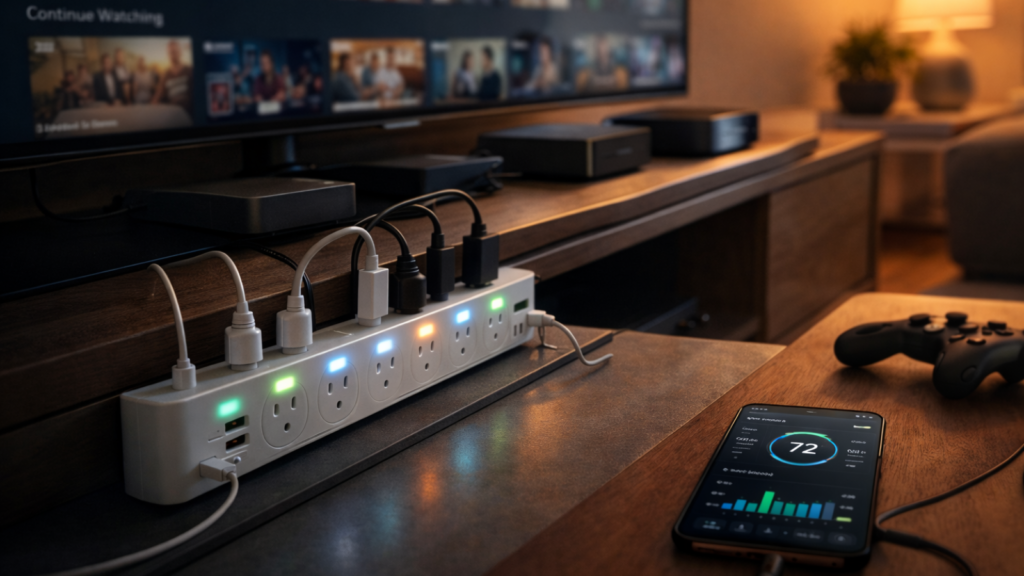
Energy-monitoring power strips extend smart plug concepts to multiple outlets simultaneously, offering centralised control for device clusters. Advanced models feature individual outlet control, USB (Universal Serial Bus) charging ports, surge protection, and detailed consumption tracking for each connected device.
Premium strips include master-controlled outlets that automatically shut off peripheral devices in cases where primary electronics enter standby mode. This master-slave configuration proves ideal for entertainment centres where televisions, game consoles, sound systems, and streaming devices naturally group together.
Eco-Friendly Features
Comprehensive energy monitoring identifies which devices consume disproportionate power, enabling targeted efficiency improvements. Automatic shut-off features prevent vampire power drain across multiple devices simultaneously, multiplying savings compared to individual smart plugs.
Many strips provide carbon footprint calculations, translating kilowatt-hours into environmental impact metrics. This contextualisation helps eco-conscious consumers understand how small changes aggregate into meaningful differences.
Benefits for Small Spaces
Single power strips replace multiple outlets cluttering limited floor space. Cable management features reduce visual chaos common in compact environments. Surge protection safeguards expensive electronics from power fluctuations that damage components and necessitate wasteful replacements.
For home office setups in small apartments, power strips enable complete workstation shutdown with single commands. This simplification removes barriers to consistent energy-saving practices, making sustainable habits effortless rather than requiring conscious effort.
Tips for Optimal Use
Position strips near device clusters. These include entertainment centres, home offices, and kitchen appliance zones. Utilise labelling features within apps to identify which outlets control specific devices. Configure master-slave relationships so peripheral devices automatically power down in cases where primary units deactivate.
Schedule complete shutdowns during extended absences like holidays or work trips. Even devices appearing “off” often consume trickle power that accumulates over days. Review monthly energy reports to benchmark improvements and adjust routines accordingly.
Recommended Products
Koogeek offers HomeKit-compatible strips for Apple ecosystem users. TP-Link power strips provide robust app functionality and individual outlet scheduling. Gosund models deliver budget-friendly options with essential monitoring features. For European markets, Brennenstuhl strips combine German engineering reliability with comprehensive energy tracking.
4. Smart LED Light Bulbs
Product Description
Intelligent LED (Light Emitting Diode) bulbs combine energy-efficient lighting technology with wireless connectivity, enabling remote control, dimming, colour customisation, and automated scheduling. Unlike traditional smart bulbs requiring separate hubs, modern direct-connect models work through Wi-Fi or Bluetooth, simplifying setup.
Available configurations include standard bulbs for general lighting, spotlight designs for directional illumination, and strip lights for accent applications. Colour-changing bulbs offer millions of hues, while white-spectrum models provide adjustable colour temperatures from warm amber to cool daylight.
Eco-Friendly Features
LED technology consumes 75% to 80% less electricity than incandescent bulbs while lasting 15 to 25 times longer. This dramatic efficiency reduces both operational energy and manufacturing waste from frequent replacements. Smart features compound savings by preventing lights from running unnecessarily through automation and remote shutoff capabilities.
Dimming capabilities further reduce consumption running bulbs at 50% brightness typically cuts energy usage by 40%. Adaptive lighting that adjusts brightness based on natural daylight maximises efficiency while maintaining adequate illumination.
Benefits for Small Spaces
Strategic lighting dramatically influences perceived spaciousness in compact environments. Colour temperature adjustments create different moods without physical modifications. Cooler temperatures enhance focus during work hours, while warmer tones promote relaxation during evenings.
Voice control eliminates needs for multiple switches in tight spaces. Automated routines simulate occupancy during absences, enhancing security without leaving lights burning continuously. Gradual wake-up lighting improves morning routines while reducing reliance on harsh overhead fixtures.
Tips for Optimal Use
Map lighting scenes to daily activities. Use bright, cool white for mornings and productivity; warm, dimmed settings for evenings and relaxation. Schedule gradual dimming before typical bedtimes, supporting natural circadian rhythms. Enable away modes that randomly activate lights, deterring potential intruders without constant illumination.
Prioritise smart bulbs for fixtures used multiple hours daily living room lamps, bedroom lighting, bathroom fixtures. Less frequently used spaces gain minimal benefit from smart capabilities. Clean bulbs quarterly to maintain optimal brightness and efficiency.
Recommended Products
Philips Hue remains industry-leading for colour accuracy, ecosystem integration, and reliability, though requiring initial hub investment. Wyze bulbs offer exceptional value for budget-conscious consumers. LIFX products eliminate hub requirements while providing vibrant colours. For UK buyers, TP-Link Tapo bulbs deliver solid performance at competitive prices.
5. Compact Robot Vacuum Cleaner
Product Description
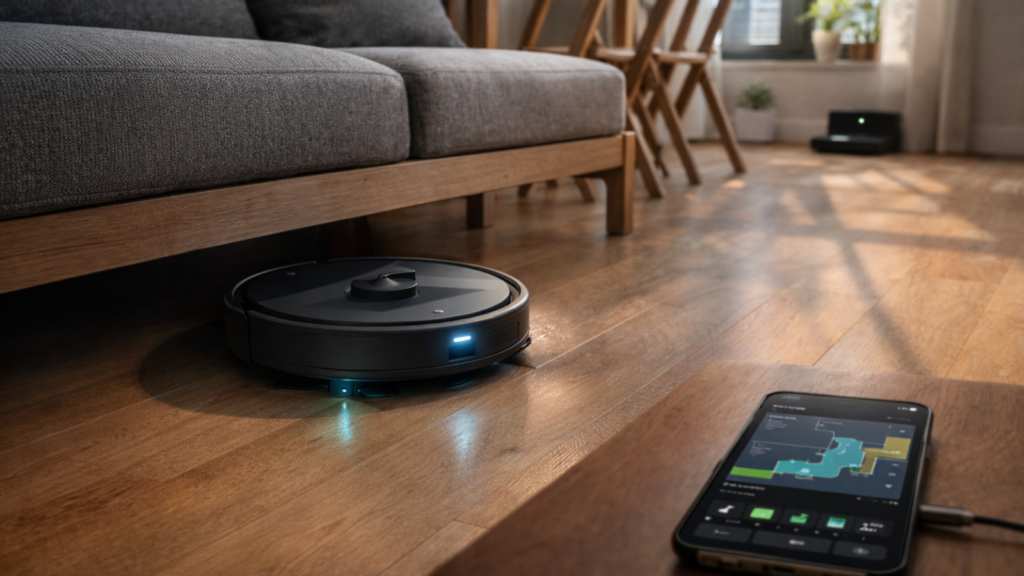
Compact robot vacuum cleaners navigate small spaces autonomously, maintaining floor cleanliness with minimal human intervention. Modern models feature intelligent mapping, obstacle detection, scheduled cleaning, and app-based control. Slim profiles allow navigation under furniture, accessing areas manual vacuuming often neglects.
Advanced units include mopping capabilities, self-emptying bases, and room-specific cleaning programmes. Battery life typically supports 60 minutes to 120 minutes of continuous operation, sufficient for most apartments. Charging docks provide automatic recharging between cleaning sessions.
Eco-Friendly Features
Energy-efficient motors consume substantially less power than traditional vacuum cleaners, typically drawing 20 watts to 40 watts during operation compared to 500 watts to 1500 watts for upright models. Scheduled cleaning maintains consistent cleanliness with shorter, more frequent sessions rather than intensive periodic cleaning, distributing energy usage.
HEPA (High Efficiency Particulate Air) filtration systems capture allergens and fine particles, improving indoor air quality. Cleaner air reduces respiratory issues, potentially decreasing medical interventions and associated environmental impacts. Reusable dustbins and washable filters minimise ongoing waste compared to disposable vacuum bags.
Benefits for Small Spaces
Automated cleaning preserves limited leisure time in busy urban lifestyles. Scheduling cleanings during absences ensures returning to tidy spaces without sacrificing personal time. Compact storage requirements suit small closets or under-furniture spaces where traditional vacuums prove unwieldy.
Consistent maintenance prevents dirt accumulation that requires intensive, energy-hungry deep cleaning sessions. Regular automated cleaning extends flooring lifespan by preventing abrasive particle buildup that degrades finishes. Quieter operation allows cleaning during early mornings or late evenings without disturbing neighbours in apartment buildings.
Tips for Optimal Use
Establish virtual boundaries around pet bowls, cables, or delicate items to prevent disruptions. Schedule cleanings during absences from home or during quieter activities like reading or working. Empty dustbins after each cleaning cycle to maintain optimal suction efficiency.
Maintain sensors and brushes monthly for consistent performance. Remove hair tangles from rolling brushes, clean cliff sensors preventing stair falls, and wipe charging contacts ensuring reliable recharging. Update firmware regularly as manufacturers often improve navigation algorithms.
Recommended Products
Eufy RoboVac series delivers strong performance for smaller budgets. iRobot Roomba models, particularly i-series and j-series, excel at navigation and obstacle avoidance. Roborock options provide excellent value, combining vacuuming and mopping capabilities. For tight budgets, Lefant or Coredy brands offer basic functionality at entry-level prices.
6. Solar-Powered Portable Chargers
Product Description
Solar-powered portable chargers harness renewable energy to charge smartphones, tablets, cameras, and other USB-powered devices. Built-in photovoltaic panels convert sunlight into electrical energy stored in internal batteries for later use. Capacities range from 10,000mAh (milliampere-hour) pocket models to 30,000mAh+ high-capacity units supporting multiple device charges.
Weather-resistant designs withstand outdoor conditions, making them ideal for balconies, windowsills, or outdoor adventures. Multiple output ports enable simultaneous charging of several devices. Many models include built-in torches, adding emergency functionality beyond simple charging.
Eco-Friendly Features
Direct solar charging eliminates reliance on grid electricity, particularly valuable in cases where balcony placement occurs in apartments. Even partial solar charging reduces cumulative grid dependency, especially for frequent phone users requiring daily top-ups. Over multi-year lifespans, solar chargers offset substantial conventional energy consumption.
Portable power reduces needs for duplicate chargers in multiple locations, decreasing manufacturing demands. Backup power capabilities extend device lifespans by preventing complete battery depletion, which degrades lithium-ion battery health. Reduced battery replacements translate into less electronic waste.
Benefits for Small Spaces
Windowsill or balcony placement utilises otherwise unused space for passive energy collection. Portable power proves invaluable during outings to parks, cafes, or coworking spaces, maintaining connectivity without seeking wall outlets. Emergency backup power provides security during unexpected outages, particularly important in high-rise apartments where stairwell lighting failures create challenges.
Cord-free charging reduces outlet congestion in space-limited environments. Single solar chargers can power personal devices for entire households, centralising charging infrastructure. Outdoor enthusiasts in urban settings maintain charged devices during weekend adventures without automotive charging.
Tips for Optimal Use
Position chargers in direct sunlight for optimal collection southern-facing windows (northern hemisphere) or northern-facing windows (southern hemisphere) receive maximum exposure. Clean solar panels monthly with soft cloths to remove dust reducing efficiency. Charge internal batteries fully via wall power before first solar use to condition cells properly.
Combine solar and conventional charging for best results. Solar top-ups extend time between wall charging rather than replacing it entirely in most urban settings. During summer months, solar charging proves most effective; winter supplementation may require increased grid charging.
Recommended Products
Anker solar chargers balance capacity, charging speed, and panel efficiency effectively. BigBlue models offer high-wattage panels for faster charging. Hiluckey units provide rugged construction suitable for outdoor balcony placement. Goal Zero products deliver premium performance with comprehensive warranties, though at higher price points.
7. Smart Leak and Water Sensors
Product Description
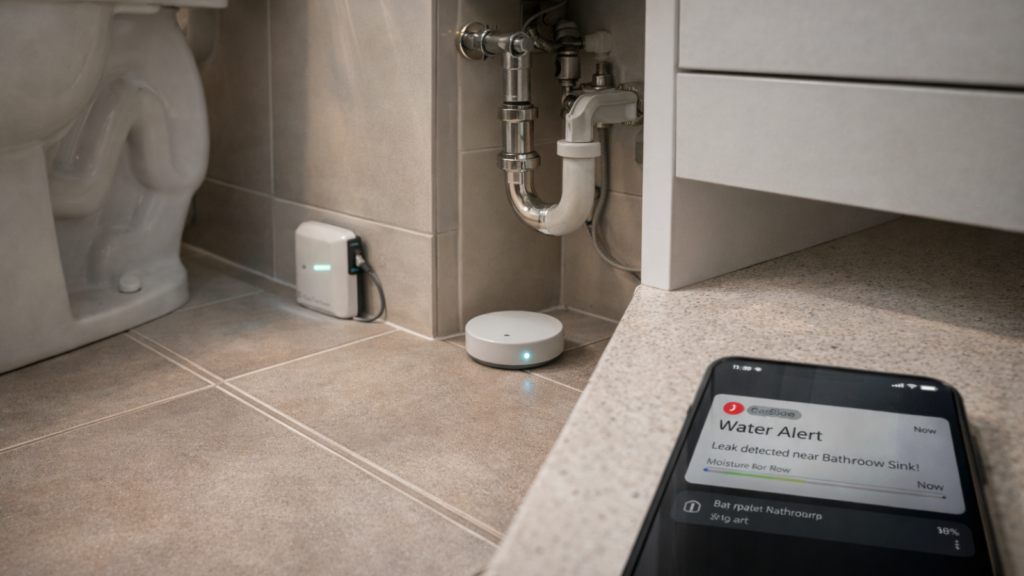
Smart water sensors detect moisture and flooding, sending immediate smartphone alerts in cases where water appears in unexpected locations. Small, battery-powered units place beneath sinks, near water heaters, behind toilets, under dishwashers, or anywhere water damage risks exist. Wireless connectivity enables remote monitoring even during absences from home.
Advanced systems include automatic water shutoff valves that stop flow at main lines in cases where sensors detect leaks, preventing catastrophic damage. Temperature sensors identify frozen pipe risks, alerting occupants before burst pipes cause floods. Battery life typically spans 1 year to 2 years before requiring replacement.
Eco-Friendly Features
Early leak detection prevents massive water waste from unnoticed drips or running toilets. Single dripping taps waste 11,000+ litres annually sensors catch such leaks immediately. Preventing water damage eliminates resource-intensive remediation requiring replacement materials, intensive cleaning, and energy-hungry dehumidification equipment.
Protecting structures from water damage extends building lifespans, reducing construction waste and embodied carbon from premature renovations. Insurance claims from water damage often result in complete material replacement rather than repairs, generating substantial waste. Prevention proves dramatically more sustainable than remediation.
Benefits for Small Spaces
Apartment dwellers face particular water damage risks, as leaks from above units or neighbouring apartments can cause sudden, extensive damage. Early detection enables quick responses before carpets, furniture, or personal belongings sustain irreparable harm. Preventing damage to belongings reduces needs for wasteful replacements.
Remote monitoring provides peace of mind during extended absences. Sensors alert users to problems requiring immediate attention, enabling arrangement of repairs before minor leaks become catastrophic floods. Many apartment insurance policies offer premium discounts for smart water detection systems.
Tips for Optimal Use
Position sensors at highest-risk locations. These include beneath sink P-traps, behind toilet connections, near washing machine hoses, under water heaters, and beside dishwasher feeds. Test sensors monthly by placing drops of water on detection pads, ensuring proper functionality. Replace batteries proactively before depletion warnings appear.
Configure alerts to multiple household members ensuring someone always receives warnings. Establish emergency response plans identifying water shutoff valve locations and emergency contact numbers for property management or plumbers. Document sensor placements for future reference, especially during moves or emergencies.
Recommended Products
Govee sensors provide reliable detection at budget-friendly prices. Aqara models integrate seamlessly with comprehensive smart home systems. Flo by Moen offers premium whole-home protection including automatic shutoff capabilities. For renters, portable units from brands like Zircon or Wasserstein require no permanent installation.
8. Automated Smart Blinds and Window Shades
Product Description
Automated window coverings open and close based on schedules, sunlight levels, temperatures, or smartphone commands. Motorised systems retrofit existing blinds or provide complete replacement solutions. Quiet motors ensure unobtrusive operation suitable for bedrooms and living spaces.
Solar-powered models eliminate electrical wiring requirements, simplifying installation in rental properties. Battery-powered alternatives offer similar flexibility. Smart hubs integrate blinds with broader home automation systems, enabling complex routines coordinating lighting, climate control, and window coverings.
Eco-Friendly Features
Strategic shade management significantly reduces heating and cooling demands. Closing blinds during peak summer heat prevents solar gain that forces air conditioning systems into overdrive. Opening south-facing shades during winter mornings allows passive solar heating, reducing furnace usage. Automated systems optimise these adjustments without requiring constant manual intervention.
Controlling natural light reduces artificial lighting needs during daytime hours. Gradual morning opening provides gentle wake-up illumination without electrical lighting. Privacy management in high-density apartment buildings allows beneficial natural light while maintaining desired seclusion.
Benefits for Small Spaces
Natural light dramatically influences perceived spaciousness in compact environments. Automated opening ensures maximum daylight penetration without sacrificing privacy during evening hours. Programmable routines create dynamic environments that shift throughout days, reducing claustrophobia common in smaller dwellings.
Remote control enables adjustment without accessing windows that might be blocked by furniture in tight layouts. Voice commands provide convenient control in cases where hands are full or during relaxation interrupted by excessive brightness. Security simulation during absences randomly adjusts shades, suggesting occupancy to potential intruders.
Tips for Optimal Use
Programme seasonal schedules reflecting changing sunlight angles. Summer routines might close east-facing shades by mid-morning preventing heat buildup, while winter programmes keep them open longer for passive warming. Coordinate blind schedules with thermostat programming for maximum climate efficiency.
Clean tracks and mechanisms quarterly to ensure smooth operation. Dust accumulation can strain motors, reducing lifespan. Calibrate limits properly so blinds avoid over-travel, which damages components. Update firmware regularly as manufacturers refine algorithms improving responsiveness and battery efficiency.
Recommended Products
IKEA Fyrtur blinds offer affordable motorisation with smart home integration. Lutron Serena shades provide premium aesthetics and whisper-quiet operation. SwitchBot Blind Tilt retrofits existing blinds cost-effectively. For custom solutions, companies like Somfy or Coulisse offer professional installation with comprehensive warranties.
9. Eco-Friendly Smart Chargers (Energy-Saving Adapters)
Product Description
Intelligent charging adapters optimise power delivery to devices, preventing overcharging and reducing phantom power consumption. GaN (Gallium Nitride) technology enables compact designs delivering high wattage output while generating minimal heat. Multi-port configurations support simultaneous device charging from single adapters.
Smart features include automatic device detection, optimal current distribution, and complete power cutoff once charging completes. USB-C (Universal Serial Bus Type-C) Power Delivery and Quick Charge protocols ensure fast, efficient charging for compatible devices. Foldable prongs enhance portability while protecting other items in bags.
Eco-Friendly Features
Traditional chargers continue drawing power even in cases where devices reach full charge or disconnect entirely. Smart chargers eliminate this waste through automatic shutoff, reducing standby consumption to near zero. GaN technology achieves higher efficiency ratings often 95% compared to traditional silicon-based chargers at 80% to 85%, converting more wall power into device charging rather than waste heat.
Consolidated charging from multi-port adapters reduces total adapter requirements, decreasing manufacturing demands and electronic waste. Single adapters replacing multiple device-specific chargers simplify electronics while reducing resource consumption. Extended device battery lifespans from optimised charging reduce premature phone and tablet replacements.
Benefits for Small Spaces
Multi-device charging from single outlets addresses outlet scarcity in older apartments. Compact GaN designs occupy less space than traditional chargers, allowing adjacent outlet usage. Reduced heat generation improves safety in tight spaces where ventilation might be limited.
Travel-friendly designs support mobile lifestyles common among urban apartment dwellers. Single chargers handling phones, tablets, laptops, and accessories eliminate luggage bulk from multiple adapters. Faster charging speeds reduce plugged-in duration, freeing outlets sooner for other uses.
Tips for Optimal Use
Match charger wattage to device requirements phones typically need 18W (watts) to 20W, tablets 30W, laptops 45W to 100W depending on models. Oversized chargers avoid damaging devices but offer no benefits beyond appropriate wattage. Conversely, underpowered chargers slow charging or fail to charge power-hungry devices during use.
Unplug chargers during travel or extended non-use periods. Though smart chargers minimise standby consumption, complete disconnection eliminates it entirely. Arrange devices by charging priority in cases where multi-port adapters are used place fastest-charging devices in highest-output ports for optimal distribution.
Recommended Products
Anker GaN chargers provide excellent efficiency across various wattage options. Ugreen offers competitive pricing without sacrificing quality. Baseus models combine high power output with compact designs. Apple users might prefer official 20W USB-C adapters for iPhones, while third-party options like Spigen or RAVPower deliver broader compatibility.
Conclusion
Smart eco-friendly products transform small homes and apartments into efficient, comfortable, sustainable spaces. These 9 essential devices smart thermostats, plugs, power strips, LED bulbs, robot vacuums, solar chargers, water sensors, automated blinds, and intelligent chargers address core opportunities for reducing environmental impact while enhancing daily living.
Compact spaces demand thoughtful solutions that maximise functionality without sacrificing sustainability. Intelligent automation removes friction from eco-friendly practices, making green living effortless rather than burdensome. Measurable savings both financial and environmental justify investments while contributing to broader climate action goals.
Begin with high-impact devices delivering immediate returns, then gradually expand systems as budgets allow and experience grows. Every product adopted represents progress toward sustainable living. Collectively, millions of small home improvements aggregate into meaningful environmental change, proving individual actions genuinely matter in addressing planetary challenges.
Frequently Asked Questions
Do smart eco-friendly products really save money?
Yes, most smart eco-friendly products deliver measurable savings through reduced energy consumption and waste prevention. Smart thermostats typically save £130 to £260 annually, while smart plugs eliminate phantom loads costing £50 to £100 yearly. Initial investments usually pay back within 1 year to 3 years, with savings continuing throughout product lifespans.
Are smart devices difficult to install in rental apartments?
Most smart eco-friendly products require no permanent installation, making them ideal for rentals. Smart plugs, power strips, LED bulbs, and portable chargers simply plug in or screw into existing fixtures. Even smart thermostats often replace existing units without wall modifications, though landlord permission might be required.
How much electricity do smart devices themselves consume?
Smart devices consume minimal power typically 0.5W to 2W in standby mode. Annual costs range from £0.50 to £2 per device, far less than savings they enable. Energy-monitoring features often reveal consumption offsetting device usage within days or weeks of installation.
Can smart home devices work without reliable internet?
Many smart devices function locally without constant internet connectivity, though remote access requires network connections. Basic automation, schedules, and controls typically work offline. Critical functions like leak detection operate independently, alerting users once connections restore. Consider cellular backup or offline-capable devices for essential functions.
Which smart eco-friendly product should I purchase first?
Smart thermostats offer fastest payback periods and largest savings for most households. Cases where thermostat replacement proves infeasible call for smart power strips eliminating phantom loads from entertainment centres, which provide excellent returns. LED smart bulbs suit those prioritising lighting upgrades combined with automation convenience.
Do solar chargers work effectively in cloudy climates?
Solar chargers function in cloudy conditions, though efficiency drops 40% to 80% compared to direct sunlight. Combination solar and grid charging proves most practical solar provides supplemental power while grid charging ensures reliable device readiness. Even partial solar offset reduces cumulative environmental impact over years of use.
Are robot vacuums truly eco-friendly compared to traditional vacuums?
Yes, robot vacuums consume 75% to 90% less energy per cleaning session than traditional uprights. Frequent, shorter cleanings distribute energy usage while maintaining cleanliness more efficiently than intensive periodic sessions. HEPA filtration improves air quality, potentially reducing health impacts associated with conventional vacuuming.
How do smart water sensors prevent environmental damage?
Early leak detection prevents massive water waste single dripping taps waste 11,000+ litres annually. Sensors also prevent water damage requiring resource-intensive remediation, replacement materials, and energy-hungry drying equipment. Protecting structures extends building lifespans, dramatically reducing construction waste and embodied carbon.
Can smart eco-friendly products increase apartment resale or rental value?
Energy-efficient upgrades increasingly appeal to eco-conscious buyers and renters. Smart devices demonstrate commitment to sustainability and modernity, differentiating properties in competitive markets. Some jurisdictions offer green certifications or energy performance ratings favourably influenced by smart technology adoption, potentially commanding premium pricing.
What happens once smart devices reach end of life?
Responsible disposal through electronics recycling programmes recovers valuable materials while preventing toxic components from entering landfills. Many manufacturers offer take-back programmes or recycling partnerships. Prioritise products from companies with established sustainability commitments and circular economy practices, ensuring responsible lifecycle management.