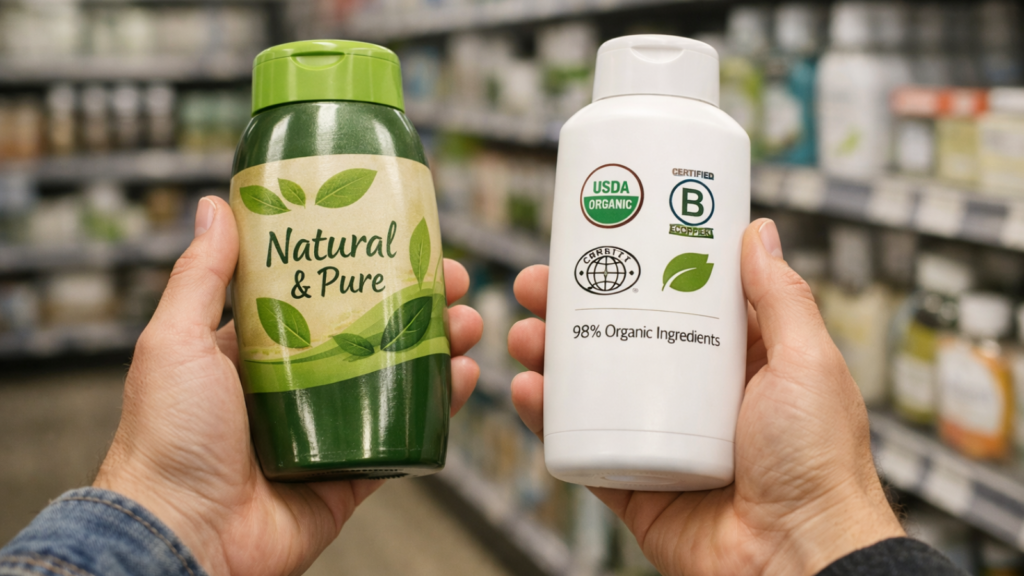
Shopping for sustainable products becomes harder each year. Brands plaster green leaves on packaging, use nature imagery everywhere, and claim environmental benefits without proof. Walk down any supermarket aisle, and you’ll encounter dozens of products marketed as “natural,” “eco-friendly,” or “green.” Yet most of these claims lack substance. Companies exploit growing environmental awareness, turning sustainability into marketing strategy rather than genuine commitment. Learning how to spot real eco-friendly products versus greenwashed ones protects your wallet and our planet.
Greenwashing costs consumers billions annually while undermining legitimate environmental efforts. Businesses spend more money on appearing green than actually becoming sustainable. False claims create confusion, making shoppers distrust all environmental marketing, even authentic efforts. This guide cuts through deception with practical verification methods, trusted certification knowledge, and comparison frameworks. You’ll gain skills to evaluate products confidently within minutes, identify red flags instantly, and make purchasing decisions aligned with your values. Armed with these tools, eco-conscious consumers can reward genuine sustainability while avoiding misleading marketing traps.
Quick Checklist: How to Tell if Products Are Truly Eco-Friendly or Just Greenwashed
Verification takes minutes, not hours. Armed with knowledge and attention to detail, eco-conscious consumers can separate genuine environmental efforts from marketing tricks. Most greenwashing collapses under basic scrutiny.
Red Flags That Usually Mean Greenwashing (Easy Signs for Beginners)
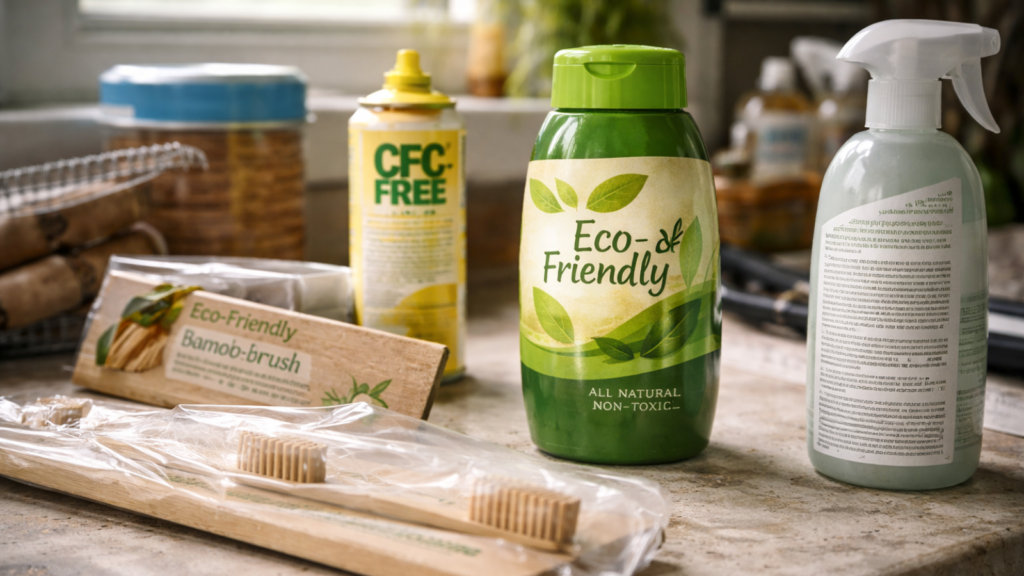
Vague language serves as warning number one. Phrases like “eco-friendly,” “natural,” or “green” mean nothing without specifics. Companies hiding behind ambiguous terms lack real environmental credentials.
Hidden trade-offs present red flag number two. Products might highlight one green feature while ignoring bigger problems. Bamboo toothbrushes wrapped in layers of plastic packaging exemplify this contradiction. Brands spotlight minor improvements to distract from major environmental damage.
Irrelevant claims create red flag number three. “CFC-free” sounds impressive until you realize Chlorofluorocarbons (CFCs) have been banned globally since 1996. Touting compliance with decades-old regulations signals deception, not leadership.
No proof equals red flag number four. Legitimate environmental claims come with data, certifications, or third-party verification. Statements lacking supporting evidence should trigger immediate skepticism. Real eco-friendly companies welcome scrutiny and provide transparency.
Misleading imagery rounds out red flag number five. Pictures of forests, oceans, or animals create emotional connections to nature without indicating actual environmental benefits. Green packaging colors and leaf graphics fool shoppers into assuming sustainability where none exists.
Short Verification Steps You Can Do in Under 2 Minutes (Labels, Copy, Ingredients)
Check certification logos first. Look for recognizable symbols from established organizations. Then verify authenticity online using registry databases. Fake badges crumble under simple searches.
Read ingredient or material lists second. Real eco-friendly products disclose contents clearly. Long chemical names or “fragrance” hiding dozens of undisclosed compounds suggest problems. Transparent companies list everything.
Search brand sustainability reports third. Companies serious about environmental impact publish annual reports with measurable goals, progress updates, and third-party audits. Missing documentation indicates greenwashing.
Review packaging claims fourth. Legitimate recycling symbols include resin identification codes (numbers 1 to 7 inside triangles). “Recyclable” without specifics misleads consumers, since most materials can technically be recycled somewhere, somehow.
Examine website transparency fifth. Genuine sustainable brands explain supply chains, factory conditions, and environmental impact calculations. Hidden information signals something to hide.
Questions to Ask on Product Pages or in Store Before Buying
Start with “What specific environmental certifications does this product hold?” Salespeople fumbling for answers reveal training gaps or absent credentials. Online product descriptions should list certifications prominently.
Follow with “Where and how was this manufactured?” Supply chain transparency separates leaders from followers. Companies shipping products globally while claiming environmental leadership face obvious contradictions.
Ask “What happens to this product at end-of-life?” Circular economy thinking considers full lifecycle impact. Products designed for landfills fail environmental tests regardless of other green marketing.
Question “What percentage of materials come from recycled or renewable sources?” Specific numbers matter more than vague claims. “Contains recycled content” might mean 1% or 99%, clarification reveals truth.
Finish with “Can you show me independent verification of environmental claims?” Third-party testing, certifications, and audits provide credibility. Self-certification means nothing.
Visual Cues Versus Substance: Packaging, Vague Claims, and Misleading Imagery
Earth tones and kraft paper packaging create false impressions. Brown cardboard looks natural but might not be recycled, recyclable, or necessary. Color psychology manipulates purchasing decisions.
Watercolor nature illustrations suggest environmental friendliness without proving anything. Beautiful forest scenes on shampoo bottles don’t indicate sustainable palm oil sourcing or biodegradable formulas. Art isn’t evidence.
Minimalist design implies sustainability through association with simplicity. Clean aesthetics and white space look pure but reveal nothing about manufacturing impact, ingredient safety, or disposal options.
“Natural” typography using handwritten fonts or organic shapes creates false connections to nature. Font choices don’t determine environmental impact. Greenwashers exploit design trends to appear authentic.
Seal-like graphics mimicking certification badges deceive quickly-scanning shoppers. Fake stamps reading “Earth Approved” or “Nature Certified” lack meaning but fool consumers trained to look for symbols.
Certifications and Labels: Which Ones Matter and How to Verify Them
Third-party verification provides strongest evidence of environmental claims. Legitimate certifications require independent audits, ongoing compliance, and public accountability. Understanding which labels matter saves time and ensures confidence.
Recognized Eco and Fair-Trade Certifications Explained (What They Actually Guarantee)
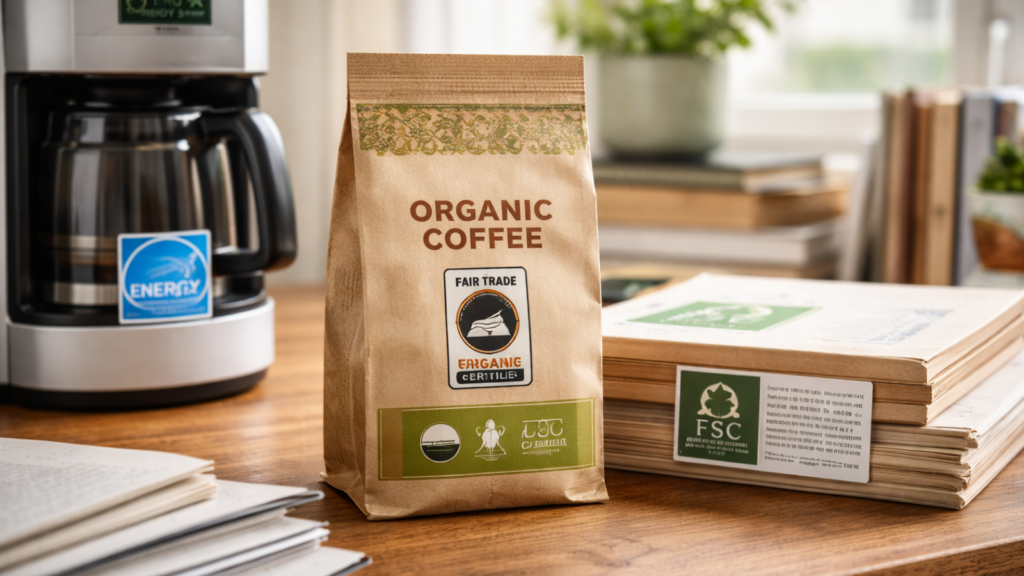
Energy Star certification guarantees energy efficiency meeting strict Environmental Protection Agency (EPA) standards. Products use 10% to 50% less energy than standard models. Verification occurs through independent testing laboratories.
Fair Trade Certified ensures farmers and workers receive fair wages, safe conditions, and community development funding. Standards prohibit child labor and forced labor while promoting environmental stewardship. Annual audits confirm compliance.
Forest Stewardship Council (FSC) certification indicates wood and paper products come from responsibly managed forests. Standards protect biodiversity, indigenous rights, and ecosystem health. Chain-of-custody tracking prevents fraud.
Global Organic Textile Standard (GOTS) certifies organic fibers throughout manufacturing. Requirements cover chemical use, wastewater treatment, and social criteria. GOTS prohibits toxic dyes, formaldehyde, and harmful metals.
Leaping Bunny certification confirms products and ingredients avoid animal testing. Companies commit to ongoing audits and supply chain monitoring. Certification covers finished products and individual ingredients.
B Corporation certification evaluates entire company performance across social and environmental metrics. Certified companies meet rigorous standards for transparency, accountability, and purpose. Recertification occurs every 3 years.
Cradle to Cradle Certified assesses products across 5 categories: material health, material reuse, renewable energy, water stewardship, and social fairness. Levels range from Basic to Platinum based on achievement.
How to Verify Claims: Registries, Certificate Numbers, and Official Lookup Tools
Certificate numbers enable verification. Look for alphanumeric codes on packaging or product pages. Visit certifying organization websites and enter codes into registry databases. Valid certificates display company names, product details, and expiration dates.
QR codes streamline verification. Scan codes with smartphones to access certification details directly. Legitimate organizations use QR technology to improve transparency and prevent counterfeiting.
Online registries list all certified companies and products. Search by brand name, product category, or certification type. Missing listings indicate false claims or expired certifications.
Contact certifying organizations directly through official channels. Email or phone inquiries receive responses within 2 to 5 business days. Representatives confirm certification status and answer questions about standards.
Mobile apps from certifying bodies provide instant verification. Apps like GoodGuide, Think Dirty, and Beat the Microbead scan product barcodes and display certification status, ingredient concerns, and environmental ratings.
Fake or Self-Made Labels: How to Spot Illegitimate Badges
Generic names lack credibility. “Eco-Certified” or “Green Approved” without specifying certifying organizations signal fabrication. Legitimate certifications always identify issuing bodies clearly.
Matching website domains to certification names exposes fakes. “CertifiedGreen.com” owned by certified company rather than independent organization indicates self-certification. Real certifiers maintain separate organizational identities.
Missing contact information raises suspicions. Legitimate certifying bodies provide addresses, phone numbers, and detailed standards documentation. Vague or absent contact details suggest nonexistent organizations.
Reverse image searches reveal copied logos. Upload badge images to Google Images or TinEye. Identical graphics appearing across unrelated websites expose fraudulent certification claims.
Professional design quality varies. Established certifications feature polished, consistent branding. Poorly designed badges with amateur graphics often indicate homemade credentials lacking authority.
Regional Differences: Which Certifications Are Meaningful in Your Country
European Union Ecolabel serves 27 member states. Standards cover environmental impact throughout product lifecycles. Recognition extends across Europe but carries less weight elsewhere.
Nordic Swan Ecolabel operates across Scandinavian countries. Rigorous standards make certification among most demanding globally. Products meeting Nordic criteria typically exceed requirements elsewhere.
China Environmental Labeling (Type I) applies within Chinese markets. Government-backed certification covers environmental performance, safety, and quality. International brands selling in China often pursue certification.
Australian Certified Organic (ACO) focuses on organic agriculture and products. Standards align with international organic principles while addressing Australian environmental conditions. Recognition strong domestically but limited internationally.
Carbon Trust Standard operates primarily within United Kingdom and Europe. Certification verifies carbon footprint measurement and reduction efforts. Standards apply to products, organizations, and supply chains.
Materials, Manufacturing, and Lifecycle: Read Between Lines of Product Claims
True environmental impact extends beyond single attributes. Manufacturing processes, material sourcing, product durability, and end-of-life disposal collectively determine sustainability. Reading between marketing lines reveals complete pictures.
How to Read Material and Ingredient Lists for Sustainability Signals
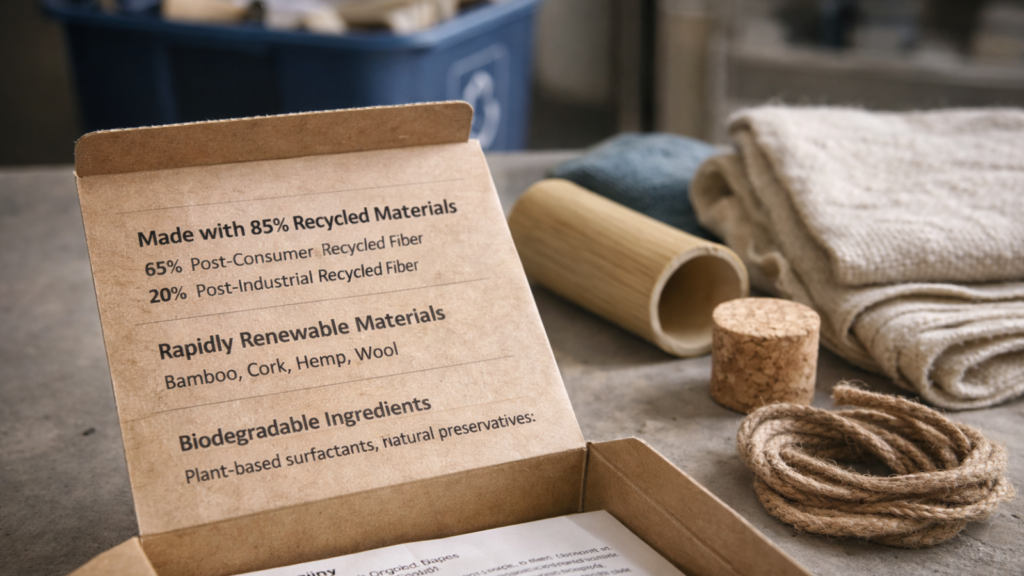
Recycled content percentages indicate commitment levels. “Made with recycled materials” ranges from 5% to 100%. Specific percentages matter, higher numbers demonstrate stronger dedication.
Post-consumer versus post-industrial recycled content differs significantly. Post-consumer recycled materials come from products consumers used and discarded. Post-industrial recycled materials derive from manufacturing waste never reaching consumers. Post-consumer content holds greater environmental value.
Rapidly renewable materials regenerate within 10 years. Bamboo, cork, hemp, and wool qualify. These materials reduce pressure on slow-growing resources like hardwood forests.
Biodegradable ingredients break down naturally without harming ecosystems. Look for plant-based surfactants, natural preservatives, and compostable components. Avoid persistent chemicals accumulating in waterways and soil.
Chemical certifications indicate safer formulations. USDA Certified Organic for food-contact products, EPA Safer Choice for cleaning products, and NSF/ANSI 305 for personal care products signal reduced toxicity.
Ingredient disclosure completeness reflects transparency. Complete lists naming every component demonstrate confidence and accountability. “And other ingredients” or “fragrance” hiding undisclosed chemicals suggest problems worth avoiding.
Durability, Repairability, and End-of-Life: True Eco Metrics to Check
Product lifespan determines overall environmental impact more than single green features. Items lasting 10 years beat items lasting 2 years even with greener materials. Longevity trumps marketing.
Repairability extends useful life significantly. Products designed for disassembly, with available replacement parts and repair manuals, reduce waste. Companies offering repair services demonstrate commitment beyond initial sale.
Modular design allows component replacement rather than full product disposal. Smartphones with replaceable batteries, laptops with upgradeable memory, and furniture with interchangeable parts exemplify sustainable design.
Take-back programs facilitate proper disposal or recycling. Brands accepting products at end-of-life for recycling or refurbishment close resource loops. Programs demonstrate extended producer responsibility.
Compostability offers ideal end-of-life solution for appropriate products. Certifications like BPI Compostable or TUV Austria OK Compost ensure breakdown in commercial or home composting systems.
Recyclability depends on local infrastructure availability. Products made from widely recycled materials (aluminum, glass, cardboard, HDPE plastic number 2, PET plastic number 1) work better than obscure materials lacking recycling facilities.
Supply-Chain Transparency: What Traceability Statements Actually Mean
“Farm to table” traceability tracks products from origin to consumer. Complete documentation includes farming practices, processing facilities, transportation methods, and storage conditions. True traceability provides accountability.
Blockchain verification creates immutable records of supply chain movements. Technology prevents falsification while enabling consumer verification through smartphone apps or website portals. Adoption grows among premium sustainable brands.
Supplier audits evaluate environmental and social practices throughout supply networks. Third-party auditors inspect facilities, review documentation, and interview workers. Audit results should be publicly available or accessible upon request.
Origin labeling identifies geographic sources of materials. “Made in” labels indicate final assembly location, which differs from component sourcing. “Grown in” or “Harvested in” labels provide better transparency.
Ingredient sourcing maps display visual representations of supply chains. Interactive maps show raw material origins, processing locations, and transportation routes. Transparency tools like sourcing maps build consumer trust.
Supply chain carbon accounting calculates emissions across entire production networks. Scope 3 emissions from suppliers often exceed Scope 1 direct emissions and Scope 2 electricity emissions. Companies measuring and reporting Scope 3 demonstrate seriousness.
Calculating Real Impact: Carbon, Water, and Waste Considerations Made Simple
Carbon footprint measures greenhouse gas emissions across product lifecycles. Measured in kilograms or tons of carbon dioxide equivalent (CO2e), footprints enable comparisons. Lower numbers indicate better climate performance.
Water footprint quantifies total water consumption including direct use and supply chain consumption. Measured in liters or gallons, calculations include blue water (surface and groundwater), green water (rainwater), and grey water (polluted water).
Lifecycle Assessment (LCA) evaluates environmental impacts from raw material extraction through manufacturing, use, and disposal. Comprehensive LCAs consider multiple impact categories: climate change, water depletion, air pollution, habitat destruction, and resource depletion.
Environmental Product Declarations (EPDs) present LCA results in standardized formats. Third-party verification ensures accuracy. EPDs enable comparing environmental performance across similar products.
Circular economy metrics measure how well products and materials cycle back into productive use. Metrics include recycled content percentage, recyclability percentage, and designed-for-disassembly scores. Higher circularity reduces virgin resource extraction.
Relative impact matters more than absolute numbers for non-experts. Comparing products reveals better choices even without understanding technical calculations. Product A using 500 liters of water beats Product B using 2,000 liters.
Head-to-Head Comparisons: Real Eco-Friendly Products Versus Greenwashed Alternatives
Comparing specific product categories reveals patterns distinguishing genuine sustainability from marketing. Understanding what to examine in each category builds evaluation skills transferable across purchases.
Cleaning Products: What to Compare (Toxicity, Biodegradability, Packaging)
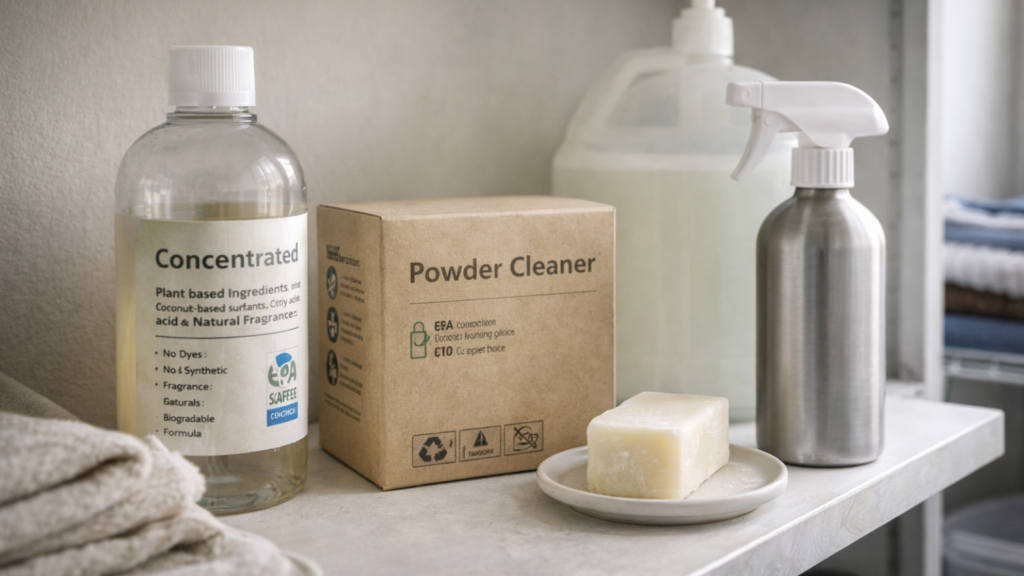
Toxicity levels determine safety for people and ecosystems. EPA Safer Choice certification identifies products meeting strict safety standards. Avoid products containing ammonia, chlorine bleach, phthalates, and triclosan.
Biodegradability ensures cleaning agents break down naturally. Look for plant-based surfactants rather than petroleum-derived chemicals. Products certified under EPA Safer Choice or EU Ecolabel meet biodegradability requirements.
Concentration affects packaging waste and transportation emissions. Concentrated formulas requiring dilution reduce packaging by 50% to 90%. Refill stations eliminate single-use containers entirely.
Packaging materials range from terrible to excellent. Worst option: virgin plastic. Better options: recycled plastic or aluminum. Best options: refillable containers, powder concentrates in cardboard, or package-free solid bars.
Real eco-friendly example: Blueland cleaning tablets use compostable packaging and reusable bottles. Formulas are EPA Safer Choice certified. Carbon footprint is 90% lower than traditional liquid cleaners.
Greenwashed alternative: major brand “natural” cleaners in green bottles. Formulas contain synthetic fragrances and preservatives. Packaging remains single-use plastic. Environmental claims lack third-party verification.
Personal Care and Cosmetics: Ingredient Red Flags and Safer Substitutes
Parabens (methylparaben, propylparaben) preserve products but disrupt hormones. Safer substitutes include phenoxyethanol, potassium sorbate, or sodium benzoate.
Phthalates hide in “fragrance” listings and increase health risks. Products labeled “phthalate-free” or listing all fragrance components avoid this problem. Essential oils provide natural scents.
Sodium lauryl sulfate (SLS) creates foam but irritates skin and harms aquatic life. Alternatives include decyl glucoside, coco glucoside, or castile soap bases.
Microplastics (polyethylene, polypropylene) pollute oceans permanently. Choose products with natural exfoliants: jojoba beads, ground walnut shells, or bamboo powder.
Synthetic colors (identified as FD&C or D&C followed by color and number) come from petroleum. Natural alternatives include fruit and vegetable extracts, mineral pigments, and plant-based dyes.
Palm oil derivatives (ingredients containing “palm,” “palmitate,” or “stearate”) drive deforestation unless certified sustainable. RSPO (Roundtable on Sustainable Palm Oil) certification ensures responsible sourcing.
Real eco-friendly example: Ethique solid shampoo bars eliminate plastic packaging completely. Ingredients are plant-based and certified cruelty-free. Products last 2 to 3 times longer than bottled shampoos.
Greenwashed alternative: luxury skincare brand marketing “botanical formulas.” Ingredient lists show synthetic fragrances, parabens, and petroleum derivatives. Packaging uses excessive layers and non-recyclable materials.
Clothing and Textiles: Sustainable Fibers, Certifications, and Longevity Tradeoffs
Organic cotton uses 91% less water than conventional cotton and avoids toxic pesticides. GOTS certification verifies organic status and ethical manufacturing.
Recycled polyester diverts plastic bottles from landfills but still sheds microplastics during washing. Consider for outerwear and bags rather than items washed frequently.
Linen and hemp require minimal water, pesticides, and processing. Both fibers offer excellent durability and biodegradability. Limited color options and higher costs present tradeoffs.
Tencel (lyocell) derives from sustainably harvested wood pulp using closed-loop manufacturing. Process recovers and reuses 99% of solvents. Material feels luxurious while maintaining environmental credentials.
Viscose and rayon come from wood pulp but use toxic chemicals and pollute waterways. Avoid unless certified under FSC and produced with closed-loop systems.
Wool provides durability and biodegradability when sourced responsibly. Look for Responsible Wool Standard (RWS) certification ensuring animal welfare and land management.
Real eco-friendly example: Patagonia fleece jackets made from 100% recycled polyester. Products carry lifetime repair guarantees. Company publishes detailed supply chain information and environmental impact data.
Greenwashed alternative: fast fashion brand “conscious collection” using 20% recycled polyester mixed with 80% virgin polyester. Collections change monthly, encouraging disposal. Recycling claims lack verification.
Electronics and Appliances: Energy Ratings, Repairability, and Planned Obsolescence
Energy efficiency ratings (Energy Star, EU Energy Label) predict operating costs and environmental impact. A-rated appliances use 20% to 40% less energy than B-rated equivalents over 10-year lifespans.
Repairability scores from iFixit evaluate how easily products can be fixed. Scores range from 1 (extremely difficult) to 10 (very easy). Higher scores indicate better sustainability.
Planned obsolescence shows through software updates ending support, non-replaceable batteries, and proprietary parts. Companies refusing independent repairs signal planned obsolescence strategies.
Modular design allows upgrading components individually. Fairphone smartphones exemplify modularity with replaceable screens, batteries, cameras, and speakers. Upgradability extends useful life significantly.
Conflict-free minerals certification ensures materials avoid funding armed conflicts. Responsible Minerals Initiative tracks tin, tantalum, tungsten, and gold (3TG) sourcing.
E-waste take-back programs accept old electronics for proper recycling. Companies operating take-back programs assume responsibility beyond point of sale.
Real eco-friendly example: Framework laptops feature completely modular designs. Users replace or upgrade any component. Company publishes repair guides and sells parts directly. Energy Star certified.
Greenwashed alternative: tech company marketing “eco-friendly” tablets with recycled aluminum cases. Batteries are glued in and irreplaceable. Software updates end after 3 years. Repairs require full device replacement.
How-To Guides, Problems, and Solutions for Beginners Who Want to Buy Better
Taking action requires practical frameworks. Following systematic approaches reduces overwhelm and builds confidence. Starting simple leads to lasting habits.
Step-by-Step Checklist: Vet Products Before You Add to Cart (Workable Template)
Step one: identify your must-haves. List essential product features, performance requirements, and budget constraints before researching environmental options. Functionality comes first.
Step two: research certification options. Determine which certifications apply to your product category. Energy Star for electronics, GOTS for textiles, and EPA Safer Choice for cleaners provide starting points.
Step three: verify certifications. Use registry databases to confirm badges on packaging or websites represent legitimate certifications. Expect verification to take 1 to 2 minutes per certification.
Step four: read ingredient or material lists. Screen for red-flag chemicals, unsustainable materials, or vague descriptions. Complete disclosure signals transparency.
Step five: assess packaging. Evaluate material type, recyclability in your local area, and amount relative to product size. Minimal packaging using recycled materials scores best.
Step six: check company transparency. Visit brand websites looking for sustainability reports, supply chain information, and specific environmental commitments with measurable goals.
Step seven: calculate lifecycle value. Consider purchase price, expected lifespan, operating costs (energy, water, consumables), and disposal costs. Total cost of ownership matters more than sticker price.
Step eight: look for repair options. Check warranty length, availability of replacement parts, and access to repair services or guides. Repairable products save money long-term.
Step nine: read independent reviews. Customer feedback reveals real-world performance, durability issues, and whether environmental claims hold up over time.
Step ten: make your decision. Balance environmental factors against practical needs and budget. Perfect options rarely exist, choose best available option considering your priorities.
How to Compare Two Competing Claims: Simple Decision Matrix You Can Use
Create comparison tables listing products across rows and criteria down columns. Visual organization clarifies differences and supports decision-making.
Rate each criterion on 1-to-5 scales. Assign 1 for poor performance, 3 for average, and 5 for excellent. Scoring quantifies subjective assessments.
Weight criteria by importance. Multiply ratings by importance weights (1x for minor factors, 2x for moderate importance, 3x for critical factors). Weighted scoring aligns with your values.
Calculate total scores by summing weighted ratings. Higher totals indicate better matches for your needs. Ties prompt deeper investigation of specific factors.
Example matrix comparing laundry detergents:
Product A (Brand X Eco):
- Certification: 5 (GOTS certified) × 3 = 15
- Ingredients: 4 (mostly plant-based) × 3 = 12
- Packaging: 5 (recycled cardboard) × 2 = 10
- Price: 2 (expensive) × 1 = 2
- Effectiveness: 4 (good reviews) × 3 = 12
- Total: 51
Product B (Brand Y Green):
- Certification: 2 (no third-party cert) × 3 = 6
- Ingredients: 3 (some synthetics) × 3 = 9
- Packaging: 3 (recycled plastic) × 2 = 6
- Price: 4 (affordable) × 1 = 4
- Effectiveness: 5 (excellent reviews) × 3 = 15
- Total: 40
Product A scores higher despite higher price because certification and ingredients received greater weight based on eco-conscious priorities.
What to Do When You Suspect Greenwashing: Report, Review, and Influence Brand Behavior
Document specific claims appearing on packaging, websites, or advertisements. Screenshots, photos, and URLs provide evidence supporting complaints.
Contact companies directly first. Email customer service describing concerns and requesting clarification or evidence. Legitimate mistakes get corrected; greenwashing gets defensive responses.
File formal complaints with regulatory agencies. Federal Trade Commission (FTC) in United States, Competition and Markets Authority (CMA) in United Kingdom, and equivalent agencies elsewhere investigate false advertising.
Leave detailed reviews on retail websites and social media. Explain what claims seemed misleading and what investigation revealed. Help other consumers make informed choices.
Support advocacy organizations fighting greenwashing. Groups like Greenpeace, Environmental Working Group (EWG), and Changing Markets Foundation investigate and expose misleading environmental marketing.
Share findings in online communities. Reddit forums, Facebook groups, and specialized websites focused on sustainability welcome discussions about greenwashing discoveries.
Choose competitors making genuine efforts. Shifting purchases rewards authenticity and punishes deception. Companies respond to revenue changes faster than complaints.
Budget-Friendly Buying Strategies: Prioritizing Impact When Money Is Limited
Buy less but buy better. One durable product lasting 5 years beats 5 cheap products lasting 1 year each. Initial cost spreads across longer useful life.
Prioritize high-impact categories. Focus limited budgets on purchases with greatest environmental consequences: energy-using appliances, frequently purchased consumables, and products containing toxic chemicals.
Consider secondhand options first. Thrift stores, consignment shops, online marketplaces, and swap groups provide sustainable products at fraction of retail prices. Reuse beats recycling.
Look for sales and bulk pricing on eco-friendly staples. Stock up when certified products go on sale. Bulk purchases reduce per-unit costs and packaging waste.
Make some products yourself. Homemade cleaning solutions using vinegar, baking soda, and castile soap cost pennies per batch. DIY skincare using simple ingredients saves money while avoiding chemicals.
Gradually transition one product category at time. Replace items as they run out rather than discarding functioning products. Staged transitions spread costs across months or years.
Split costs through buying cooperatives. Pool resources with friends or neighbors to purchase bulk quantities of eco-friendly products, sharing volume discounts.
Frequently Asked Questions
What makes products genuinely eco-friendly versus just marketed as green?
Genuine eco-friendly products carry third-party certifications, disclose complete ingredient lists, and provide lifecycle impact data. Greenwashed products rely on vague claims, nature imagery, and self-made badges without independent verification. Look for specific, verifiable evidence rather than appealing marketing.
Which eco-certifications can consumers trust most?
Energy Star, Fair Trade Certified, FSC, GOTS, Leaping Bunny, B Corporation, and Cradle to Cradle Certified represent gold standards. These require independent audits, ongoing compliance monitoring, and public accountability. Verify certificate numbers through official registries to confirm legitimacy before trusting certified claims.
How long should verification of eco-claims take?
Basic verification takes 2 to 5 minutes per product. Check certification registries online, scan ingredient lists for red flags, and review packaging recyclability. Deeper investigation into supply chains and lifecycle impacts requires 15 to 30 minutes but proves worthwhile for expensive or frequently purchased items.
Can products without certifications still be environmentally responsible?
Small companies and startups sometimes lack resources for expensive certification processes despite genuine environmental commitments. Look for detailed transparency about materials, manufacturing, and impact data. Contact companies directly asking specific questions. Response quality reveals whether absence of certification reflects budget constraints or greenwashing.
What should consumers prioritize when every choice involves tradeoffs?
Prioritize durability and repairability over single green features. Products lasting longer reduce overall environmental impact regardless of materials. Next, consider certifications addressing your primary concerns: organic for pesticides, Fair Trade for labor, Energy Star for efficiency. Accept that perfect products rarely exist.
How can consumers report suspected greenwashing effectively?
Document specific claims with screenshots and photos. File complaints with regulatory agencies: FTC in United States, CMA in United Kingdom, or equivalent authorities elsewhere. Contact companies directly explaining concerns. Share experiences through reviews and social media, helping others avoid deceptive products.
Does buying secondhand count as eco-friendly even for non-green products?
Absolutely. Secondhand purchases extend product lifecycles, reducing manufacturing demand for new items. Environmental impact from manufacturing typically exceeds use-phase impact for most products. Buying used always beats buying new regardless of original product’s environmental credentials.
Are expensive eco-friendly products worth higher costs?
Calculate total cost of ownership including purchase price, operating costs, repairs, and lifespan. Durable products often cost less long-term despite higher initial prices. However, expensive doesn’t automatically mean eco-friendly, verify certifications and quality before assuming price reflects environmental value.
What matters more: packaging or product ingredients?
Product ingredients matter more for items used directly on bodies or released into environments (cleaners, cosmetics, foods). Packaging matters more for durable goods (electronics, appliances, clothing). Ideal products optimize both, but prioritize based on product category and personal values.
How do different countries’ eco-standards compare?
European standards (EU Ecolabel, Nordic Swan) typically exceed requirements elsewhere, making EU-certified products safe choices globally. United States standards vary by category: Energy Star leads efficiency ratings while organic food certification lags behind Europe. Research certifications relevant to your location and product categories.