
Winter brings dropping temperatures, yet warming your home need not harm our planet. Eco-conscious consumers now have access to 15 sustainable heating solutions that reduce carbon footprints while maintaining comfort. This comprehensive guide explores environmentally responsible options that balance warmth, efficiency, plus long-term savings.
Why Choose Sustainable Heating Solutions?
Traditional heating systems consume vast amounts of energy, contributing significantly to greenhouse gas emissions. Residential heating accounts for approximately 42% of household energy use in many developed nations. Switching to eco-friendly alternatives delivers three major benefits: firstly, reduced environmental impact; secondly, lower energy bills; thirdly, improved indoor air quality.
Climate change demands immediate action. Each household that adopts sustainable heating methods contributes to global carbon reduction goals. Modern green heating technologies have advanced considerably, offering performance that rivals or exceeds conventional systems.
1. Solar Heating Systems
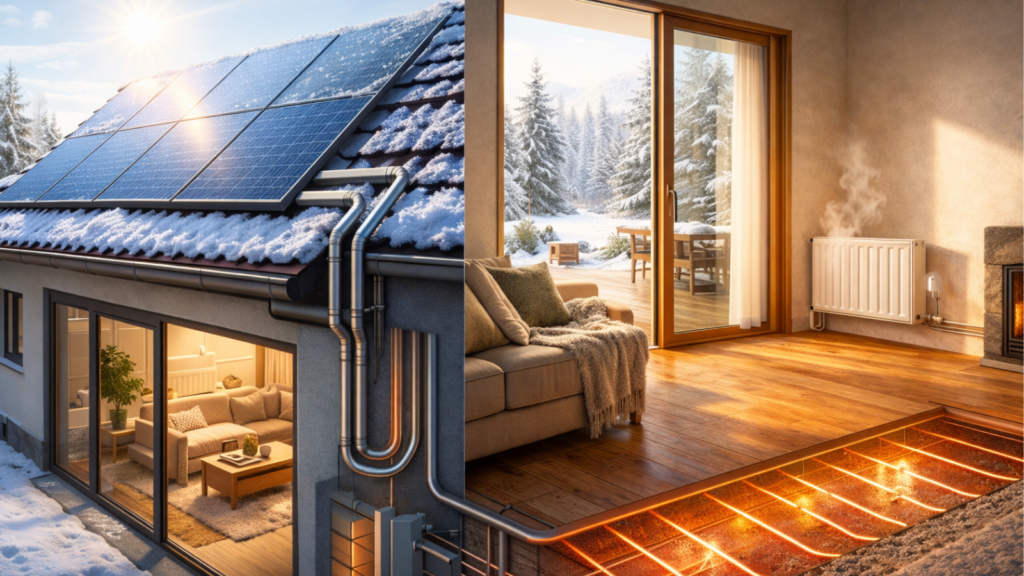
Description
Solar heating harnesses energy from sunlight to warm living spaces. Photovoltaic (PV) panels or solar thermal collectors convert sunlight into usable heat, which distributes throughout homes via radiators, underfloor systems, or forced air.
Eco Features
Solar power generates zero emissions during operation. Unlike fossil fuel systems, solar heating produces no carbon dioxide, nitrogen oxides, or particulate matter. Panels typically last 25 to 30 years, requiring minimal maintenance throughout their lifespan.
Benefits
Energy independence tops solar heating advantages. Households reduce reliance on grid electricity by 60% to 80% annually. Financial savings accumulate significantly over time, with many systems paying for themselves within 7 to 10 years (7 years to 10 years). Government incentives and tax credits further improve return on investment.
Tips for Use
Maximise efficiency by installing panels on south-facing roofs at optimal angles between 30° (30 degrees) and 45° (45 degrees). Combine solar heating with battery storage to capture excess energy for evening use. Regular cleaning of panel surfaces ensures peak performance, particularly in dusty or coastal environments.
Recommended Products
SunPower Maxeon panels offer industry-leading efficiency ratings above 22%. LG NeON series provides excellent performance in low-light conditions. For thermal collectors, Viessmann Vitosol systems deliver reliable hot water generation year-round.
2. Geothermal Heat Pumps
Description
Geothermal heat pumps, also known as Ground Source Heat Pumps (GSHP), extract warmth from stable underground temperatures. Loops of pipe buried 1.5 metres (1500 millimetres) to 3 metres (3000 millimetres) deep circulate fluid that absorbs Earth’s constant thermal energy.
Eco Features
Geothermal systems operate with remarkable efficiency, producing 3 to 5 units (3 units to 5 units) of heat for every unit of electricity consumed. This translates to efficiency ratings between 300% and 500%, vastly superior to conventional furnaces at 78% to 95% (78 percent to 95 percent).
Benefits
Operating costs drop by 40% to 60% compared to traditional heating methods. Systems function quietly, eliminating outdoor noise pollution common with air-source units. Longevity exceeds most alternatives, with indoor components lasting 25 years and ground loops functioning for 50 years or more.
Tips for Use
Proper sizing proves critical for optimal performance. Conduct professional heat loss calculations before installation to determine appropriate system capacity. Maintain consistent thermostat settings rather than frequent adjustments, which optimises efficiency. Annual inspections ensure refrigerant levels and mechanical components remain in peak condition.
Recommended Products
Bosch Compress 7000i offers smart connectivity for remote monitoring. WaterFurnace 7 Series achieves exceptional efficiency ratings. Nibe F1255 models provide versatile installation options for various property types.
3. Biomass Boilers
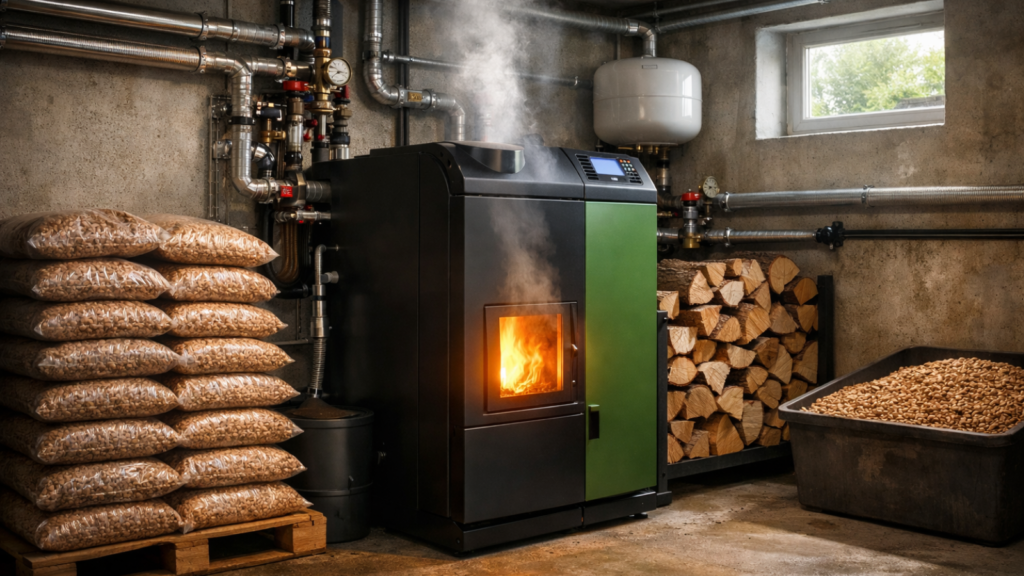
Description
Biomass boilers burn organic materials such as wood pellets, chips, or logs to generate heat. Modern designs incorporate advanced combustion technology that maximises fuel efficiency while minimising emissions.
Eco Features
Carbon neutrality defines biomass heating. Trees absorb carbon dioxide during growth, which releases back during combustion, creating a balanced cycle. Using sustainably sourced wood from managed forests ensures renewable fuel supplies indefinitely.
Benefits
Fuel costs remain significantly lower than oil or gas, with wood pellets typically costing 30% to 40% less per kilowatt-hour. Automated pellet boilers offer convenience comparable to conventional systems. Rural properties without mains gas access particularly benefit from biomass solutions.
Tips for Use
Store fuel in dry, well-ventilated locations to maintain optimal moisture content below 20%. Clean ash from combustion chambers weekly to prevent efficiency losses. Source pellets bearing ENplus A1 certification, which guarantees quality and low ash content.
Recommended Products
Ökofen Pellematic Smart stands out for automated operation plus high efficiency. Grant Spira combines compact design with powerful output. Froling P4 Pellet accommodates larger properties requiring substantial heating capacity.
4. Air Source Heat Pumps
Description
Air Source Heat Pumps (ASHP) extract warmth from outdoor air, even in freezing conditions down to -15°C (-15 degrees Celsius). Refrigerant circulates through coils, absorbing external heat that compresses and releases inside homes.
Eco Features
Electricity powers ASHPs, yet efficiency ratios of 250% to 350% mean minimal energy consumption per heat unit produced. Combining with renewable electricity sources creates completely emission-free heating. Modern refrigerants feature low Global Warming Potential (GWP), reducing environmental impact further.
Benefits
Installation costs fall below geothermal alternatives by 40% to 50%, making ASHPs accessible to more households. Systems provide both heating and cooling, eliminating separate air conditioning requirements. Maintenance needs remain minimal, typically requiring annual professional checks plus filter cleaning.
Tips for Use
Position outdoor units away from bedrooms to minimise noise disturbance. Ensure adequate airflow around compressors by maintaining 30 centimetres (300 millimetres) clearance on all sides. Defrost cycles activate automatically in cold weather, so slight efficiency drops prove normal and temporary.
Recommended Products
Daikin Altherma 3 delivers excellent cold-weather performance. Mitsubishi Ecodan systems offer whisper-quiet operation below 40 decibels. Samsung EHS Mono models provide smart home integration capabilities.
5. Infrared Heating Panels

Description
Infrared panels emit electromagnetic radiation that directly warms objects and people rather than air. Mounted on walls or ceilings, panels convert electricity into radiant heat that feels similar to sunshine.
Eco Features
Radiant heating eliminates energy waste from warming air that rises and escapes. Efficiency reaches 90% to 95%, as nearly all consumed electricity converts to usable heat. Panels contain no moving parts, requiring zero maintenance throughout 30-year lifespans.
Benefits
Installation simplicity allows DIY mounting in under an hour per panel. Instant heat delivery eliminates warm-up periods, providing comfort within seconds of activation. Allergy sufferers appreciate reduced air circulation, which minimises dust and allergen movement.
Tips for Use
Calculate wattage requirements at 60 watts (W) to 100 watts (W) per square metre, depending on insulation quality. Mount panels 2 metres (2000 millimetres) to 2.5 metres (2500 millimetres) high for optimal heat distribution. Combine with smart thermostats to schedule operation during off-peak electricity periods, maximising cost savings.
Recommended Products
Herschel Select XLS panels offer sleek designs in multiple finishes. Vitramo VIT-Serie delivers German engineering quality. Infranomic Standard panels provide budget-friendly options without compromising performance.
6. Masonry Heaters
Description
Masonry heaters, also called Finnish stoves or Russian fireplaces, store heat in massive brick or stone structures. Single wood fires heat masonry mass, which radiates warmth for 12 hours (h) to 24 hours (h) afterward.
Eco Features
Complete combustion at extremely high temperatures, between 1000°C (1000 degrees Celsius) and 1500°C (1500 degrees Celsius), produces minimal smoke and particulates. Efficiency ratings exceed 85%, vastly superior to conventional fireplaces at 10% to 30% (10 percent to 30 percent).
Benefits
Renewable wood fuel provides independence from fossil fuels and electricity grids. Radiant heat feels more comfortable than forced-air systems at lower ambient temperatures. Structures double as architectural features, adding aesthetic value to properties.
Tips for Use
Burn hot, fast fires using dry hardwood with moisture content below 20%. Avoid smouldering fires, which reduce efficiency and increase emissions. Professional installation ensures proper draft and smoke channel design. Clean chimneys annually to prevent creosote buildup.
Recommended Products
Tulikivi soapstone heaters feature traditional Finnish craftsmanship. Temp-Cast offers customisable designs for various architectural styles. Greenstone Soapstone Works provides North American alternatives with similar thermal mass properties.
7. Underfloor Heating

Description
Underfloor heating distributes warmth through pipes or electric cables embedded beneath floor surfaces. Water-based systems circulate heated fluid, while electric variants use resistance cables that generate heat when energised.
Eco Features
Lower operating temperatures compared to radiators reduce energy consumption by 15% to 30%. Heat rises naturally from floors, eliminating fan energy requirements. Compatibility with low-temperature heat sources like heat pumps maximises overall system efficiency.
Benefits
Even temperature distribution eliminates cold spots and drafts. Floor surfaces remain comfortably warm, allowing lower thermostat settings without sacrificing comfort. Hidden installation frees wall space while reducing dust circulation.
Tips for Use
Install high-quality insulation beneath heating elements to prevent downward heat loss. Wood floors require careful selection of species and finish to accommodate temperature changes. Programme systems to reach desired temperatures 30 minutes before occupancy rather than running continuously.
Recommended Products
Warmup DCM-PRO offers smart connectivity with energy monitoring. Nu-Heat LoPro10 systems suit retrofit installations with minimal floor height impact. Polypipe overlay boards simplify installation over existing floors.
8. Heat Recovery Ventilation
Description
Heat Recovery Ventilation (HRV) systems, also known as Mechanical Ventilation with Heat Recovery (MVHR), capture warmth from stale exhaust air and transfer it to incoming fresh air. Central units containing heat exchangers facilitate this transfer.
Eco Features
Recovering up to 95% of heat from exhaust air dramatically reduces heating loads. Fresh air supply improves indoor air quality without temperature penalties. Continuous balanced ventilation prevents moisture problems that waste energy through condensation and mould.
Benefits
Energy savings reach 30% to 50% in well-sealed homes. Consistent fresh air supply eliminates stuffiness while filtering outdoor pollutants. Quiet operation maintains peaceful indoor environments below 25 decibels in living spaces.
Tips for Use
Replace filters every 6 months (6 m) to maintain efficiency and air quality. Balance airflow rates room-by-room during initial commissioning. Clean heat exchanger cores annually using vacuum cleaners or compressed air.
Recommended Products
Zehnder ComfoAir systems deliver Swiss precision engineering. Paul Novus units provide compact solutions for smaller properties. Vaillant recoVAIR offers integrated control with compatible heating systems.
9. Wood-Burning Stoves
Description
Modern wood-burning stoves feature advanced combustion technology, burning fuel at high temperatures with secondary air supplies that ignite smoke particles. Clean-burn and catalytic designs meet stringent emissions standards.
Eco Features
Carbon-neutral burning uses sustainably harvested wood from managed forests. Locally sourced fuel reduces transportation emissions to minimal levels. Modern stoves achieve efficiency ratings above 75%, converting most wood energy to usable heat.
Benefits
Independence from utility companies provides energy security during power outages. Visible flames create ambiance that enhances home atmosphere. Operating costs remain remarkably low, particularly where wood sources are abundant.
Tips for Use
Burn only seasoned hardwood with moisture content below 20%, measured using inexpensive moisture metres. Build fires from top down rather than bottom up to reduce smoke during ignition. Maintain chimney temperatures above 250°F (121 degrees Celsius) to prevent creosote formation.
Recommended Products
Jøtul F 163 combines Norwegian heritage with modern efficiency. Morso 6148 offers contemporary styling with clean-burn technology. Charnwood Island III provides 360-degree viewing for central installations.
10. Passive Solar Design
Description
Passive solar design incorporates architectural features that naturally collect, store, plus distribute solar energy. South-facing windows, thermal mass materials, plus strategic overhangs work together without mechanical systems.
Eco Features
Zero energy consumption characterises passive solar heating. No moving parts mean zero maintenance requirements throughout building lifespans. Embodied energy remains minimal, using standard construction materials in intelligent configurations.
Benefits
Operating costs drop to zero for passive heating components. Enhanced natural lighting reduces electricity consumption for illumination. Property values increase due to superior comfort and lower operating expenses.
Tips for Use
Maximise south-facing glazing while minimising north-facing windows. Incorporate thermal mass through concrete floors, brick walls, or water-filled containers. Install adjustable shading to prevent summer overheating. Position deciduous trees strategically to provide summer shade while allowing winter sun penetration.
Recommended Products
Velux roof windows optimise daylighting in upper floors. Pilkington K Glass provides high insulation values for larger glazed areas. Phase Change Materials (PCM) from companies like Rubitherm store excess heat for nighttime release.
11. Electric Thermal Storage Heaters
Description
Electric Thermal Storage (ETS) heaters charge overnight using off-peak electricity, storing heat in ceramic bricks or similar high-density materials. Stored energy releases gradually throughout following days.
Eco Features
Time-shifting electricity consumption to off-peak periods reduces grid strain and supports renewable energy integration. Wind and solar generation often peaks during off-hours, making storage heaters ideal renewable energy partners.
Benefits
Electricity costs decrease by 50% to 70% through off-peak tariffs. Silent operation eliminates noise concerns associated with forced-air systems. Compact designs suit various room sizes and layouts.
Tips for Use
Programme charge levels based on weather forecasts to avoid under- or over-charging. Ensure adequate insulation to retain stored heat throughout discharge periods. Close doors to heated rooms to maximise efficiency.
Recommended Products
Dimplex Quantum heaters feature intelligent charge control. Elnur Ecombi combines storage with direct-acting heating. Stiebel Eltron SHF models offer German reliability with precise temperature management.
12. Portable Oil-Filled Radiators
Description
Oil-filled radiators contain sealed thermal fluid that heats via electric elements. Convection and radiation distribute warmth throughout rooms. Portable designs allow flexible placement wherever heat is needed.
Eco Features
Thermal fluid retains heat long after power switches off, extending warmth without continuous electricity consumption. No combustion means zero emissions at point of use. Durability ensures decades of service, reducing replacement waste.
Benefits
Affordability makes oil-filled radiators accessible to all budgets, with quality units costing £40 (40 pounds sterling) to £100 (100 pounds sterling). Portability allows room-by-room heating, warming only occupied spaces. Silent operation suits bedrooms and studies.
Tips for Use
Position radiators away from drapes and furniture to prevent fire hazards. Use timers to activate heating before room occupancy. Clean fins regularly to maintain efficient heat transfer.
Recommended Products
De’Longhi Dragon series offers energy-saving ECO modes. Warmlite WL43005Y provides budget-friendly reliable performance. Pro Breeze 2500W models deliver rapid heating for larger spaces.
13. Rocket Mass Heaters
Description
Rocket mass heaters combine rocket stove efficiency with thermal mass storage. Highly efficient combustion channels heat through cob benches or masonry beds that radiate warmth for extended periods.
Eco Features
Combustion efficiency exceeds 90%, burning small amounts of wood completely with minimal smoke. DIY construction using natural materials like clay, sand, plus straw reduces embodied energy. Versatile fuel acceptance includes small branches, reducing forest fire risk in wooded areas.
Benefits
Fuel consumption drops to one-sixth (1/6) of conventional wood stoves for equivalent heat output. Comfortable seating or sleeping surfaces combine function with warmth. Off-grid capability provides energy independence.
Tips for Use
Feed small sticks continuously rather than loading large logs. Ensure proper draft by maintaining vertical feed tube heights above 1 metre (1000 millimetres). Allow cob or masonry to cure completely before first use, typically 2 weeks (14 days) minimum.
Recommended Products
Rocket Mass Heater kits from companies like Ernie and Erica Wisner provide tested designs. Books such as “Rocket Mass Heaters” by Ianto Evans guide self-builders. Commercially available Liberator Rocket Heaters offer certified alternatives.
14. Portable Propane Heaters
Description
Propane heaters burn liquefied petroleum gas (LPG) to produce immediate heat. Modern catalytic versions operate without flames, using platinum-coated pads that glow when exposed to propane vapours.
Eco Features
Propane burns cleaner than other fossil fuels, producing 30% to 40% less carbon dioxide than coal. Portable nature eliminates ductwork and electrical installation, reducing material consumption. High efficiency converts 98% of fuel to usable heat.
Benefits
Portability enables precise heating of specific areas rather than entire homes. Independence from electricity grids ensures warmth during power failures. Immediate heat delivery requires no warm-up time.
Tips for Use
Maintain adequate ventilation to prevent carbon monoxide buildup, opening windows slightly during operation. Use oxygen depletion sensors, which automatically shut off heaters in low-oxygen conditions. Store propane cylinders outdoors in upright positions.
Recommended Products
Mr Heater Buddy series includes automatic shut-off features. Coleman Portable Propane Heater offers camping-grade reliability. Rinnai EX11CT provides thermostat control for consistent temperatures.
15. Heated Floors via Solar Water Systems
Description
Solar water heating systems collect energy through rooftop panels, storing heated water in insulated tanks. Pumps circulate stored hot water through underfloor pipes, distributing solar-captured warmth throughout living spaces.
Eco Features
Combining two proven technologies maximises renewable energy utilisation. Storage tanks buffer cloudy periods, providing consistent heating despite variable sunlight. Zero emissions during operation align with carbon reduction goals.
Benefits
Dual functionality provides both domestic hot water and space heating from single system investment. Summer excess production ensures year-round solar contribution, even where winter generation proves insufficient for complete heating needs. Government incentives often apply to solar thermal installations, improving financial returns.
Tips for Use
Size collector arrays at 0.05 square metres (m²) to 0.08 square metres (m²) per square metre of heated floor area. Install mixing valves to prevent excessively hot water from damaging floor materials. Insulate pipes thoroughly to minimise heat loss between collectors, storage, plus distribution systems.
Recommended Products
Viessmann Vitosol thermal collectors pair effectively with underfloor heating manifolds. Roth multilayer pipes handle high temperatures while maintaining flexibility. Wilo solar circulation pumps ensure reliable fluid movement with minimal electricity consumption.
Making Your Choice
Selecting from 15 eco-friendly heating alternatives requires careful consideration of your specific circumstances. Climate zone, property type, budget constraints, plus personal priorities all influence optimal choices. Energy audits identify heat loss areas, maximising investment returns through improved insulation before system installation.
Financial incentives continue expanding as governments worldwide recognise heating’s climate impact. Tax credits, grants, plus renewable heat incentive payments improve project economics significantly. Research available programmes before finalising decisions to maximise financial benefits.
Your journey toward sustainable heating begins with information gathering and honest assessment of needs. This guide provides foundation knowledge about 15 proven alternatives. Further research into specific technologies that interest you will deepen understanding, enabling confident decisions that serve both environmental and personal goals.
Winter warmth and environmental stewardship no longer exist as opposing forces. Embrace eco-friendly heating alternatives that align values with action, creating comfortable homes while protecting our shared planet.
Frequently Asked Questions
What makes heating alternatives eco-friendly?
Eco-friendly heating alternatives use renewable energy sources, operate with high efficiency, or burn carbon-neutral fuels. Systems that reduce fossil fuel consumption and minimise greenhouse gas emissions qualify as environmentally responsible. Many options combine multiple sustainability factors to maximise environmental benefits.
Do eco-friendly heaters save money long-term?
Yes, most eco-friendly heating systems deliver substantial savings over their lifespans. Initial investment costs typically recoup within 5 years (5 y) to 15 years (15 y), depending on system type and energy prices. Reduced fuel consumption and lower maintenance requirements contribute to ongoing financial advantages beyond payback periods.
Can renewable heating work in extremely cold climates?
Modern heat pumps and solar systems function effectively in temperatures as low as -25°C (-25 degrees Celsius). Proper system sizing and backup heating sources ensure comfort during extreme cold snaps. Ground source heat pumps particularly excel in cold regions due to stable underground temperatures year-round.
How much space do alternative heating systems require?
Space requirements vary significantly among technologies. Wall-mounted infrared panels and portable radiators need minimal space, while biomass boilers require fuel storage areas. Geothermal systems need outdoor ground loop space, though this doesn’t impact indoor living areas. Professional assessment determines specific spatial needs.
Are government incentives available for green heating?
Many governments worldwide offer financial incentives for renewable heating installations. UK’s Boiler Upgrade Scheme provides grants up to £7,500 for heat pump installations. US federal tax credits cover 30% of eligible system costs. Check local and national programmes to maximise available financial support.
Which eco-friendly heater suits apartments best?
Infrared panels, oil-filled radiators, plus air source heat pumps adapted for flats work well in apartment settings. Space constraints and installation permissions often limit options. Portable solutions offer flexibility without permanent modifications, suiting rental situations.
How often do green heating systems need maintenance?
Maintenance schedules vary by technology. Heat pumps require annual professional servicing plus quarterly filter checks. Biomass boilers need weekly ash removal and annual cleaning. Solar panels typically need only occasional cleaning. Most systems demand less maintenance than traditional boilers.
Can different eco-friendly systems combine together?
Hybrid systems combining multiple technologies often deliver optimal results. Solar panels paired with heat pumps maximise renewable energy utilisation. Biomass boilers provide backup for solar thermal systems during cloudy periods. Professional design ensures compatible systems work harmoniously.
What size system does my home need?
Proper sizing depends on multiple factors including floor area, insulation quality, local climate, plus building orientation. Professional heat loss calculations determine precise requirements. Undersized systems struggle to maintain comfort, while oversized units waste energy through frequent cycling. Consultation with certified installers ensures appropriate sizing.
Do eco-friendly heaters increase property value?
Sustainable heating systems typically increase property values by 5% to 10%. Buyers increasingly prioritise energy efficiency and lower operating costs. Green certifications and Energy Performance Certificate (EPC) improvements enhance marketability. Long-term savings and environmental benefits appeal to growing numbers of eco-conscious purchasers.