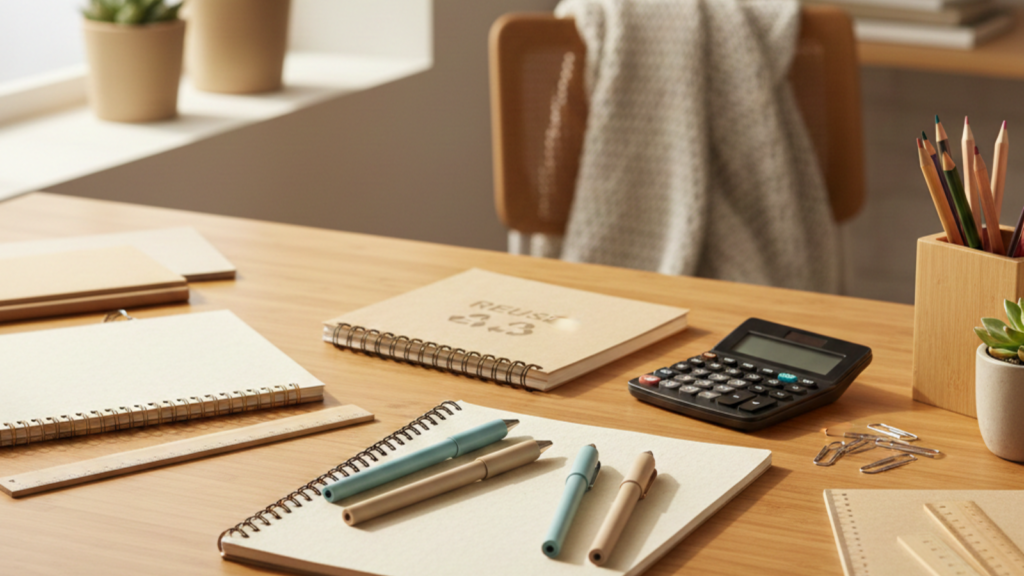
Exam season brings stress, late-night study sessions, and mountains of stationery. Most students rely on conventional products without realising their environmental impact. Plastic pens, synthetic highlighters, and disposable notebooks contribute to waste that takes centuries to decompose.
Eco-conscious consumers now seek sustainable alternatives for exam preparation. Switching to environmentally responsible tools reduces carbon footprints while maintaining study efficiency. This guide explores 9 innovative products designed for learners who value both academic success and planetary health.
Modern green stationery combines functionality with sustainability. From biodegradable writing instruments to solar-powered devices, each tool serves dual purposes. Students gain quality study aids while supporting manufacturers committed to ecological preservation.
1. Recycled Paper Notebooks with Seed-Embedded Covers
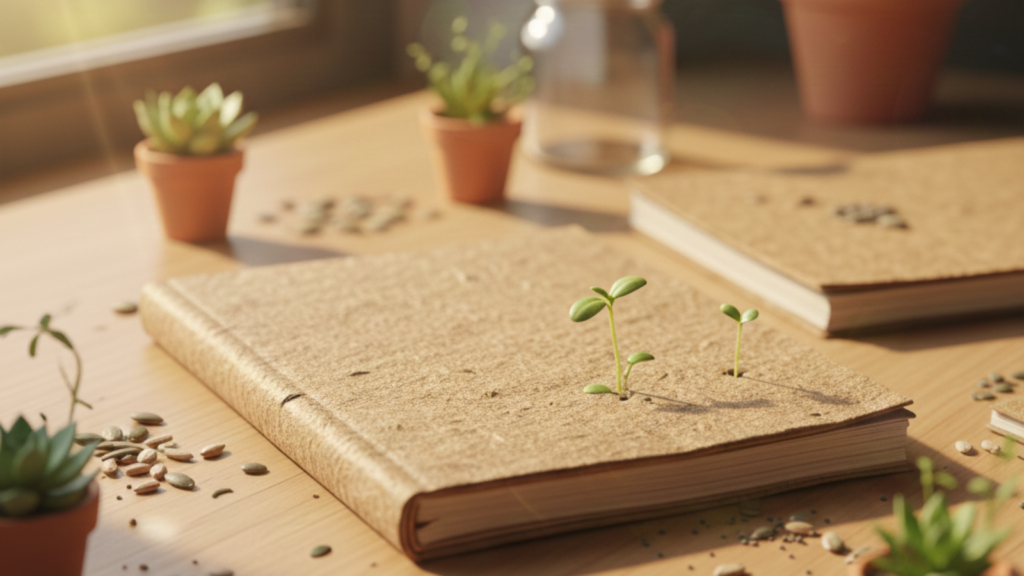
Traditional notebooks end up in landfills after exams finish. Recycled paper notebooks offer superior alternatives for environmentally aware students. Manufacturers create pages from post-consumer waste paper, reducing demand for virgin pulp and saving forests.
Description
Seed-embedded cover notebooks feature pages made from 100% recycled materials. Covers contain wildflower or herb seeds embedded within biodegradable paper. Students plant covers in soil after finishing notebooks, transforming waste into blooming gardens.
Pages accept various writing instruments without bleeding. Wire bindings use recycled metal, while some versions feature stitched spines for complete compostability. Sizes range from pocket journals to A4 examination notebooks.
Eco Features
Production processes consume 70% less water compared to conventional notebook manufacturing. Energy requirements drop by 40% when using recycled fibres. Carbon emissions decrease significantly since transportation of raw timber becomes unnecessary.
Seed paper covers biodegrade within 6 to 8 weeks (42 to 56 days) after planting. Wildflowers attract pollinators, supporting local ecosystems. Zero plastic packaging ensures complete environmental responsibility from purchase through disposal.
Benefits
Students save trees while maintaining quality note-taking experiences. Planting finished notebooks creates positive environmental actions, reinforcing sustainable habits. Durable construction withstands heavy exam preparation usage.
Guilt-free disposal eliminates end-of-term waste anxiety. Gardens flourishing from planted covers provide visual reminders of environmental contributions. Affordable pricing matches conventional notebook costs, removing financial barriers to sustainable choices.
Tips for Use
Store notebooks in dry locations to preserve seed viability. Write using eco-friendly pens to maintain complete sustainability. Tear covers carefully when planting to maximise germination success.
Water planted covers regularly during initial growth phases. Choose native wildflower varieties to support local biodiversity. Share planting experiences on social media to inspire peers toward greener study habits.
Recommended Products
Botanical PaperWorks offers customisable seed paper notebooks with various wildflower options. Karst Stone Paper produces notebooks from calcium carbonate, requiring zero trees or water. Ecojot creates Canadian-made recycled notebooks with minimalist designs.
Where to Buy
Purchase from online retailers including Amazon, Etsy, and direct manufacturer websites. Health food stores and eco-boutiques stock local brands. University bookshops increasingly feature sustainable stationery sections.
2. Bamboo Mechanical Pencils
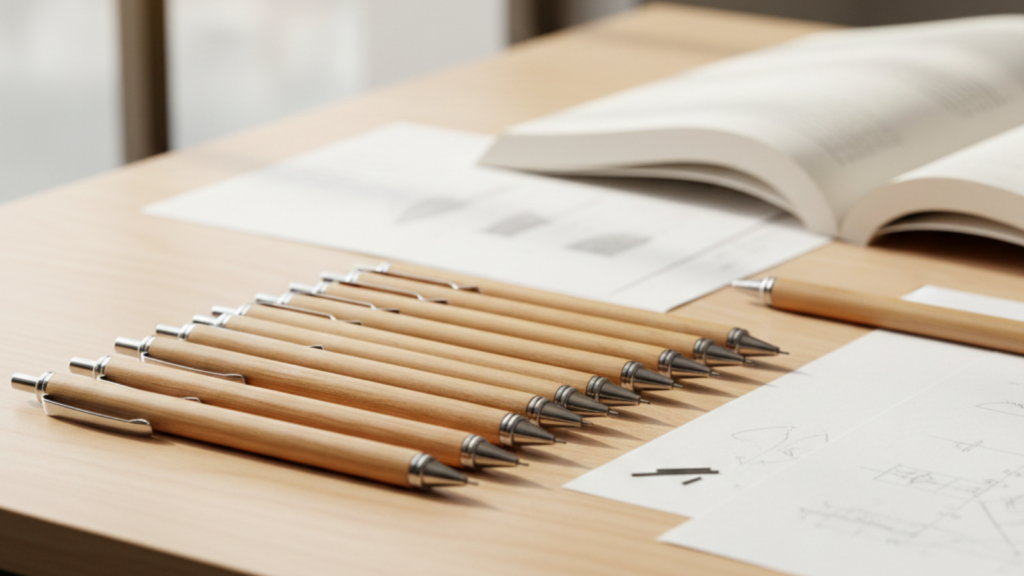
Plastic mechanical pencils dominate student pencil cases worldwide. Bamboo mechanical pencils provide sustainable alternatives without sacrificing functionality. Bamboo grows rapidly without pesticides, making cultivation highly sustainable.
Description
Bamboo mechanical pencils feature bodies crafted from sustainably harvested bamboo timber. Internal mechanisms use recycled metals or durable plastics. Refillable lead cartridges extend product lifespans significantly beyond disposable alternatives.
Ergonomic designs prevent hand fatigue during lengthy study sessions. Natural bamboo finishes create unique grain patterns, making each pencil distinctive. Comfortable grips ensure precise control for mathematical calculations and detailed diagrams.
Eco Features
Bamboo regenerates within 3 to 5 years (1,095 to 1,825 days), compared to hardwood trees requiring decades. Carbon sequestration during growth offsets manufacturing emissions. Biodegradable bamboo decomposes naturally, unlike petroleum-based plastic alternatives.
Manufacturing processes avoid toxic chemicals used in plastic production. Minimal water requirements during bamboo cultivation preserve freshwater resources. Sustainable forestry certifications ensure responsible harvesting practices.
Benefits
Refillable designs reduce replacement frequency, saving money over academic years. Natural antibacterial properties of bamboo maintain hygiene during shared study sessions. Lightweight construction makes carrying multiple pencils effortless.
Smooth writing experiences rival premium plastic mechanical pencils. Aesthetic appeal elevates study spaces with natural elegance. Supporting bamboo cultivation encourages sustainable agriculture practices globally.
Tips for Use
Store refill leads in original containers to prevent breakage. Clean mechanisms periodically using soft brushes to maintain smooth operation. Avoid excessive force when advancing leads to preserve internal components.
Purchase extra refills in bulk to reduce packaging waste. Engrave names onto bamboo surfaces for personalisation and theft prevention. Combine with recycled paper for completely sustainable writing setups.
Recommended Products
Onyx and Green manufactures bamboo mechanical pencils with recycled metal clips. Sprout World creates plantable pencils that grow into herbs after use. Caran d’Ache produces Swiss-engineered bamboo mechanical pencils with precision mechanisms.
Where to Buy
Available through Amazon, specialty stationery retailers, and eco-friendly online marketplaces. Art supply stores stock premium bamboo writing instruments. Campus bookshops expand sustainable product ranges annually.
3. Solar-Powered LED Reading Lamps
Late-night study sessions consume significant electrical energy. Solar-powered LED reading lamps harness renewable energy for sustainable illumination. Modern photovoltaic technology delivers bright, adjustable lighting without grid dependence.
Description
Portable reading lamps incorporate solar panels for daytime charging. LED bulbs provide adjustable brightness levels suitable for various study environments. Rechargeable lithium-ion batteries store energy for 6 to 10 hours (360 to 600 minutes) of continuous use.
Flexible necks allow precise light positioning for textbooks, notes, or laptop screens. USB charging ports offer backup power options during cloudy periods. Compact designs facilitate easy transportation between library, dormitory, and home study spaces.
Eco Features
Solar charging eliminates fossil fuel dependency for electricity generation. LED technology consumes 75% less energy compared to incandescent bulbs. Long-lasting LEDs reduce electronic waste from frequent bulb replacements.
Rechargeable batteries prevent disposable battery waste accumulation. Durable construction extends product lifespans beyond 5 years (1,825 days) with proper care. Minimal packaging uses recycled cardboard rather than plastic clamshells.
Benefits
Zero electricity costs reduce student living expenses significantly. Independence from power outlets enables studying in libraries, parks, or outdoor locations. Adjustable brightness prevents eye strain during extended reading sessions.
Emergency backup lighting during power outages ensures uninterrupted study schedules. Reduced carbon footprints align with environmental values without compromising academic performance. Portable designs support flexible study habits and various learning environments.
Tips for Use
Position solar panels in direct sunlight for optimal charging efficiency. Clean panels monthly using soft cloths to maintain absorption rates. Charge fully before first use to condition battery longevity.
Use lower brightness settings when ambient light supplements task lighting. Store lamps in cool, dry locations to preserve battery health. Combine with natural daylight whenever possible to extend battery reserves.
Recommended Products
MPOWERD produces inflatable solar lanterns perfect for portable studying. Solio manufactures rugged solar desk lamps with multiple brightness modes. Goal Zero creates versatile solar lighting systems with phone charging capabilities.
Where to Buy
Outdoor retailers stock solar lighting alongside camping equipment. Online marketplaces including Amazon and eBay feature extensive selections. Renewable energy shops provide expert guidance on solar product selection.
4. Plantable Highlighters Made from Natural Pigments
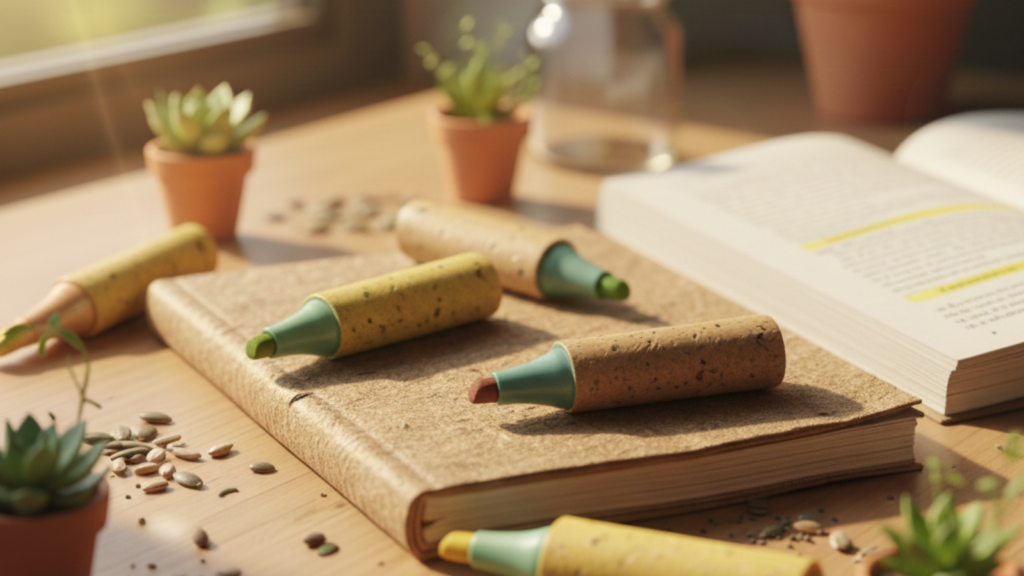
Conventional highlighters contain synthetic dyes and plastic casings. Plantable highlighters revolutionise exam preparation with biodegradable materials and natural colorants. Students highlight key concepts while minimising environmental harm.
Description
Highlighter bodies consist of recycled paper infused with vegetable seeds. Natural pigments derived from fruits, vegetables, and minerals create vibrant colours. Water-based inks produce clear markings without toxic volatile organic compounds.
Colours include yellow from turmeric, pink from beetroot, and green from spirulina. Chisel tips enable both broad highlighting and fine underlining. After depletion, entire highlighters plant directly into soil, sprouting herbs or flowers.
Eco Features
Natural pigments biodegrade completely without soil contamination. Zero plastic components eliminate petroleum-based material consumption. Seed-embedded casings transform waste into productive plant growth.
Water-based formulations avoid harmful solvents found in traditional highlighters. Compostable packaging uses plant-based materials rather than cellophane. Carbon-neutral shipping options reduce transportation impacts.
Benefits
Non-toxic formulations protect health during prolonged study sessions. Vibrant colours remain visible under various lighting conditions. Planting used highlighters creates rewarding sustainability rituals.
Allergen-free compositions suit sensitive individuals. Refillable options extend usability while minimising waste. Supporting natural pigment industries encourages agricultural diversification.
Tips for Use
Test colours on scrap paper before highlighting important notes. Store horizontally to prevent ink settling. Cap immediately after use to maintain ink moisture.
Allow highlighted sections to dry fully before closing books. Plant used highlighters in nutrient-rich soil for best germination. Rotate colours to create visual study aids through colour-coding systems.
Recommended Products
Sprout World offers plantable highlighters growing into basil, thyme, or cherry tomatoes. Eco-Highlighter produces natural pigment markers with compostable casings. Seedling Stationery creates customisable highlighter sets with regional seed varieties.
Where to Buy
Eco-friendly online retailers specialise in plantable stationery. Health food stores expand product lines to include sustainable school supplies. Direct purchases from manufacturer websites often include bulk discounts.
5. Reusable Whiteboard Notebooks
Single-use paper creates enormous waste during intensive exam preparation. Reusable whiteboard notebooks combine traditional note-taking with digital-age sustainability. Students write, erase, and rewrite countless times on durable pages.
Description
Synthetic paper made from stone powder creates smooth, erasable surfaces. Waterproof pages withstand accidental spills without damage. Compatible with dry-erase markers and specially designed erasable pens.
Spiral bindings allow pages to lie flat for comfortable writing. Cloud-uploading capabilities via companion apps digitise notes before erasing. Microfibre cloths or damp tissues erase markings completely.
Eco Features
Single notebooks replace hundreds of disposable pages annually. Stone paper production requires zero trees or water. Durable construction ensures 5-year (1,825-day) minimum lifespans with regular use.
Reduced paper consumption decreases deforestation pressures globally. Eliminated need for notebook replacement reduces manufacturing emissions. Recyclable at end-of-life through specialised programmes.
Benefits
Unlimited practice space perfect for mathematical problems and diagram repetition. Digital backups preserve important notes while freeing physical storage. Cost savings accumulate significantly over academic careers.
Portability replaces heavy textbook stacks with lightweight notebooks. Immediate error correction encourages experimental learning approaches. Cleaner study spaces result from eliminated paper clutter.
Tips for Use
Photograph pages before erasing to maintain digital archives. Use recommended pens to prevent ghosting or staining. Clean pages weekly using mild soap solutions for deep cleaning.
Avoid excessive pressure to prevent surface damage. Store notebooks flat to maintain page alignment. Combine with cloud storage services for organised digital note libraries.
Recommended Products
Rocketbook produces erasable notebooks with app integration for cloud uploads. Wipebook creates professional-grade reusable notebooks for technical subjects. Newyes manufactures budget-friendly erasable notebooks in various sizes.
Where to Buy
Electronics retailers stock reusable notebooks alongside tablets. Online marketplaces offer comprehensive selections with customer reviews. University technology stores feature demonstration models for hands-on evaluation.
6. Organic Cotton Study Pillow Supports

Prolonged sitting during study marathons causes posture-related discomfort. Organic cotton study pillow supports provide ergonomic comfort without synthetic materials. Chemical-free production protects both health and environment.
Description
Lumbar support pillows feature covers made from 100% certified organic cotton. Fillings consist of natural buckwheat hulls, kapok fibres, or organic cotton batting. Adjustable straps secure pillows to various chair types.
Breathable fabrics prevent overheating during lengthy study sessions. Removable, machine-washable covers maintain hygiene standards. Contoured shapes support natural spine curvature, reducing back strain.
Eco Features
Organic cotton cultivation avoids synthetic pesticides and fertilisers. Water-efficient farming practices reduce environmental footprints. Natural fibre biodegradability ensures responsible end-of-life disposal.
Fair trade certifications guarantee ethical labour practices. Zero synthetic materials eliminate microplastic pollution. Carbon-neutral shipping options minimise transportation impacts.
Benefits
Improved posture enhances concentration and reduces fatigue. Natural materials prevent allergic reactions common with synthetic foams. Durable construction outlasts cheap synthetic alternatives.
Temperature regulation maintains comfort across seasons. Supporting organic agriculture encourages sustainable farming transitions. Adjustable firmness accommodates individual comfort preferences.
Tips for Use
Position pillows at lower back curves for optimal support. Adjust filling amounts to achieve desired firmness levels. Wash covers monthly in cold water to maintain fabric integrity.
Air-dry pillows in sunlight to refresh natural fillings. Rotate filling materials periodically to prevent compression. Combine with ergonomic seating for comprehensive comfort solutions.
Recommended Products
Brentwood Home manufactures organic cotton lumbar pillows with buckwheat fills. Coyuchi creates GOTS-certified organic cotton support cushions. White Lotus Home produces customisable organic pillows for various body types.
Where to Buy
Bedding specialty stores feature organic pillow collections. Health-focused retailers prioritise chemical-free comfort products. Online organic marketplaces provide detailed material certifications.
7. Kinetic Energy Desk Organisers
Cluttered desks hinder productivity and focus during exam preparation. Kinetic energy desk organisers harness movement to generate power for small devices. Sustainable design meets functional storage solutions.
Description
Multi-compartment organisers feature built-in kinetic generators. Moving parts like rotating pen holders or sliding drawers capture motion energy. Generated electricity charges smartphones, calculators, or LED desk lamps.
Sustainable materials including reclaimed wood, bamboo, or recycled plastics construct organisers. Modular designs accommodate personalised storage configurations. Compact footprints suit small dormitory desks.
Eco Features
Self-powered systems eliminate battery waste and grid electricity consumption. Reclaimed materials give new life to discarded resources. Durable construction ensures decade-long (3,650-day) usability.
Energy generation from routine movements demonstrates practical renewable energy applications. Minimal manufacturing processes reduce carbon footprints. Recyclable components facilitate responsible disposal.
Benefits
Generated power reduces reliance on wall outlets and disposable batteries. Organised storage improves study efficiency and reduces time wasted searching for supplies. Educational value demonstrates renewable energy principles.
Space-saving designs maximise limited desk real estate. Aesthetic appeal creates motivating study environments. Supporting innovative green technology encourages sustainable product development.
Tips for Use
Position organisers within easy reach to maximise kinetic energy generation. Use regularly to maintain charge capacities. Clean compartments weekly to prevent dust accumulation.
Combine with other kinetic devices to create comprehensive self-powered study spaces. Monitor energy generation to understand renewable power capabilities. Share experiences to inspire eco-innovation adoption among peers.
Recommended Products
K-TOR manufactures pedal-powered generators adaptable to desk setups. Perpetual Kid creates novelty kinetic organisers with educational components. DIY kits from various makers allow custom kinetic organiser construction.
Where to Buy
Innovation-focused retailers showcase kinetic energy products. Online crowdfunding platforms feature emerging kinetic technology products. Renewable energy exhibitions display cutting-edge sustainable gadgets.
8. Biodegradable Sticky Notes from Agricultural Waste
Sticky notes facilitate exam preparation through visual reminders and quick annotations. Biodegradable sticky notes made from agricultural waste transform farming byproducts into useful study tools. Sustainable adhesives complete environmentally responsible designs.
Description
Paper bases use waste materials from rice husks, sugarcane bagasse, or wheat straw. Natural plant-based adhesives provide secure attachment without synthetic chemicals. Various sizes and colours organise information hierarchically.
Completely compostable components break down within 90 days (approximately 3 months) in proper conditions. Smooth surfaces accept ink from various writing instruments. Adhesive strength allows repositioning without residue.
Eco Features
Agricultural waste utilisation prevents burning practices that release greenhouse gases. Zero virgin pulp consumption preserves forests. Composting returns nutrients to soil, closing material loops.
Chemical-free processing protects waterways from industrial pollution. Reduced transportation distances from farms to manufacturing facilities lower carbon emissions. Supporting agricultural waste industries creates additional farmer income streams.
Benefits
Performance matches conventional sticky notes without environmental guilt. Waste material transformation demonstrates circular economy principles. Supporting agricultural communities strengthens rural economies.
Compostable disposal integrates seamlessly with organic waste streams. Vibrant colours from natural dyes maintain visual appeal. Affordable pricing encourages widespread adoption.
Tips for Use
Store in cool, dry locations to maintain adhesive effectiveness. Compost used notes in designated bins rather than regular rubbish. Combine colour-coding with note-taking systems for enhanced organisation.
Trim larger notes to custom sizes for specific applications. Avoid placing on delicate surfaces where adhesive might leave marks. Purchase in bulk to reduce packaging waste.
Recommended Products
Agood Company produces sticky notes from stone paper and sugarcane. Strawbees creates educational sticky notes from wheat straw. Elephant Poo Paper manufactures sticky notes from processed elephant dung fibres.
Where to Buy
Eco-stationery websites offer extensive sustainable sticky note collections. Office supply chains increasingly stock green alternatives. Fair trade shops support ethical agricultural waste product lines.
9. Hand-Crank Powered Pencil Sharpeners
Electric sharpeners consume unnecessary energy for simple tasks. Hand-crank powered pencil sharpeners provide efficient, sustainable alternatives. Mechanical operation eliminates electricity dependence entirely.
Description
Precision-engineered blades sharpen pencils to perfect points through manual cranking. Durable metal construction ensures lifelong reliability without electronic components. Desktop-mounted or portable designs suit various study locations.
Transparent shaving receptacles indicate when emptying becomes necessary. Adjustable settings accommodate different pencil diameters. Clamps or suction bases secure sharpeners during operation.
Eco Features
Zero electricity consumption eliminates ongoing energy costs and grid dependency. Metal components last indefinitely with minimal maintenance, preventing electronic waste. Sharpenings compost naturally, returning carbon to soil.
Manufacturing simplicity reduces production emissions compared to electric alternatives. Repairable designs extend usability through blade replacements rather than whole-unit disposal. Minimal packaging reflects product simplicity.
Benefits
Reliable operation continues during power outages or in locations without electricity. Silent functioning avoids disturbing library or shared study spaces. Precise sharpening maintains consistent pencil performance.
One-time purchase eliminates replacement costs associated with battery or electric sharpeners. Portable versions enable outdoor studying in parks or gardens. Meditative cranking motion provides study breaks without screen time.
Tips for Use
Empty shaving receptacles before they become full to prevent jamming. Clean blades monthly using small brushes to remove graphite buildup. Apply light machine oil annually to maintain smooth cranking action.
Secure sharpeners firmly before use to prevent movement. Sharpen pencils in smooth, consistent rotations for best results. Compost pencil shavings to complete sustainable cycles.
Recommended Products
Classroom Friendly Supplies manufactures heavy-duty hand-crank sharpeners built for decades of use. Carl Angel-5 produces premium Japanese sharpeners with adjustable points. Staedtler creates portable hand-crank sharpeners for travel studying.
Where to Buy
Art supply stores stock professional-grade manual sharpeners. Office retailers maintain mechanical sharpener inventories despite electric popularity. Online vintage marketplaces offer restored classic sharpeners with proven longevity.
Conclusion
Sustainable exam preparation transforms studying from environmentally harmful to ecologically beneficial. These 9 eco-friendly tools demonstrate that academic success need not compromise planetary health. Each product serves dual purposes: supporting educational goals while reducing environmental footprints.
Adopting green study tools creates ripple effects beyond individual choices. Purchases support companies committed to sustainable manufacturing practices. Visible usage inspires peers to consider their own environmental impacts. Small changes accumulate into significant collective action.
Worldwide movements toward sustainability require participation at every level. Students possess unique positions to demonstrate that environmental responsibility enhances rather than hinders performance. Future professionals carrying these values into workplaces will drive broader systemic changes.
Frequently Asked Questions
What makes exam preparation tools eco-friendly?
Eco-friendly exam preparation tools use sustainable materials like bamboo, recycled paper, or agricultural waste. Manufacturing processes minimise water usage, energy consumption, and chemical inputs. Products feature biodegradable components, extended lifespans, or reusable designs that reduce waste generation.
Do sustainable study tools cost more than conventional options?
Initial costs sometimes exceed conventional alternatives, but long-term savings offset higher upfront expenses. Reusable notebooks eliminate ongoing paper purchases. Durable construction reduces replacement frequency, lowering total ownership costs over academic careers.
Where can students find eco-friendly exam preparation tools?
Online marketplaces like Amazon and Etsy stock extensive sustainable stationery ranges. Specialty eco-retailers focus exclusively on environmentally responsible products. University bookshops, health food stores, and art supply retailers increasingly feature green study tool sections.
Are plantable products genuinely effective?
Plantable products function identically to conventional alternatives during use. Seed germination rates exceed 70% with proper planting techniques. Products transform from study aids into gardens, herbs, or flowers, providing tangible environmental benefits.
How much waste do traditional study tools generate?
Average students discard approximately 15 kilograms (33 pounds) of paper annually. Plastic pens, highlighters, and organisers contribute additional non-biodegradable waste. Switching to sustainable alternatives reduces personal waste by up to 80% over academic years.
Can solar lamps provide sufficient brightness for studying?
Modern LED solar lamps deliver 300 to 500 lumens (equivalent to 40 to 60-watt incandescent bulbs). Adjustable brightness settings accommodate various lighting needs. Full solar charges provide 6 to 10 hours (360 to 600 minutes) of continuous illumination.
Do natural highlighters work as well as synthetic ones?
Natural pigment highlighters create vibrant, visible markings comparable to synthetic alternatives. Water-based formulations dry quickly without bleeding through paper. Colours remain stable over time when stored properly away from direct sunlight.
How long do reusable whiteboard notebooks last?
Quality reusable notebooks withstand 1,000+ write-erase cycles before showing wear. Stone paper pages resist tearing, water damage, and general deterioration. Proper care extends usability beyond 5 years (1,825 days) of regular academic use.
Are organic cotton study pillows machine washable?
Covers remove easily for machine washing in cold water. Natural fillings like buckwheat hulls require hand-washing or replacement rather than machine washing. Air-drying preserves fabric integrity and prevents shrinkage.
What happens to eco-friendly tools at end-of-life?
Biodegradable products compost in home bins or municipal facilities within 90 to 180 days (approximately 3 to 6 months). Durable items like bamboo pencils or hand-crank sharpeners pass to younger students or recycle through appropriate streams. Seed-embedded products plant directly into gardens, completing natural cycles.