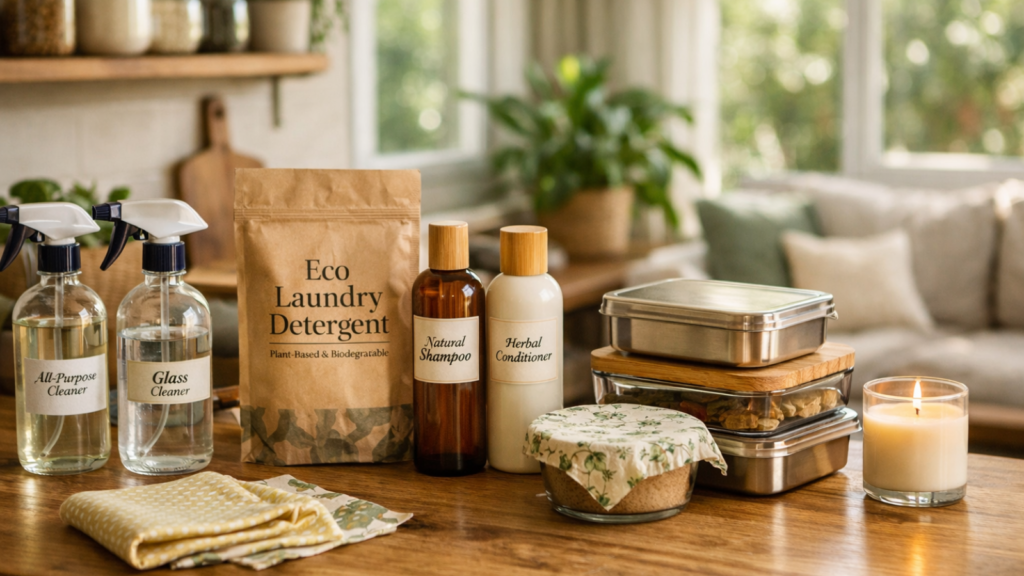
Modern households contain harmful substances in everyday products such as glass cleaners, laundry detergents, shampoos, plastic food containers, and air fresheners. Many conventional products contain synthetic fragrances, petroleum-based solvents, and chlorine compounds, which release volatile organic compounds that reduce indoor air quality and can irritate the respiratory system, skin, and eyes. Choosing sustainable alternatives is not simply a lifestyle trend; eco-friendly products avoid toxic ingredients, helping to protect human health while reducing pollution and long-term environmental damage.
Understanding which sustainable swaps deliver genuine benefits requires navigating marketing claims and identifying truly effective solutions. This comprehensive guide explores eight essential eco-friendly products designed to replace harmful conventional options, providing detailed insights into their features, benefits, and practical applications for conscious consumers seeking healthier homes.
1. Refillable Cleaning Sprays
Description
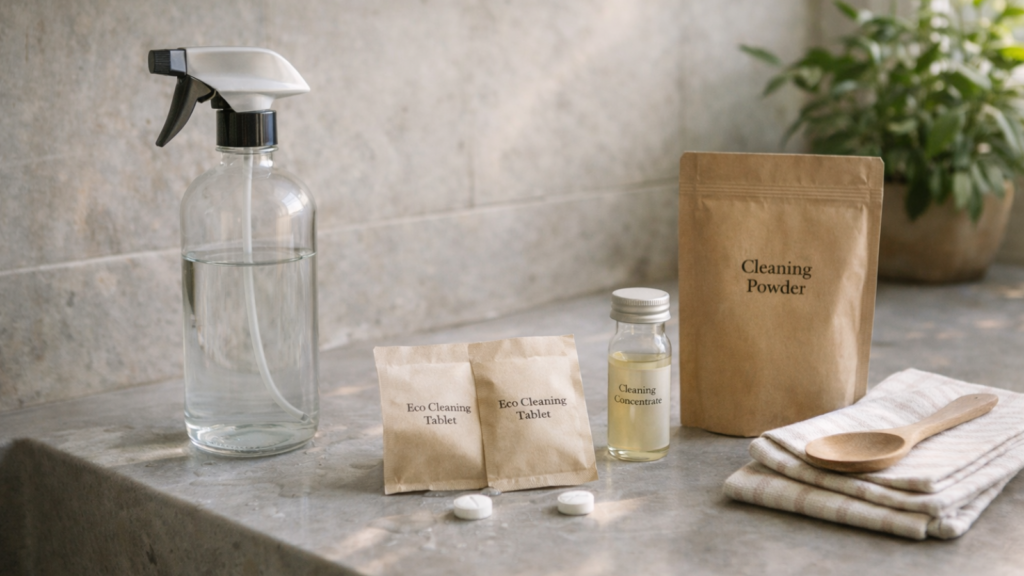
Refillable cleaning sprays revolutionise household maintenance by separating durable spray bottles from concentrated cleaning solutions. Rather than purchasing new plastic bottles for each cleaning session, users invest in quality reusable dispensers and purchase concentrated formulas or dissolvable tablets that mix with water. This system dramatically reduces plastic waste whilst maintaining cleaning effectiveness.
Modern refillable systems come in various formats: concentrated liquid refills packaged in minimal containers, dissolvable tablets wrapped in compostable materials, or powder concentrates requiring simple mixing. Bottles themselves feature durable construction from glass, recycled plastic, or stainless steel designed for years of repeated use.
Eco Features
Refillable spray systems address multiple environmental concerns simultaneously. Single-use plastic reduction stands as the most immediate benefit, with estimates suggesting one refillable bottle replaces dozens of disposable alternatives throughout its lifetime. Concentrated formulas require less packaging material, reduce transportation emissions due to lighter weight, and minimise storage space requirements.
Many brands utilise plant-derived ingredients like coconut-based surfactants, essential oils, and mineral compounds rather than petroleum-based chemicals. Packaging often consists of recycled materials, whilst dissolvable tablet wrappings frequently employ compostable films. Carbon footprint reduction extends beyond packaging concentrated products require less water during manufacturing and transport fewer heavy bottles across distribution networks.
Benefits
Health advantages emerge immediately when switching to refillable eco-friendly cleaning sprays. Plant-based formulations eliminate exposure to synthetic fragrances, chlorine bleach, ammonia, and other respiratory irritants commonly found in conventional cleaners. Households with asthma sufferers, young children, or pets particularly benefit from reduced chemical exposure.
Economic savings accumulate over time. Whilst initial investment in quality bottles may exceed conventional spray prices, refill costs typically run 50-70% lower than purchasing new bottles repeatedly. Space efficiency improves as well storing small refill packets or tablets requires minimal cupboard space compared to bulky spray bottles.
Environmental impact reduction provides long-term satisfaction for conscious consumers. Each refill prevents additional plastic from entering waste streams, conserves resources used in bottle manufacturing, and supports brands prioritising sustainable practices.
Tips for Use
Maximise refillable spray effectiveness by following proper dilution ratios specified by manufacturers. Over-concentrating solutions wastes product and may leave residues, whilst under-diluting reduces cleaning power. Label bottles clearly when using multiple formulas for different surfaces, kitchen degreasers, bathroom cleaners, and glass solutions each serve specific purposes.
Clean spray mechanisms regularly to prevent clogging, especially when using natural formulas containing essential oils. Monthly rinsing with warm water maintains optimal spray patterns. Store concentrated refills in cool, dark locations to preserve ingredient potency, particularly for formulas containing natural preservatives.
Recommended Products
Blueland Cleaning Starter Set offers dissolvable tablets paired with sleek reusable bottles, featuring formulas for multi-surface cleaning, glass, and bathrooms. Tablets arrive in compostable wrappers, eliminating plastic packaging entirely.
Grove Collaborative Concentrates provides liquid refills in recyclable packaging, compatible with attractive spray bottles available through subscription services. Formulas incorporate plant-based ingredients with customisable scent options.
Ecover Refill Stations appearing in select retailers allow consumers to refill bottles directly from bulk dispensers, reducing packaging waste to near zero. Concentrated formulas deliver professional-grade cleaning performance.
Branch Basics Concentrate combines multiple cleaning products into one concentrated formula, which dilutes differently for various applications from all-purpose cleaning to laundry treatment. Single concentrate replaces numerous conventional products.
Where to Buy
Purchase refillable cleaning systems through eco-focused retailers like Package Free Shop, Life Without Plastic, or Earthhero. Major chains including Target, Whole Foods Market, and Boots increasingly stock sustainable cleaning brands. Direct manufacturer websites often provide subscription services delivering refills automatically, ensuring consistent supply whilst frequently offering discounted pricing.
Local zero-waste shops and refill stations enable package-free purchasing in many communities. Online marketplaces such as Amazon, Ethical Superstore, and iHerb stock extensive selections, though examining shipping practices ensures overall sustainability of purchasing decisions.
2. Biodegradable Dish Soaps
Description
Biodegradable dish soaps harness plant-derived surfactants and natural degreasers to cut through food residues, grease, and grime without introducing persistent chemicals into water systems. Unlike conventional dish detergents containing synthetic surfactants derived from petroleum, eco-friendly alternatives break down naturally in aquatic environments without harming marine life or accumulating in ecosystems.
Formulations typically feature coconut oil, palm oil (sustainably sourced), olive oil, or sugar-based surfactants combined with natural antimicrobial agents like tea tree oil, lemon extract, or thyme. These ingredients provide effective cleaning whilst remaining gentle on hands and safe for septic systems.
Eco Features
Complete biodegradability represents the cornerstone environmental advantage. Plant-based surfactants decompose fully within days or weeks when entering wastewater systems, contrasting sharply with synthetic alternatives that persist for years. Aquatic toxicity testing demonstrates minimal impact on fish, algae, and microorganisms essential to healthy water ecosystems.
Sustainable sourcing practices distinguish quality brands. Coconut and palm oils should carry certifications like RSPO (Roundtable on Sustainable Palm Oil) or Fair Trade verification, ensuring production doesn’t contribute to deforestation or unfair labour practices. Many manufacturers utilise agricultural byproducts or waste-stream materials, adding value to resources otherwise discarded.
Benefits
Hand health improves noticeably when switching to biodegradable formulas. Harsh synthetic detergents strip natural skin oils, causing dryness, cracking, and irritation problems particularly acute for individuals washing dishes frequently. Plant-based alternatives clean effectively whilst maintaining skin moisture, often incorporating glycerin or aloe for additional nourishment.
Waterway protection extends benefits beyond individual households. Greywater containing biodegradable soap can safely irrigate gardens in many jurisdictions, recycling water whilst nourishing plants. Septic system compatibility eliminates concerns about disrupting bacterial balance crucial for proper waste breakdown in rural properties.
Tips for Use
Small amounts deliver surprising cleaning power natural surfactants concentrate effectively when properly formulated. Start with half the quantity typically used with conventional detergents, adjusting upward only if necessary. This practice extends product lifespan whilst preventing excessive suds that require additional rinsing.
Hard water regions may require slightly more product or benefit from adding washing soda to improve cleaning performance. Mineral content in water can interfere with plant-based surfactants, though quality formulations account for this variable through balanced ingredient ratios.
Recommended Products
Dr. Bronner’s Sal Suds offers versatile cleaning power suitable for dishes, laundry, and household surfaces. Concentrated formula means bottles last months for typical families, whilst biodegradable ingredients ensure environmental safety.
Ecover Zero Dish Soap provides fragrance-free cleaning ideal for sensitive skin, featuring plant-based formulas in bottles made from plant plastic derived from sugarcane. Dermatologically tested for skin compatibility.
Attitude Dishwashing Liquid combines effective grease cutting with hypoallergenic formulations, certified by EWG (Environmental Working Group) for ingredient safety. Available in various natural scents or fragrance-free options.
No Tox Life Dish Block revolutionises washing with solid soap bars that last equivalent to 3-4 liquid bottles. Plastic-free packaging and zero water weight reduce transportation emissions significantly.
Where to Buy
Find biodegradable dish soaps at health food stores, zero-waste shops, and eco-focused retailers nationwide. Supermarket chains increasingly dedicate shelf space to sustainable cleaning brands, making access convenient for mainstream consumers. Online retailers including Thrive Market, iHerb, and brand websites offer competitive pricing with subscription discounts.
Farmers markets and craft fairs often feature local soap makers producing small-batch dish soaps with minimal packaging. Supporting local artisans reduces transportation emissions whilst strengthening community economies.
3. Non-Toxic Laundry Detergents
Description
Non-toxic laundry detergents replace synthetic chemicals with plant-derived cleaning agents, enzymes, and mineral compounds that effectively remove stains and odours without leaving harmful residues on fabrics or releasing pollutants into water systems. Modern eco-friendly formulations match or exceed conventional detergent performance whilst eliminating concerns about skin irritation, allergic reactions, and environmental contamination.
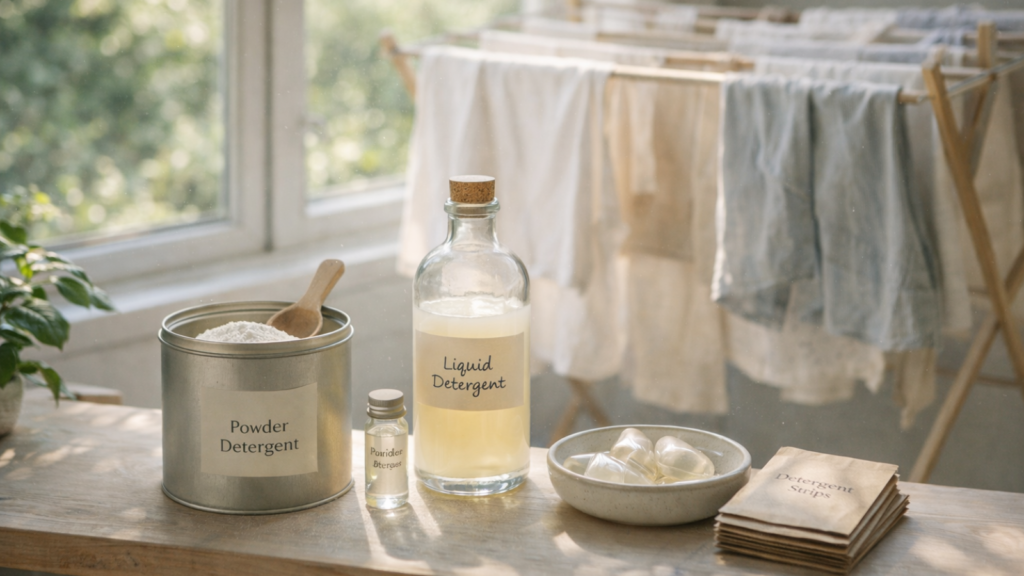
Available formats include liquids, powders, pods, and detergent strips each offering distinct advantages. Powders provide concentrated cleaning with minimal packaging, liquids offer pre-treatment versatility, pods ensure precise dosing, and strips deliver ultimate portability with near-zero waste.
Eco Features
Biodegradable surfactants derived from coconuts, corn, or other renewable crops form the foundation of eco-friendly laundry detergents. These ingredients break down completely in wastewater treatment facilities or septic systems, avoiding bioaccumulation in aquatic environments. Enzyme blends tackle protein, starch, and fat-based stains through biological action rather than harsh chemicals.
Phosphate-free formulations prevent algal blooms that suffocate aquatic ecosystems a critical consideration since conventional detergents historically contributed to widespread waterway degradation. Many brands eliminate optical brighteners (synthetic compounds that make clothes appear whiter by reflecting UV light) which persist in environments and may cause skin sensitivities.
Benefits
Fabric gentleness extends garment lifespans by avoiding harsh chemicals that degrade fibres over time. Natural detergents preserve colours, maintain fabric softness, and reduce wear saving money through fewer clothing replacements. Delicate items like wool, silk, and technical athletic fabrics benefit particularly from gentle plant-based cleaning.
Skin health improvements manifest for individuals with eczema, psoriasis, or chemical sensitivities. Conventional detergent residues remaining on clothes after washing continuously contact skin, potentially triggering inflammation or allergic reactions. Hypoallergenic eco-friendly alternatives minimise these risks whilst cleaning effectively.
Tips for Use
Pre-treat stubborn stains with concentrated detergent or natural stain removers before washing. Allow treatment to sit for 15-30 minutes, giving enzymes time to break down stain compounds. This practice prevents repeated washing cycles that waste water and energy.
Adjust dosing based on water hardness, load size, and soil levels. Hard water regions may require slightly more detergent or benefit from adding washing soda to soften water naturally. Overusing detergent leaves residues on clothes and washer components, whilst under-dosing reduces cleaning effectiveness.
Recommended Products
Seventh Generation Free & Clear provides powerful cleaning without fragrances or dyes, suitable for sensitive skin whilst maintaining environmental standards. Concentrated formula reduces packaging waste and requires smaller doses per load.
Dropps Laundry Detergent Pods arrive in water-soluble packaging that dissolves completely during washing, eliminating pod casings. Carbon-neutral shipping and recyclable outer packaging reinforce sustainability commitments.
Tru Earth Eco-Strips revolutionise laundry with ultra-thin detergent sheets that generate zero plastic waste. Strips work in all water temperatures, suitable for standard and high-efficiency machines whilst taking minimal storage space.
Molly’s Suds Original Laundry Powder combines traditional washing powder effectiveness with modern safety standards. Earth-derived ingredients include sodium carbonate, sodium bicarbonate, and sea salt proving simple formulations clean effectively without complexity.
Where to Buy
Purchase non-toxic laundry detergents at grocery stores increasingly dedicating shelf space to eco-friendly brands. Health food retailers like Whole Foods Market and natural product stores stock extensive selections. Online retailers including Grove Collaborative, Package Free Shop, and Amazon offer convenient delivery with subscription savings.
Zero-waste stores provide bulk refill options for liquid detergents, allowing customers to reuse containers indefinitely. Manufacturer websites frequently offer best pricing with auto-ship programmes ensuring consistent supply.
4. Natural Air Fresheners
Description
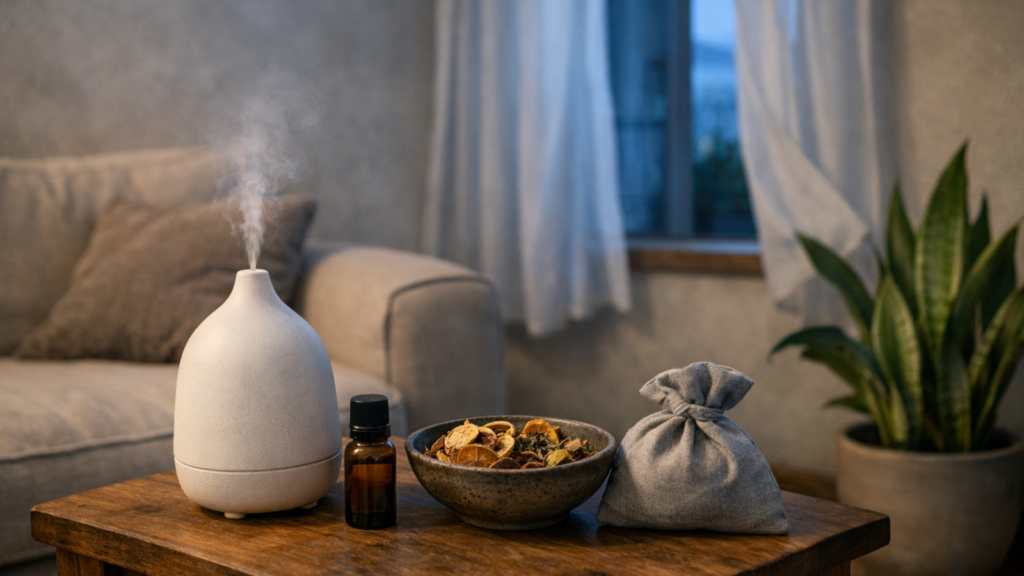
Natural air fresheners purify and scent indoor spaces using plant extracts, essential oils, minerals, and biological processes rather than synthetic fragrances and chemical propellants found in conventional aerosols and plug-ins. These alternatives eliminate airborne odours through absorption, neutralisation, or masking with genuine botanical scents creating pleasant atmospheres without compromising air quality.
Options range from passive solutions like activated charcoal bags and potted plants to active systems including essential oil diffusers, natural spray fresheners, and simmer pots. Each approach offers unique benefits suited to different spaces, preferences, and odour challenges.
Eco Features
Eliminating volatile organic compounds (VOCs) represents the primary environmental and health advantage. Conventional air fresheners release phthalates, formaldehyde, benzene, and numerous other chemicals that contribute to indoor air pollution whilst potentially causing respiratory irritation, headaches, and hormonal disruption. Natural alternatives avoid these concerns entirely through pure botanical ingredients.
Sustainable sourcing ensures essential oils and plant extracts come from responsibly managed sources. Certifications like organic, fair trade, or Rainforest Alliance indicate environmentally conscious production. Bamboo charcoal, volcanic rock, and other mineral absorbents offer renewable or abundantly available materials requiring minimal processing.
Benefits
Indoor air quality improvements extend beyond eliminating chemical exposure. Plants actively filter toxins whilst releasing oxygen, creating healthier breathing environments. Studies demonstrate certain species remove formaldehyde, benzene, and trichloroethylene from indoor air addressing pollution from furniture, carpets, and building materials.
Customisation allows tailoring scents to personal preferences and functional needs. Lavender and chamomile promote relaxation in bedrooms, peppermint and citrus energise workspaces, eucalyptus and tea tree provide antimicrobial properties for bathrooms. Adjusting oil blends or plant selections creates personalised atmospheres matching lifestyle requirements.
Tips for Use
Position activated charcoal bags strategically in odour-prone areas: near litter boxes, in shoe cupboards, beside rubbish bins, or within refrigerators. Recharge monthly by placing in direct sunlight for several hours, which releases absorbed particles and restores effectiveness. Replace bags every two years when absorption capacity diminishes.
Operate essential oil diffusers intermittently rather than continuously. Running for 30-60 minute intervals provides pleasant scent without overwhelming spaces or wasting oils. Clean diffusers weekly to prevent oil buildup that reduces mist output and creates breeding grounds for bacteria.
Recommended Products
Moso Natural Air Purifying Bags utilise bamboo charcoal to absorb odours, moisture, and pollutants continuously. Available in various sizes for different spaces, bags recharge through sunlight and last two years with proper maintenance.
Vitruvi Stone Diffuser combines elegant ceramic design with ultrasonic technology, dispersing essential oils as fine mist throughout rooms. Automatic shut-off provides safety, whilst minimal design suits various décor styles.
Mrs. Meyer’s Room Freshener offers plant-derived ingredients and essential oil scents in recyclable bottles. Non-aerosol spray mechanism avoids propellants whilst delivering effective odour elimination.
Snake Plants, Spider Plants, and Peace Lilies rank among top air-purifying houseplants, removing toxins whilst requiring minimal care. Available at garden centres and plant nurseries in various sizes.
Where to Buy
Find natural air fresheners at health food stores, home goods retailers, and plant nurseries. Essential oil suppliers like Plant Therapy, Rocky Mountain Oils, and doTERRA offer pure oils suitable for diffusion. Activated charcoal products appear in bed and bath sections of major retailers or specialised eco-stores.
Online marketplaces provide extensive selections: Amazon stocks major brands, whilst Etsy features handmade options from small businesses. Local nurseries and farmers markets offer plants and handcrafted botanical fresheners supporting community growers.
5. Bamboo Toothbrushes
Description
Bamboo toothbrushes replace plastic handles with rapidly renewable bamboo stalks, dramatically reducing plastic waste generated through personal oral care routines. Whilst bristles may still contain nylon in many models, some brands now offer fully biodegradable options with plant-based or animal-derived bristle materials. Handles naturally decompose or can be composted after removing bristle heads, contrasting sharply with conventional plastic brushes persisting in landfills for centuries.
Design variations include children’s sizes, ergonomic shapes, varied bristle firmness levels, and decorative customisation through natural dyes or laser engraving. Bamboo’s natural antimicrobial properties prevent bacterial growth on handles, whilst smooth finishing creates comfortable grip comparable to plastic.
Eco Features
Plastic reduction forms the compelling environmental argument. Billions of plastic toothbrushes enter waste streams annually, contributing to ocean pollution and microplastic contamination. Single bamboo brush eliminates approximately 20 grams of plastic waste, multiplied across regular replacements recommended every three months adding up to substantial impact when adopted widely.
Bamboo cultivation offers remarkable sustainability credentials. Growing rapidly without pesticides, fertilisers, or irrigation, bamboo regenerates from root systems after harvesting avoiding deforestation concerns. Carbon sequestration during growth offsets manufacturing emissions, whilst grass classification means harvesting doesn’t harm forest ecosystems.
Benefits
Waste reduction provides immediate environmental satisfaction. Each switched individual prevents roughly 300 plastic brushes from entering landfills over lifetime assuming three-month replacement cycles from childhood through elderly years. Collective adoption would dramatically decrease plastic pollution from personal care products.
Chemical exposure elimination benefits oral health. Conventional plastic brushes may leach BPA and other compounds, particularly when exposed to hot water or sunlight. Bamboo handles avoid these concerns entirely through natural composition.
Tips for Use
Store bamboo toothbrushes in dry environments between uses. Unlike plastic that sheds water easily, bamboo absorbs moisture if kept wet continuously potentially causing deterioration or mould growth. Stand brushes upright in holders allowing air circulation around handles and bristles.
Replace brushes on manufacturer-recommended schedules, typically every three months or when bristles fray. Worn bristles lose cleaning effectiveness regardless of handle material, whilst regular replacement maintains optimal oral hygiene.
Recommended Products
Brush with Bamboo offers fully biodegradable options with plant-based bristles, completely eliminating plastic. Handles feature smooth finishes comfortable for daily use, whilst packaging uses recyclable materials.
Humble Brush provides Swedish-designed bamboo brushes with ergonomic shaping and varied firmness levels. Vegan bristles and Dentist-approved designs ensure oral health standards meet sustainability goals.
WooBamboo creates family-friendly options including children’s sizes with fun natural colours achieved through non-toxic dyes. Soft bristles suit sensitive gums whilst maintaining effective plaque removal.
The Humble Co. donates portions of proceeds to oral health initiatives in developing communities, combining environmental consciousness with social responsibility. Certified vegan and cruelty-free production.
Where to Buy
Purchase bamboo toothbrushes at health food stores, zero-waste shops, and increasingly mainstream retailers. Pharmacies and supermarkets now stock eco-friendly oral care alongside conventional options. Online retailers including Amazon, Package Free Shop, and brand websites offer convenient bulk purchasing at discounted rates.
Subscription services deliver fresh brushes quarterly, ensuring timely replacement whilst providing cost savings. Local eco-stores often feature regional producers crafting brushes with minimal transportation emissions.
6. Plant-Based All-Purpose Cleaners
Description
Plant-based all-purpose cleaners utilise botanical extracts, natural acids, and mineral compounds to tackle diverse cleaning challenges throughout homes from kitchen counters to bathroom tiles. Versatile formulations replace numerous specialised conventional products, simplifying cleaning routines whilst eliminating exposure to harsh chemicals found in traditional multi-surface sprays.
Ingredient combinations typically include plant-derived surfactants for lifting dirt, natural acids like citric acid or vinegar for cutting grease and mineral deposits, essential oils providing antimicrobial action and pleasant scents, and plant alcohols or hydrogen peroxide offering disinfecting properties. These components work synergistically to clean, degrease, disinfect, and deodorise diverse surfaces safely.
Eco Features
Biodegradable formulations ensure cleaning rinse water breaks down harmlessly in natural environments. Plant-sourced ingredients decompose through biological processes rather than persisting as pollutants. This characteristic proves especially important given significant quantities of cleaner entering greywater systems daily from household use.
Renewable resource utilisation distinguishes plant-based products from petroleum-derived conventional cleaners. Corn, coconut, citrus, and sugar-derived ingredients regenerate seasonally through agricultural cycles, contrasting with finite fossil fuel resources requiring millions of years to form.
Minimal packaging innovations reduce waste. Concentrated formulas requiring dilution use smaller containers, whilst some brands offer solid or powder formats eliminating liquid packaging entirely. Refill programmes allow container reuse, dramatically reducing single-use plastic consumption.
Benefits
Surface versatility simplifies cleaning cupboards. Single product effectively cleans countertops, appliances, floors, windows, and bathrooms eliminating need for multiple specialised cleaners. This consolidation reduces clutter, saves money, and decreases packaging waste from various product purchases.
Health safety enables cleaning without protective equipment. Conventional cleaners often necessitate gloves and ventilation due to caustic ingredients and harsh fumes. Plant-based alternatives allow barehanded use and cleaning with windows closed, improving convenience whilst protecting respiratory systems.
Residue-free cleaning proves particularly valuable in kitchens where food preparation occurs. Natural ingredients don’t leave potentially harmful films on surfaces contacting edibles. Families with young children benefit from safe cleaning that doesn’t require worrying about chemical residues on floors or toys.
Tips for Use
Test surfaces before widespread application, particularly on natural stone, unsealed wood, or specialty materials. Whilst plant-based cleaners suit most surfaces, acidic ingredients like vinegar may damage certain stones. Small inconspicuous-area testing prevents potential issues.
Dilute concentrates precisely according to manufacturer instructions. Over-concentrating wastes product without improving cleaning whilst potentially leaving residues. Under-diluting reduces effectiveness, requiring additional scrubbing effort.
Allow dwell time for tough jobs. Spray surfaces and wait 3-5 minutes before wiping, giving natural ingredients time to break down grime and kill bacteria. This patience replaces harsh chemicals that work instantaneously through aggressive reactions.
Recommended Products
Better Life Natural All-Purpose Cleaner combines plant-based surfactants with natural scents in recyclable bottles. Effective on diverse surfaces from granite to stainless steel without leaving streaks or residues.
Aunt Fannie’s Cleaning Vinegar harnesses concentrated vinegar’s cleaning power with added essential oils for improved scent. Food-grade ingredients ensure complete safety in kitchens and around children.
Puracy Natural Multi-Surface Cleaner formulates with coconut-based cleansers and minerals, creating biodegradable solution suitable for homes with pets and babies. Concentration allows significant dilution, extending product lifespan.
Force of Nature Cleaner generates hypochlorous acid through electrolysis of salt, water, and vinegar creating powerful disinfectant from simple ingredients. Reusable system includes activator appliance and refillable spray bottles.
Where to Buy
Find plant-based all-purpose cleaners at grocery stores, health food retailers, and eco-focused shops. Major supermarket chains now dedicate cleaning aisles to natural brands alongside conventional options. Online retailers including Thrive Market, Grove Collaborative, and Amazon offer convenient purchasing with subscription savings.
Zero-waste stores provide bulk refilling options, allowing indefinite container reuse. Farmers markets occasionally feature local producers creating small-batch cleaners with minimal packaging.
7. Reusable Silicone Food Bags
Description
Reusable silicone food bags replace disposable plastic storage bags, cling film, and aluminium foil offering durable, versatile food storage solutions that eliminate single-use packaging from daily routines. Made from food-grade silicone, these bags withstand freezing, microwaving, and dishwasher cleaning whilst maintaining flexibility and seal integrity through thousands of uses.
Design features typically include airtight seals preventing leaks, transparent or translucent material allowing content visibility, stand-up bottoms facilitating filling and storage, and sizes ranging from snack portions to gallon capacities. Premium options offer additional features like write-on labels, dual zip mechanisms, or hanging loops.
Eco Features
Plastic waste reduction delivers substantial environmental impact. Average household uses hundreds of single-use plastic bags annually most ending in landfills or as marine pollution. Single set of reusable silicone bags replaces years of disposable purchases, preventing significant plastic entering waste streams.
Durability ensures long-term sustainability. Quality silicone bags last 3,000+ uses when properly maintained potentially decades of daily service. This longevity contrasts sharply with single-use alternatives discarded immediately after one application.
Manufacturing efficiency improves over lifecycle. Whilst silicone production requires energy and resources, reusing products thousands of times spreads environmental costs across numerous applications. Lifecycle assessments demonstrate reusable bags achieve environmental superiority after approximately 50 uses compared to disposables quickly surpassed in typical household adoption.
Benefits
Versatility expands food storage possibilities. Silicone bags safely transition between freezer, microwave, and dishwasher without degradation features impossible with disposable plastic bags. Sous vide cooking compatibility, oven use up to specific temperatures, and ability to store both dry goods and liquids make silicone bags remarkably adaptable.
Food preservation improves through superior sealing. Airtight closures prevent oxidation and moisture loss better than many disposable alternatives, extending produce freshness and preventing freezer burn. Transparent material allows easy content identification without opening bags.
Cost savings accumulate rapidly. Despite higher initial investment compared to disposable bag boxes, reusable bags pay for themselves within months through eliminated repurchasing. Families packing daily lunches or regularly batch-cooking realise savings most quickly.
Tips for Use
Wash before first use with warm soapy water, removing any manufacturing residues. Initial washing also helps identify potential quality issues like seal problems before storing valuable foods.
Fill bags appropriately without overstuffing, which strains seals and reduces effectiveness. Leave small air gaps unless vacuum-sealing for freezer storage. Proper filling extends bag lifespan whilst maintaining seal integrity.
Clean thoroughly after each use, paying attention to corners and seal areas where food particles accumulate. Turn bags inside-out for washing, either by hand or in dishwasher top racks. Ensure complete drying before storage to prevent mould growth.
Recommended Products
Stasher Bags pioneered platinum silicone food storage with patented Pinch-Loc seals. Multiple sizes and colours accommodate varied storage needs, whilst dishwasher, microwave, and oven safety (up to 204°C) provides exceptional versatility.
Zip Top Containers feature one-piece construction eliminating separate closures that wear over time. Stand-up design facilitates filling, whilst transparent material allows easy content identification. Available in cup, dish, and bag formats.
Food Huggers Reusable Silicone Bags offer affordable entry into sustainable food storage with reliable airtight seals and freezer-safe construction. Variety packs provide multiple sizes covering diverse household needs.
Planet Wise Reusable Bags combine food-grade silicone with ethical manufacturing practices. Transparent design with measurement markings assists meal prep and portion control.
Where to Buy
Purchase reusable silicone bags at kitchen supply stores, eco-retailers, and major chains including Target, John Lewis, and Lakeland. Online marketplaces such as Amazon provide extensive selections with customer reviews aiding decision-making. Brand websites often offer complete sets at discounted rates compared to individual purchases.
Zero-waste shops increasingly stock silicone storage solutions alongside bulk food offerings, creating convenient one-stop shopping for sustainable kitchen supplies. Local kitchen boutiques may carry premium brands with expert staff assistance.
8. Compostable Trash Bags
Description
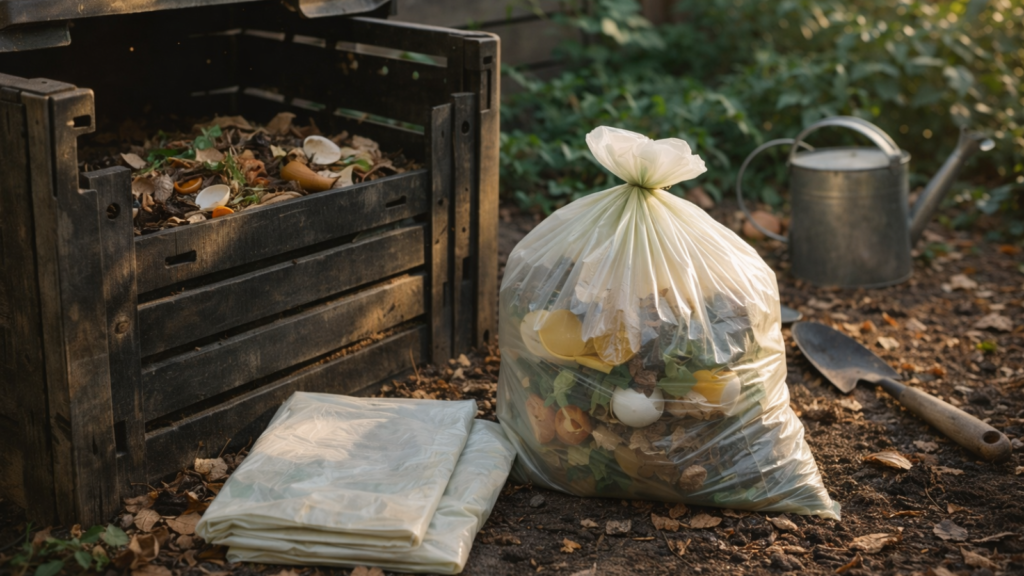
Compostable rubbish bags manufactured from plant-based materials like cornstarch, potato starch, or vegetable oils replace conventional petroleum-based plastic bags breaking down naturally in composting environments rather than persisting as landfill waste. Certified compostable bags meet strict standards ensuring complete biodegradation within specific timeframes under proper conditions, leaving no toxic residues.
Available in various sizes from small bin liners to large outdoor bins, compostable bags offer thickness and strength options suitable for different waste types. Clear or tinted varieties provide aesthetic choices, whilst some feature drawstring closures or handles for convenient handling and tying.
Eco Features
Biodegradability transforms waste management’s environmental impact. Conventional plastic bags require centuries to degrade, fragmenting into microplastics that contaminate soil and water indefinitely. Compostable alternatives break down within 10-45 days in industrial composting facilities or 3-6 months in active home compost systems returning nutrients to soil rather than creating pollution.
Plant-based composition utilises renewable resources. Manufacturing from agricultural materials like corn or potatoes avoids fossil fuel extraction whilst supporting agricultural economies. Many producers source materials from non-food-grade crops or agricultural waste, preventing food supply competition.
Benefits
Composting system compatibility represents primary practical advantage. Many municipal and commercial composting programmes accept certified compostable bags, allowing convenient organic waste collection without contaminating compost with persistent plastics. This compatibility encourages composting adoption by simplifying processes.
Odour management improves through breathable material allowing air circulation whilst containing waste. Unlike conventional plastic that traps odours, compostable bags reduce smell accumulation particularly beneficial for food scraps and kitchen waste stored temporarily before disposal.
Moisture resistance in quality products prevents leaking despite plant-based composition. Advances in bioplastic technology create bags withstanding wet waste without tearing or deteriorating prematurely. Proper storage keeps unused bags dry, maintaining strength until use.
Tips for Use
Verify acceptance before purchasing. Check whether local composting programmes accept compostable bags some facilities prefer loose organic waste or paper bags. Understanding local requirements prevents wasted investment in incompatible products.
Store bags properly to maintain integrity. Keep unused bags in cool, dry locations away from direct sunlight and moisture. Heat and humidity can trigger premature breakdown, whilst moisture exposure weakens bags before use. Original packaging usually provides adequate protection.
Fill appropriately without overloading. Compostable materials generally offer less stretch and tensile strength than conventional plastic. Respecting weight capacities prevents tearing and messy failures. Double-bagging options exist for heavier or wetter waste loads.
Recommended Products
BioBag Compostable Bags earned widespread certification including ASTM D6400 and EN 13432, ensuring genuine biodegradability. Various sizes suit kitchen bins to large outdoor containers, whilst adequate thickness prevents tearing during normal use.
UNNI Compostable Bags provide affordable certified options in bulk quantities. Made from plant starches and compostable polymers, bags break down in composting facilities whilst resisting tears and leaks during use.
If You Care Certified Compostable Bags combine environmental responsibility with ethical production practices. Extra-thick options accommodate demanding applications, whilst standard weights suit typical household waste.
Green Earth Compostable Bags feature vegetable-based inks for printed information and renewable plant materials. Certifications verify complete biodegradability meeting international standards.
Where to Buy
Find compostable rubbish bags at supermarkets increasingly stocking sustainable home products alongside conventional options. Health food stores, eco-retailers, and zero-waste shops typically offer multiple brands and sizes. Online retailers including Amazon, Ethical Superstore, and manufacturer websites provide convenient purchasing with bulk discounts.
Local hardware stores and garden centres often carry compostable bags near composting equipment and organic gardening supplies. Municipal waste management facilities occasionally sell or recommend specific brands compatible with local composting programmes.
Conclusion: Creating Your Healthy Home
Transitioning towards eco-friendly products that eliminate toxic chemicals represents powerful personal action addressing environmental challenges whilst protecting family health. These eight essential swaps; refillable cleaning sprays, biodegradable dish soaps, non-toxic laundry detergents, natural air fresheners, bamboo toothbrushes, plant-based all-purpose cleaners, reusable silicone food bags, and compostable rubbish bags form the foundation for sustainable household management accessible to typical consumers.
Environmental impact extends beyond individual households. Collective adoption of sustainable alternatives drives market transformation, encouraging manufacturers to innovate further whilst making eco-friendly options increasingly affordable and accessible. Each purchase vote supports companies prioritising environmental responsibility over short-term profits.
Health benefits manifest immediately through reduced chemical exposure, improved indoor air quality, and minimised contact with endocrine disruptors and respiratory irritants. Long-term advantages include decreased allergy symptoms, reduced toxic burden on bodies, and enhanced wellbeing from living in cleaner environments.
Frequently Asked Questions
Are eco-friendly cleaning products as effective as conventional cleaners?
Modern plant-based cleaners match or exceed conventional product performance for typical household cleaning tasks. Advances in green chemistry have created natural surfactants and enzymes that cut grease, remove stains, and kill bacteria effectively. For heavily soiled areas or industrial applications, some specialised conventional products may offer advantages, but daily home cleaning sees excellent results from eco-friendly alternatives.
How much money can I save by switching to reusable products?
Initial costs typically run higher, but reusable products generate substantial long-term savings. Refillable cleaning systems save 50-70% on repurchases, reusable silicone bags pay for themselves within 3-6 months, and concentrated natural detergents last significantly longer than conventional options. Most households recover initial investments within one year whilst continuously saving thereafter.
Will compostable bags work in regular bins or just compost bins?
Compostable bags function in standard waste bins for regular rubbish disposal. However, environmental benefits primarily emerge when bags enter composting systems where they biodegrade properly. Using compostable bags for non-organic waste sent to landfills reduces benefits since anaerobic landfill conditions slow degradation significantly.
Are bamboo toothbrushes hygienic compared to plastic ones?
Bamboo toothbrushes maintain excellent hygiene when properly stored and replaced regularly. Bamboo’s natural antimicrobial properties actually inhibit bacterial growth better than plastic surfaces. Key practices include storing brushes upright in dry environments, replacing every three months, and avoiding prolonged moisture exposure that could affect any toothbrush material.
Do natural air fresheners eliminate odours or just mask them?
Natural freshening approaches vary activated charcoal actively absorbs odour molecules, plants filter air through biological processes, and essential oils can both neutralise odours chemically and provide pleasant masking scents. Effectiveness depends on matching appropriate solutions to specific odour sources whilst addressing underlying cleanliness issues rather than relying solely on fresheners.
Can I make my own eco-friendly cleaning products at home?
Homemade cleaning solutions using vinegar, bicarbonate of soda, castile soap, and essential oils create effective, economical alternatives. Numerous reliable recipes exist for all-purpose cleaners, glass cleaners, and specialised formulas. However, commercial products often incorporate sophisticated ingredient combinations and quality control standards difficult to replicate at home.
Are all plant-based products safe for septic systems?
Most genuine plant-based products featuring biodegradable ingredients suit septic systems, supporting beneficial bacterial colonies rather than harming them with antimicrobial chemicals. Always verify specific product information, as “plant-based” claims without biodegradability certification may include ingredients incompatible with septic systems. Look for explicit septic-safe labelling.
How do I know if products are genuinely eco-friendly or just greenwashed?
Legitimate eco-friendly products carry third-party certifications like EWG Verified, EPA Safer Choice, Leaping Bunny, or USDA Organic. Transparent ingredient lists using recognisable plant-based components indicate authenticity. Research brands’ environmental practices beyond individual products companies with comprehensive sustainability commitments usually offer genuine solutions rather than marketing deception.
What’s the best way to transition to eco-friendly products?
Replace conventional products gradually as they run out rather than discarding functional items wastefully. Prioritise high-impact swaps like laundry detergent, all-purpose cleaners, and reusable food storage used frequently. Start with products addressing your primary concerns whether chemical sensitivities, plastic waste, or specific environmental issues building sustainable routines through manageable changes.
Where should I dispose of reusable products at end-of-life?
Disposal methods vary by product. Compostable items like bamboo toothbrush handles belong in compost bins after removing non-compostable components. Silicone products require specialised recycling through manufacturer take-back programmes or facilities accepting silicone. Research local recycling options or creative reuse possibilities before resorting to landfill disposal for products reaching genuine end-of-life.