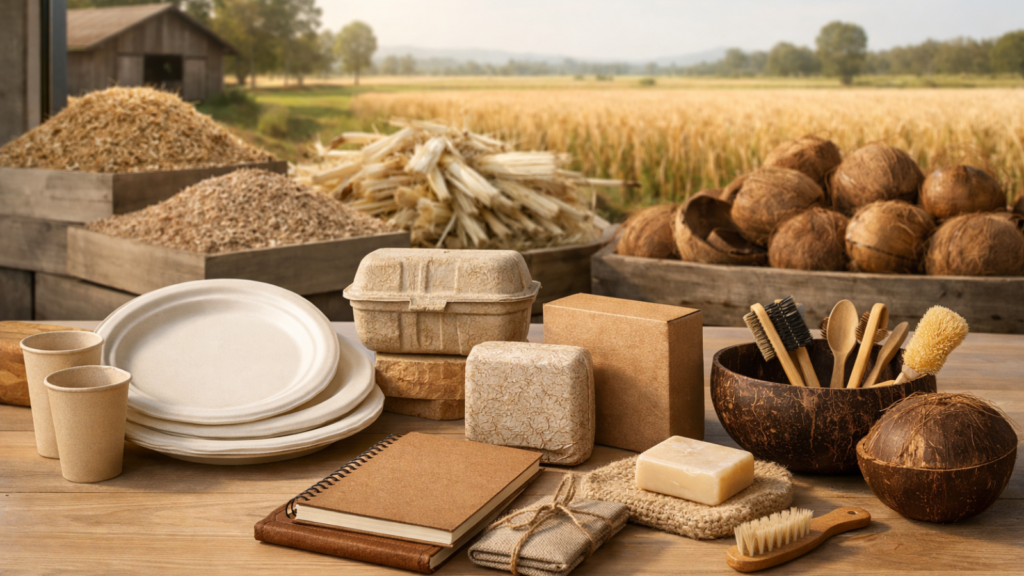
Farms worldwide generate over 998 million tonnes of crop residue each year. Agricultural waste once burned in fields or left to decompose now serves as raw material for innovative, sustainable products. Forward-thinking manufacturers have discovered ways to transform rice husks, sugarcane fibers, and coconut shells into everyday essentials that benefit both planet and people.
This comprehensive guide explores 12 remarkable eco-friendly products crafted from agricultural byproducts. These alternatives offer practical solutions to petroleum-based goods while supporting circular economy principles.
Why Agricultural Waste Matters for Sustainability
Farm residue typically faces one of three fates. Firstly, open-field burning creates harmful air pollution and contributes to climate change. Secondly, landfill disposal wastes valuable organic matter while generating methane emissions. Thirdly, natural decomposition leaves vast quantities of biomass underutilised, although this option proves better than burning.
Converting agricultural waste into useful products addresses multiple environmental concerns simultaneously. Greenhouse gas emissions from burning and decomposition reduce significantly. Dependence on virgin materials and fossil fuels decreases. Economic opportunities for farming communities increase. Organic waste diverts from overflowing landfills. Regenerative agricultural practices gain support through waste valorisation.
1. Bagasse Tableware
Description
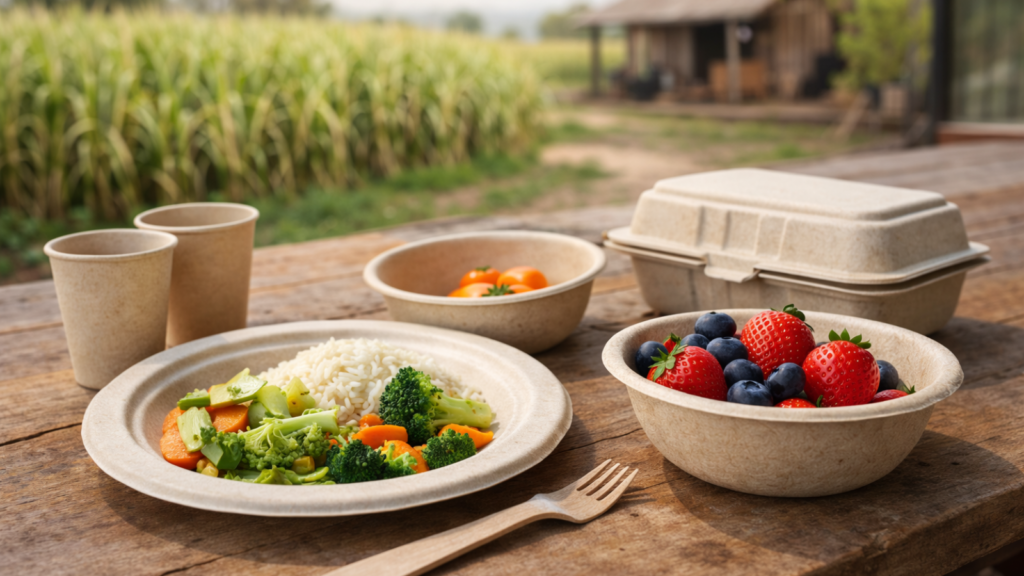
Bagasse refers to fibrous residue remaining after crushing sugarcane stalks to extract juice. Sugar mills traditionally burned or composted bagasse, creating disposal challenges. Modern manufacturing processes now transform this abundant byproduct into sturdy, biodegradable tableware. Products include plates, bowls, cups, and takeaway containers.
Eco Features
Manufacturing bagasse tableware requires significantly less energy compared to producing plastic or ceramic alternatives. Production processes use no added chemicals or bleaching agents, preserving natural colour and texture. Bagasse plates are 100% compostable. Complete breakdown occurs within 30 to 90 days in commercial composting facilities. Unlike Styrofoam or plastic, bagasse releases no toxic substances during decomposition.
Benefits
Bagasse tableware withstands hot, cold, and oily foods without losing structural integrity. Products remain microwave and freezer safe, handling temperatures from -20°C (-4°F) to 200°C (392°F). Natural fibers provide excellent heat insulation, keeping hands comfortable while holding hot containers. Sturdy construction prevents sogginess or collapse during meals, matching conventional disposable tableware performance.
Tips for Use
Store bagasse tableware in dry locations to maintain structural integrity before use. Prolonged exposure to liquids eventually weakens fibers, although products remain moisture-resistant. Transfer very liquid dishes to conventional bowls for extended meal service. Dispose of bagasse products in commercial composting bins rather than standard recycling streams after use. Home composting works but requires longer decomposition periods.
Recommended Products
Brands like Eco-Products, World Centric, and Vegware offer certified compostable bagasse ranges. Check for Biodegradable Products Institute (BPI) or EN13432 certification ensuring genuine compostability. Many suppliers offer bulk purchasing options for events, restaurants, and catering services seeking sustainable alternatives.
2. Rice Husk Fuel Bricks
Description
Rice production generates massive quantities of husks protective outer shells removed during milling. Approximately 200 kilograms (440 pounds) of husks emerge as byproduct for every tonne of rice harvested. Compressing and binding rice husks creates dense fuel bricks. These bricks offer renewable heating and cooking alternatives to wood, coal, or fossil fuels.
Eco Features
Rice husk briquettes burn cleanly with minimal smoke and ash production. Carbon emissions remain neutral. Carbon released during burning equals carbon absorbed during plant growth. Manufacturing requires no chemical additives. Natural lignin within husks acts as binding agent under heat and pressure. Using rice husks for fuel prevents agricultural waste burning, reducing air pollution significantly.
Benefits
High calorific value makes rice husk briquettes efficient heating sources comparable to coal or wood. Long burning duration provides extended heat output, reducing fuel consumption frequency. Minimal ash residue (approximately 15% to 20%) simplifies cleanup. Remaining ash provides nutrient-rich material for garden composting. Cost-effectiveness makes rice husk fuel accessible for households and small businesses in agricultural regions.
Tips for Use
Store briquettes in completely dry conditions. Moisture absorption reduces burning efficiency. Start fires using kindling before adding rice husk bricks for optimal ignition. Maintain adequate ventilation during burning. Complete combustion occurs with proper airflow, creating minimal indoor smoke. Collect remaining ash for garden use as potassium-rich soil amendment.
Recommended Products
Seek suppliers offering densified briquettes with moisture content below 10% for efficient burning. Brands like Bio-Coal and EcoFacer produce quality rice husk fuel bricks. Local agricultural cooperatives in rice-producing regions often manufacture affordable options. These purchases support regional economies.
3. Wheat Straw Paper

Description
Wheat cultivation leaves behind straw dried stalks remaining after grain harvest. Papermaking traditionally relies on tree pulp, driving deforestation concerns. Wheat straw provides excellent alternative fiber source for producing paper. Applications include cardboard, notebooks, and packaging materials without harvesting forests.
Eco Features
Wheat straw paper production uses 30% to 50% less water and energy compared to conventional wood-pulp paper manufacturing. Chemical requirements decrease significantly. Wheat fibers require gentler processing than wood. Annually renewable wheat crops eliminate decades-long waiting periods associated with tree growth. Carbon footprint reduction reaches up to 75% compared to traditional paper production.
Benefits
Wheat straw paper offers comparable strength and durability to wood-pulp alternatives. Natural colour variations create unique aesthetic appeal without artificial brightening agents. Standard printing and writing applications work seamlessly with wheat straw paper. Fully recyclable and biodegradable properties ensure end-of-life environmental responsibility.
Tips for Use
Wheat straw paper performs identically to conventional paper in printers, copiers, and writing applications. Store in standard conditions. Excessive humidity affects fiber integrity. Support brands transparently sharing agricultural sourcing and manufacturing processes. Choose unbleached varieties. Environmental benefits maximise with reduced chemical processing.
Recommended Products
Companies like Step Forward Paper, Papier, and Tree-Free Greetings specialise in wheat straw stationery and paper goods. Look for Forest Stewardship Council (FSC) or similar sustainability certifications verifying responsible sourcing. Many online retailers now stock wheat straw notebooks, greeting cards, and office supplies.
4. Coconut Husk Brushes
Description
Coconut processing for meat and water discards fibrous husks covering hard inner shells. Extracting and processing coir coarse fibers from coconut husks creates durable bristles. These bristles prove perfect for cleaning brushes, scrubbers, and brooms. Traditional craftsmanship combined with modern techniques produces effective cleaning tools from waste material.
Eco Features
Coconut coir is completely biodegradable. Natural breakdown occurs without microplastic pollution. Cultivation requires no pesticides or synthetic fertilizers, making coconut farming naturally organic. Processing uses minimal energy and no harmful chemicals, preserving environmental integrity. Longevity exceeds plastic alternatives, reducing replacement frequency and overall consumption.
Benefits
Natural stiffness provides excellent scrubbing power for tough cleaning jobs. Surfaces remain unscratched despite rigorous cleaning. Coir resists mould and mildew better than synthetic materials, extending brush lifespan. Heat resistance allows use with hot water for sanitising cleaning tools. Ergonomic wooden handles paired with coir bristles create comfortable, effective cleaning implements.
Tips for Use
Rinse coconut brushes thoroughly after each use. Complete air drying prevents moisture accumulation. Avoid soaking in water for extended periods. Prolonged soaking weakens natural fiber bonds. Dedicate separate brushes for dishes versus surfaces for kitchen use. Hygiene standards remain high with dedicated tools. Compost entire brush with untreated wood handles once bristles wear down.
Recommended Products
Brands like Redecker, Full Circle, and EcoCoconut offer quality coconut coir cleaning brushes. Verify handles use sustainably sourced wood or recycled materials. Eco-friendly bristles pair best with sustainable handle materials. Artisan makers on platforms like Etsy provide handcrafted options. These purchases support small businesses.
5. Corn Stalk Bioplastics
Description
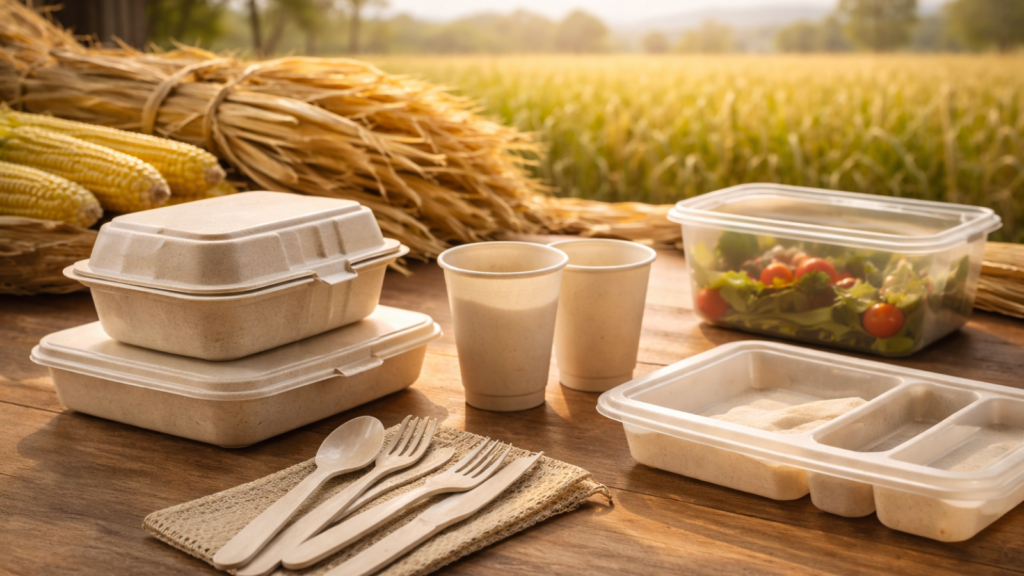
Maize farming generates enormous quantities of stalks discarded after harvesting kernels. Scientists extract cellulose and starch from corn stalks. Processing transforms these materials into bioplastic polymers suitable for manufacturing. Applications include packaging, utensils, containers, and various moulded products. Bioplastics offer performance similar to petroleum-based plastics while dramatically reducing environmental impact.
Eco Features
Corn stalk bioplastics derive from renewable annual crops rather than finite fossil fuel resources. Production generates 60% to 70% fewer greenhouse gas emissions compared to conventional plastic manufacturing. Many formulations are industrially compostable. Breakdown into organic matter occurs within months. Non-toxic composition eliminates harmful chemical leaching into food or soil.
Benefits
Versatility allows bioplastics to replace traditional plastics across numerous applications. Food packaging to consumer goods all become possible replacements. Durability matches conventional plastics for most everyday uses. Lighter weight reduces transportation emissions. Home compostable varieties enable guilt-free disposal without contributing to persistent plastic pollution.
Tips for Use
Check packaging labels distinguishing between industrially compostable and home compostable varieties. Proper disposal depends on accurate identification. Avoid exposure to excessive heat. Premature degradation occurs with heat exposure. Store food in bioplastic containers following same guidelines as conventional plastics. Support brands transparently communicating sourcing, manufacturing, and end-of-life disposal instructions.
Recommended Products
Companies like NatureWorks, Novamont, and BioBag produce certified corn-based bioplastics. Look for products certified by Biodegradable Products Institute or European EN13432 standards. Many grocery stores now stock bioplastic produce bags and food storage containers.
6. Banana Fiber Textiles
Description
Banana cultivation for fruit leaves behind pseudo-stems thick trunk-like stalks supporting plants during growth. Farmers typically discard these stems after harvesting. Stems contain strong, silky fibers ideal for textile production despite routine disposal. Extracting and processing banana fibers creates eco-friendly fabrics. Applications include clothing, accessories, home textiles, and craft materials.
Eco Features
Banana fiber production utilises waste from existing agriculture. No dedicated land cultivation becomes necessary. Water requirements remain minimal compared to water-intensive crops like cotton. No pesticides or chemical fertilizers are necessary for banana plants. Processing uses mechanical extraction and natural retting, avoiding toxic chemical treatments. Biodegradability ensures textiles return harmlessly to soil at end of life.
Benefits
Natural strength and durability make banana textiles long-lasting despite lightweight feel. Breathability and moisture-wicking properties create comfortable wear in warm climates. Unique texture and subtle sheen provide distinctive aesthetic appeal. Hypoallergenic properties suit sensitive skin better than some synthetic alternatives.
Tips for Use
Hand wash banana fiber textiles in cool water. Fiber integrity and colour vibrancy preserve with gentle washing. Avoid harsh detergents. Mild, pH-neutral soaps work best for natural fibers. Air dry away from direct sunlight. Fading prevention requires shade drying. Iron on low heat settings as needed. Banana fiber papers and yarns offer beautiful textures for craft projects.
Recommended Products
Brands like Offset Warehouse, Qmilk, and various artisan cooperatives produce banana fiber products. Fair trade certification ensures ethical production. Farming communities benefit from certified production practices. Banana fiber papers, bags, and clothing increasingly appear in eco-conscious retailers and online marketplaces.
7. Peanut Shell Packaging
Description
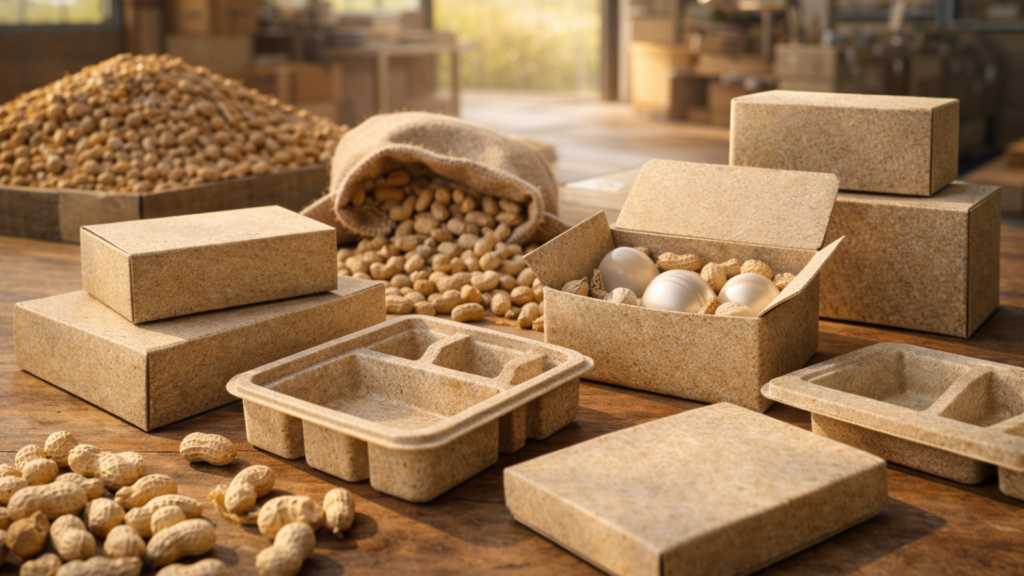
Peanut processing removes shells protecting kernels, generating substantial waste streams. Innovative companies now transform peanut shells into biodegradable packaging peanuts. Additional products include protective padding and shipping materials. Ground shells also create biocomposite materials for manufacturing various moulded products and packaging solutions.
Eco Features
Peanut shell packaging completely biodegrades within weeks. Composting or exposure to moisture and microorganisms triggers breakdown. Production requires minimal processing and no synthetic additives. Carbon-neutral lifecycle captures carbon during peanut growth. Equivalent amounts release during decomposition. Water-soluble varieties dissolve completely, eliminating disposal concerns.
Benefits
Protective cushioning properties rival or exceed petroleum-based Styrofoam for shipping fragile items. Lightweight composition reduces shipping costs and transportation emissions. Static-free nature prevents electronic component damage during shipping. Non-toxic composition ensures safe handling without health concerns.
Tips for Use
Store peanut shell packaging in dry conditions before use. Moisture begins degradation process upon contact. Seal boxes thoroughly for shipping. Moisture exposure prevention becomes critical during transit. Recipients can compost peanut packaging or dissolve water-soluble varieties down drains. Businesses can collect and reuse peanut packaging multiple times before composting.
Recommended Products
Companies like Better Packaging Co., Salazar Packaging, and Ranpak produce peanut-based protective packaging. Many office supply retailers now stock biodegradable packing peanuts. Request peanut shell packaging from shipping services. Environmental responsibility becomes priority for sustainable shippers.
8. Bagasse Board
Description
Sugarcane bagasse serves as excellent raw material for manufacturing rigid boards beyond tableware applications. Uses include construction, furniture, and interior design. Pressing and binding bagasse fibers under heat creates sturdy panels. These panels rival plywood and particleboard in performance. Applications include cabinetry, wall panels, ceiling tiles, and temporary structures.
Eco Features
Bagasse board production diverts millions of tonnes of agricultural waste from burning or landfilling. Manufacturing requires no formaldehyde or toxic binding agents. Conventional particleboard commonly uses these harmful chemicals. Renewable sugarcane grows rapidly, producing harvestable biomass annually. Lower embodied energy compared to wood processing reduces carbon footprint significantly.
Benefits
Structural strength suits demanding applications from furniture to building materials. Natural resistance to termites and pests reduces treatment chemical requirements. Excellent acoustic and thermal insulation properties improve building performance. Workability allows standard woodworking tools and techniques. Cutting, drilling, and finishing proceed normally with bagasse boards.
Tips for Use
Seal bagasse boards properly in moisture-prone environments. Kitchens and bathrooms require protective sealing. Standard wood finishes, paints, and varnishes adhere well to bagasse surfaces. Pre-drill holes preventing splitting. Screws or fasteners insert more safely with pre-drilled holes. Consult local building codes regarding bagasse board specifications and approvals for construction applications.
Recommended Products
Brands like Sierra Pine, Kirei, and Ecor produce architectural-grade bagasse boards. Verify certifications like Greenguard ensuring low Volatile Organic Compound (VOC) emissions. Indoor air quality improves with low-emission materials. Specialty sustainable building suppliers increasingly stock bagasse panels alongside traditional materials.
9. Rice Straw Biochar
Description
Rice straw remaining after harvest undergoes pyrolysis, heating in oxygen-limited conditions producing biochar. Biochar is a stable carbon-rich material serving multiple purposes. Soil amendment applications improve agricultural productivity, water retention, and nutrient availability. Additional uses extend to water filtration, carbon sequestration projects, and environmental remediation.
Eco Features
Biochar production locks carbon into stable form. Carbon remains in soil for centuries, actively removing carbon dioxide (CO2) from atmosphere. Process prevents methane emissions from rice straw decomposition or burning pollution. Soil application reduces fertilizer requirements through improved nutrient efficiency. Water purification applications eliminate need for energy-intensive treatment methods.
Benefits
Agricultural use increases crop yields 10% to 20% through enhanced soil structure and microbial activity. Improved water retention reduces irrigation needs significantly. pH buffering capacity helps moderate acidic or alkaline soils. Long-term stability means single application benefits soil for decades.
Tips for Use
Mix biochar with compost before soil application. Nutrient charging occurs during mixing, enhancing effectiveness. Application rates typically range 5 to 20 tonnes per hectare depending on soil conditions. Blend biochar 10% to 20% by volume with potting mix or topsoil for gardens. Water thoroughly after application. Biochar integration with soil microbiome requires adequate moisture.
Recommended Products
Companies like Wakefield BioChar, Pacific Biochar, and Carbon Gold produce quality rice straw biochar. Agricultural cooperatives in rice-growing regions often produce affordable local options. Garden centres increasingly stock biochar-enhanced soils and amendments.
10. Sugarcane Bagasse Biofuels
Description
Sugarcane bagasse yields liquid biofuels through advanced processing beyond solid fuel applications. Enzymatic hydrolysis and fermentation convert bagasse cellulose into bioethanol. Bioethanol suits vehicle fuel or industrial applications. Gasification processes produce syngas for electricity generation and chemical manufacturing.
Eco Features
Second-generation biofuels from bagasse avoid food-versus-fuel debates plaguing corn ethanol. Carbon-neutral combustion releases only carbon absorbed during sugarcane growth. Waste-to-energy conversion maximises agricultural resource utilisation. Reduced fossil fuel dependence decreases petroleum extraction environmental impacts.
Benefits
Bagasse ethanol blends seamlessly with conventional petrol in existing vehicles. No modifications become necessary for compatibility. Energy density approaches gasoline, providing comparable engine performance. Domestic production enhances energy security. Import dependence reduces with local fuel production. Rural economic development occurs as sugar-producing regions diversify revenue streams.
Tips for Use
Check vehicle compatibility with ethanol blends. Most modern engines handle E10 to E15 without issues. Store ethanol fuels properly. Hygroscopic nature attracts atmospheric moisture. Support policies encouraging renewable fuel standards and infrastructure development. Bagasse-fueled generators offer off-grid solutions in sugar-producing areas for home power generation.
Recommended Products
Major fuel retailers in sugarcane-producing regions increasingly offer ethanol blends from bagasse. Companies like Raizen and BP Bunge produce large-scale bagasse ethanol. Check if local utilities source renewable energy from bagasse power plants for electricity.
11. Cocoa Pod Husk Ash Fertiliser
Description
Chocolate production discards cocoa pod husks after extracting beans. Burning husks produces nutrient-rich ash. Ash contains potassium, phosphorus, calcium, and micronutrients valuable for plant growth. Cocoa ash serves as organic fertiliser alternative to synthetic chemicals. Benefits particularly suit acidic soils common in tropical regions.
Eco Features
Complete waste utilisation from cocoa processing prevents organic matter landfilling. Chemical-free composition eliminates synthetic fertiliser production emissions and water pollution. Slow nutrient release provides sustained plant nutrition. Application frequency reduces with gradual release. Locally sourced ash reduces transportation emissions compared to imported synthetic fertilisers.
Benefits
High potassium content particularly benefits flowering and fruiting plants. Alkaline pH helps neutralise acidic soils. Nutrient availability improves with pH adjustment. Trace mineral content provides comprehensive plant nutrition beyond Nitrogen-Phosphorus-Potassium (NPK) ratios. Cost-effectiveness makes quality fertiliser accessible for small-scale farmers.
Tips for Use
Apply cocoa ash 2 to 4 weeks before planting. Soil integration occurs during waiting period. Mix thoroughly with soil rather than surface application. Nutrient loss prevention requires thorough mixing. Combine with organic compost creating balanced soil amendments. Test soil pH before application. Excessive use may over-alkalinise soil.
Recommended Products
Agricultural suppliers in cocoa-producing regions sell cocoa pod ash fertiliser. Organic farming cooperatives often produce ash as value-added product. Similar potash-rich wood ash provides comparable benefits for gardeners outside cocoa regions.
12. Hempcrete Building Blocks
Description
Industrial hemp cultivation produces fibrous stalks containing woody core material called hurd. Mixing hemp hurd with lime binder creates hempcrete, lightweight, insulating building material. Applications suit walls, floors, and roofs. Pre-formed hempcrete blocks simplify construction. Sustainable alternatives to concrete and conventional masonry emerge from this agricultural waste.
Eco Features
Hemp grows rapidly. Significant atmospheric carbon captures occur during 120-day cultivation cycles. Hempcrete continues absorbing CO2 during curing process. Carbon-negative building material results from carbon absorption. Cultivation requires no pesticides. Weeds receive natural suppression from hemp. Biodegradable composition allows eventual return to earth without environmental harm.
Benefits
Excellent thermal insulation reduces heating and cooling energy requirements 50% to 70%. Natural breathability regulates humidity. Mould growth prevention and improved indoor air quality result from breathability. Fire resistance and pest resistance enhance building durability and safety. Lightweight composition reduces structural load and foundation requirements.
Tips for Use
Hempcrete requires lime plaster finish. Direct weather exposure demands protective coating. Non-load-bearing application necessitates timber or steel framing for structural support. Allow adequate curing time several weeks before finishing interior surfaces. Consult experienced hempcrete builders for proper mixing ratios and application techniques.
Recommended Products
Companies like IsoHemp, Hempcrete Natural Building, and Bâtichanvre produce quality hempcrete blocks and materials. Verify local building code compliance before construction projects. Specialised green building suppliers stock hempcrete materials and provide technical support.
Making Sustainable Choices: Practical Steps Forward
Transitioning toward products made from agricultural waste supports environmental sustainability while meeting everyday needs. Identify high-impact switches first. Replacing disposable plastic tableware with bagasse alternatives significantly reduces personal environmental footprint. Choosing wheat straw paper creates measurable environmental impact.
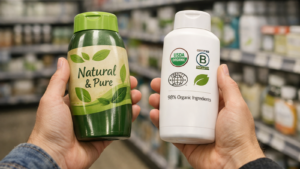
Research brands committed to transparent sourcing and genuine sustainability. Greenwashing marketing requires scrutiny. Certifications like United States Department of Agriculture (USDA) BioPreferred, Cradle to Cradle, and compostability standards provide reliable verification.
Support policy changes encouraging agricultural waste utilisation through circular economy initiatives. Consumer demand drives innovation. Eco-friendly alternatives become increasingly accessible and affordable with market pressure.
Share discoveries with friends, family, and communities. Awareness spreads about agricultural waste transformation possibilities. Collective action multiplies individual efforts. Meaningful environmental progress emerges from combined efforts.
Conclusion
Agricultural waste transformation represents remarkable intersection of environmental necessity and innovative opportunity. These 12 products demonstrate how reimagining farm byproducts creates sustainable solutions. Plastic pollution, deforestation, and climate change receive practical responses. Rural economies gain support simultaneously.
Every purchase decision carries environmental impact. Choosing products from agricultural waste over conventional alternatives reduces resource consumption, emissions, and pollution. Collective adoption of these innovations drives market growth. Sustainable options become increasingly accessible and affordable through widespread adoption.
Sustainable future grows from choices made today. Agricultural waste products offer practical pathway toward environmental responsibility. Convenience and quality require no sacrifice. Together, we transform waste into worth. Healthier planet emerges for generations ahead.
Frequently Asked Questions
What happens to agricultural waste if not converted into products?
Traditional disposal methods include open-field burning, which creates air pollution and greenhouse gas emissions. Decomposition in fields releases methane. Some waste reaches landfills where valuable organic matter goes unused. Converting agricultural waste into products prevents these environmental problems while creating economic value.
Are products from agricultural waste more expensive than conventional alternatives?
Pricing varies by product category and market maturity. Some items like bagasse tableware cost similarly to quality disposables. Others remain premium-priced due to smaller production scales. Increasing demand and manufacturing improvements continue reducing costs. Agricultural waste products become increasingly competitive with price reductions.
How do I properly dispose of compostable products made from agricultural waste?
Commercial composting facilities provide ideal disposal environments. Controlled temperature and moisture conditions ensure complete breakdown. Many municipalities now collect compostable materials separately. Home composting works but requires longer periods and proper conditions. Always verify product certifications indicating appropriate composting methods.
Can agricultural waste products match conventional product performance?
Yes, modern processing techniques create agricultural waste products meeting or exceeding conventional alternatives in durability, functionality, and safety. Bagasse tableware withstands hot foods. Hempcrete provides superior insulation. Coconut brushes clean effectively. Rigorous testing ensures products meet performance standards before market release.
Do agricultural waste products contain harmful chemicals or pesticides?
Reputable manufacturers process agricultural waste removing potential contaminants and residues. Certification programmes verify products meet safety standards for food contact and other applications. Choosing certified organic or specifically tested products provides additional assurance. Processing methods typically involve minimal chemical use compared to conventional manufacturing.
How does using agricultural waste products support farmers?
Creating markets for agricultural byproducts generates additional revenue streams for farming communities. Waste materials previously burned or discarded become valuable commodities. Economic diversification strengthens rural economies. Farming becomes more financially sustainable with multiple revenue sources. Some programmes ensure fair compensation directly supporting smallholder farmers.
Are all agricultural waste products biodegradable?
Most products from agricultural waste are biodegradable. Materials return to soil as organic matter. Degradation rates and conditions vary significantly. Some items require commercial composting facilities. Others break down in home compost or natural environments. Always check specific product certifications and disposal recommendations for proper end-of-life management.
Where can I purchase products made from agricultural waste?
Availability continues expanding through online retailers, eco-friendly shops, and mainstream stores. Consumer demand drives retail recognition. Speciality suppliers focus exclusively on sustainable alternatives. Many products ship internationally. Seeking local sources reduces transportation emissions. Community cooperatives and farmers’ markets sometimes stock regionally produced agricultural waste products.
What agricultural waste materials show most promise for future products?
Researchers actively explore numerous agricultural residues. Coffee husks, olive pits, citrus peels, and bamboo receive significant research attention. Advances in processing technology continually unlock new applications. Combining different agricultural wastes creates composite materials with enhanced properties. Future innovations will likely produce even more diverse and sophisticated products from farm byproducts.
How can I encourage businesses to adopt agricultural waste products?
Consumer demand powerfully influences business decisions. Request sustainable alternatives while shopping. Market interest signals emerge from consumer requests. Support companies already using agricultural waste products. Positive practices receive reinforcement through patronage. Share information through social media and reviews. Awareness raises with information sharing. Contact businesses directly expressing preferences for eco-friendly options. Sustainable alternatives receive consideration from direct feedback.