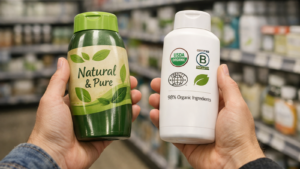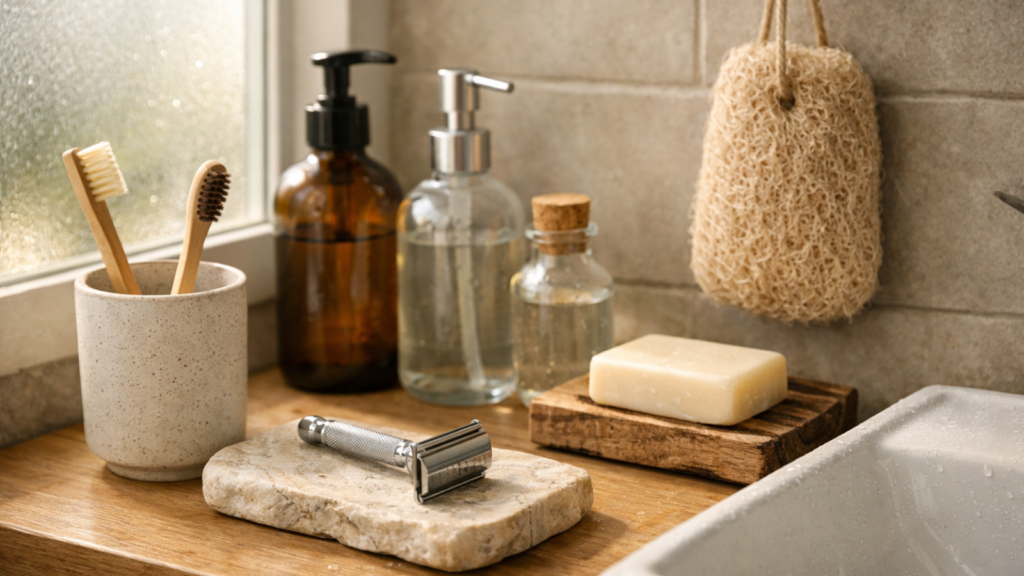
Bathrooms have become ground zero for plastic pollution within our homes. Conventional bathroom products generate mountains of waste destined for landfills and oceans, from disposable razors to synthetic sponges. Making conscious choices transforms your daily routine whilst significantly reducing environmental impact.
This comprehensive guide explores 12 sustainable alternatives that eliminate plastic dependency, offering practical solutions for eco-conscious consumers seeking meaningful change. Each product recommendation considers durability, effectiveness, and genuine environmental benefits rather than greenwashing marketing claims.
Understanding Plastic’s Impact on Bathroom Sustainability
Conventional bathroom products contribute substantially to global plastic waste. Single-use items like cotton buds, disposable razors, and plastic bottles accumulate rapidly. Most take centuries to decompose. Microplastics from synthetic fabrics and packaging leach into water systems, affecting marine life and entering food chains.
Transitioning toward sustainable alternatives doesn’t require perfection. Small, consistent swaps create meaningful environmental impact over time. Focus on replacing items as current products run out, building habits gradually whilst supporting businesses committed to genuine sustainability.
12 Essential Eco-Friendly Products for a Plastic-Free Bathroom
1. Bamboo Toothbrush
Description
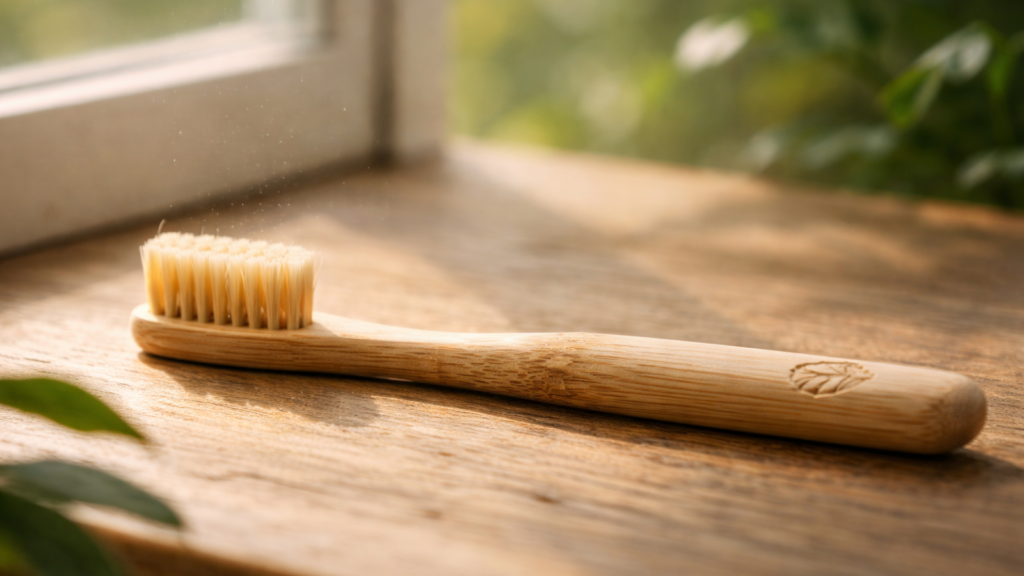
Bamboo toothbrushes replace plastic counterparts with naturally antimicrobial handles crafted from sustainably harvested bamboo. Bristles vary between nylon and plant-based materials. Handles biodegrade within months after disposal.
Eco Features
Bamboo grows rapidly without pesticides or fertilisers. Handles decompose naturally in compost bins. Manufacturing requires minimal energy compared to plastic production. Packaging typically uses recyclable cardboard rather than plastic.
Benefits
Switching saves approximately 4 plastic toothbrushes annually per person. Multiplied across millions of users, this represents billions of plastic items diverted from landfills. Natural properties of bamboo resist bacterial growth, maintaining hygiene throughout product lifespan.
Tips for Use
Store brushes in dry environments between uses, preventing moisture accumulation on handles. Replace every 3 months following dental recommendations. Remove nylon bristles with pliers before composting, recycling or disposing of them separately from biodegradable handles.
Recommended Products
Look for brands offering plant-based bristles from castor oil or pig hair alternatives. Verify bamboo sourcing through Forest Stewardship Council (FSC) certification or equivalent standards ensuring sustainable harvesting practices.
Where to Buy
Health food stores, zero-waste shops, online sustainable marketplaces, and mainstream supermarkets now stock bamboo toothbrushes at competitive prices.
2. Shampoo Bars and Conditioner Bars
Description
Solid shampoo and conditioner bars concentrate cleansing ingredients into compact forms, eliminating water content and plastic packaging. Quality bars contain natural oils, botanical extracts, and gentle surfactants that clean hair effectively without stripping natural oils.
Eco Features
Zero plastic packaging exists. Bars typically come wrapped in recyclable paper or cardboard. Concentrated formula means less transportation emissions occur. Bars last significantly longer than bottled products. One bar equals 2 to 3 bottles. Water-free formulation conserves resources during manufacturing.
Benefits
Bars prove economical over time, lasting 50 to 80 washes depending on hair length and frequency. Travel-friendly solid formats avoid liquid restrictions whilst eliminating spill risks. Natural ingredients reduce chemical exposure, benefiting scalp health and water systems.
Tips for Use
Keep bars dry between uses on soap dishes with drainage. Lather directly onto wet hair or create foam in hands first. Transition periods may occur as hair adjusts from conventional products. Persevere for 2 to 4 weeks allowing natural oil balance to restore.
Recommended Products
Seek bars formulated for specific hair types such as oily, dry, curly, or colour-treated hair. Verify ingredients avoid sulphates and synthetic fragrances. Cold-processed bars retain beneficial properties better than mass-manufactured alternatives.
Where to Buy
Specialist retailers, farmers’ markets, artisan soap makers, and online zero-waste stores offer extensive selections. Many brands provide sample sizes for testing before committing to full bars.
3. Safety Razor with Replaceable Blades
Description
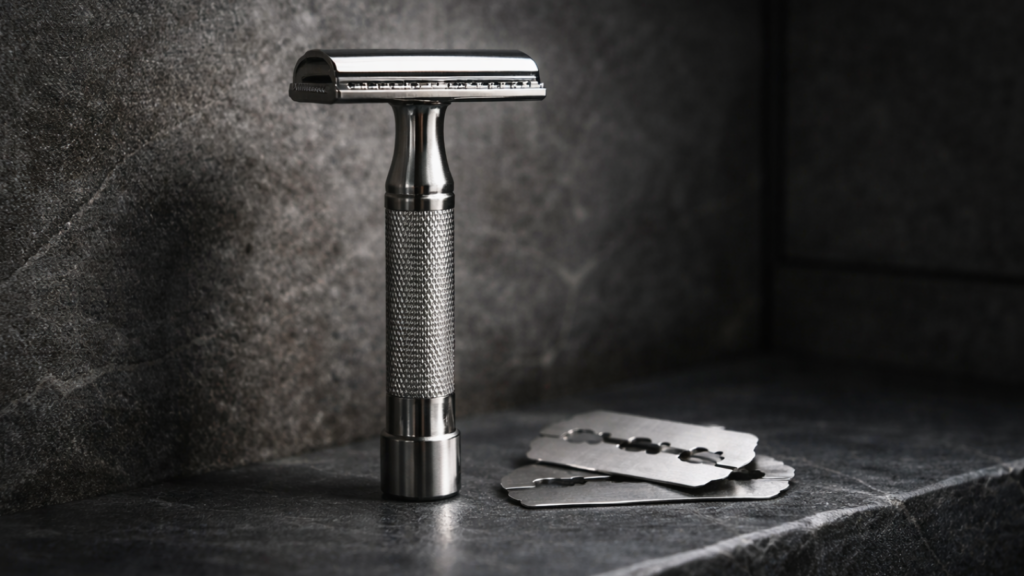
Traditional safety razors feature durable metal handles accepting recyclable stainless steel blades. Safety razors last decades with only blades requiring replacement, unlike disposable plastic razors discarded entirely after use.
Eco Features
Stainless steel construction ensures lifetime durability. Replacement blades are 100% recyclable metal. This design eliminates plastic cartridge waste entirely. Manufacturing resource consumption decreases significantly.
Benefits
Initial investment pays dividends through minimal ongoing costs. Blade packs cost pennies per shave compared to expensive cartridge systems. Closer shaves result from sharp, single blades positioned at optimal angles. Reduced skin irritation occurs without plastic guards and multiple blades pulling hair.
Tips for Use
Practice proper technique holding razors at 30-degree angles, allowing blade weight to provide pressure rather than pushing forcefully. Replace blades weekly for face shaving, fortnightly for body shaving. Store used blades in dedicated blade banks before recycling through metal collection programmes.
Recommended Products
Butterfly-opening razors simplify blade changes for beginners. Adjustable models allow customisation of blade exposure suited to different shaving areas. Choose handles with textured grips preventing slippage.
Where to Buy
Specialist shaving retailers, online sustainable shops, vintage stores, and mainstream retailers stock quality safety razors responding to growing demand.
4. Natural Loofah or Konjac Sponge
Description
Plant-based exfoliating tools replace synthetic plastic poufs and sponges. Loofahs grow from gourd plants, whilst konjac sponges derive from Asian konjac root fibres. Both provide gentle exfoliation whilst decomposing completely after use.
Eco Features
Products are 100% plant-based and biodegradable. Plants grow without synthetic inputs. Sponges become compostable at end of life. Minimal processing occurs from harvest to finished product.
Benefits
Natural fibres provide effective exfoliation without microplastic pollution associated with synthetic sponges. Antibacterial properties naturally present in plant materials reduce bacterial growth. Products suit sensitive skin types when used gently with natural cleansers.
Tips for Use
Rinse thoroughly after each use, squeezing excess water out before hanging to dry. Replace loofahs monthly, konjac sponges every 4 to 6 weeks. Soften konjac sponges in warm water before use. Compost old sponges in garden beds where plant fibres enrich soil.
Recommended Products
Purchase unbleached loofahs maintaining natural colour and properties. Konjac sponges infused with activated charcoal or clay suit different skin needs. Ensure products contain zero added plastics or synthetic materials.
Where to Buy
Health food stores, zero-waste retailers, Asian supermarkets (for konjac), garden centres (for loofahs), and online sustainable marketplaces stock natural bathing tools.
5. Solid Soap Bars
Description
Traditional bar soaps replace liquid body washes packaged in plastic bottles. Quality bars contain natural oils, botanicals, and gentle cleansers that nourish skin whilst cleaning effectively without harsh detergents.
Eco Features
Paper or cardboard packaging eliminates plastic entirely. Concentrated format reduces transportation emissions. Minimal water content conserves resources. Crafting often uses traditional cold-process methods requiring less energy.
Benefits
Bar soaps prove economical, lasting significantly longer than equivalent liquid volumes. Natural ingredient formulations avoid synthetic chemicals absorbed through skin or released into water systems. Versatile products suit body washing, hand washing, and even shaving applications.
Tips for Use
Store bars on well-draining soap dishes preventing soggy deterioration. Allow bars to dry completely between uses, extending lifespan considerably. Cut large bars into smaller portions, storing unused pieces in dry locations for future use.
Recommended Products
Cold-processed soaps retain glycerin naturally produced during saponification, providing moisturising properties. Seek locally-made artisan products supporting small businesses. Avoid bars containing palm oil unless certified sustainable to prevent deforestation.
Where to Buy
Farmers’ markets, craft fairs, independent retailers, zero-waste shops, and online artisan platforms connect consumers with quality soap makers prioritising sustainability.
6. Bamboo Cotton Buds
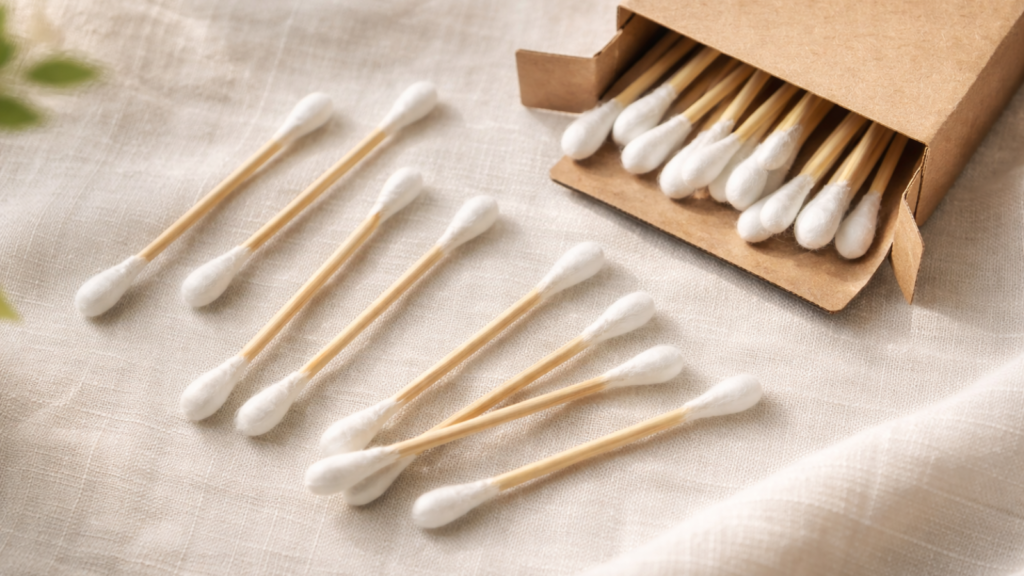
Description
Bamboo stems replace plastic sticks in cotton buds (cotton swabs), offering identical functionality whilst completely biodegrading. Organic cotton tips provide gentle cleaning without introducing synthetic materials into waste streams.
Eco Features
Bamboo sticks compost within months. Organic cotton tips break down naturally. Sustainable bamboo cultivation requires minimal resources. Paper packaging becomes recyclable or compostable.
Benefits
Direct replacements for conventional plastic-stemmed cotton buds eliminate a significant single-use plastic source. Biodegradable materials safely enter compost systems without microplastic contamination. Comparable pricing makes switching effortless economically.
Tips for Use
Use sparingly for outer ear cleaning only. Avoid inserting deep into ear canals as medical professionals recommend. Store in dry containers maintaining cleanliness. Compost used buds with other organic waste, where both bamboo and cotton decompose naturally.
Recommended Products
Choose products specifying 100% organic cotton and sustainably sourced bamboo. Verify packaging contains no plastic windows or synthetic coatings. Some brands offer unbleached cotton reducing chemical processing.
Where to Buy
Supermarkets increasingly stock sustainable alternatives alongside conventional options. Health food stores, pharmacies, and online retailers offer extensive selections at various price points.
7. Reusable Makeup Remover Pads
Description
Washable cloth pads replace disposable cotton rounds and makeup wipes, offering infinite reuses through simple laundering. Typically crafted from organic cotton, bamboo terry, or microfibre, reusable pads effectively remove makeup, cleanse skin, and apply toners.
Eco Features
Pads eliminate single-use cotton production waste. Water and pesticide usage associated with conventional cotton farming decreases. Machine washing occurs hundreds of times before replacement becomes necessary. Packaging often includes reusable containers or bags.
Benefits
Financial savings accumulate rapidly. Single pad sets replace thousands of disposable rounds over years. Softer materials prove gentler on facial skin than rough disposables. Environmental impact decreases dramatically through waste elimination and reduced resource consumption.
Tips for Use
Wash pads weekly or when visibly soiled in mesh laundry bags preventing loss. Add to regular washing loads. Avoid fabric softeners reducing absorbency. Store dirty pads in designated containers between washes. Replace pads when fabric deteriorates, typically after 1 to 2 years regular use.
Recommended Products
Organic cotton pads suit most skin types naturally. Bamboo terry offers extra softness for sensitive skin. Microfibre effectively removes waterproof makeup. Purchase sets of 10 to 20 pads ensuring rotation whilst laundering.
Where to Buy
Zero-waste retailers, online sustainable marketplaces, beauty supply stores, and craft platforms selling handmade products offer reusable pad selections.
8. Wooden Hairbrush with Natural Bristles
Description
Traditional wooden brushes featuring natural boar bristles or wooden pins replace plastic alternatives. Handcrafted from sustainably sourced wood, quality brushes distribute natural scalp oils throughout hair whilst gently detangling.
Eco Features
Renewable wood sources biodegrade eventually. Natural bristles come from ethical sources. Durable construction ensures decades of use. Minimal manufacturing energy requirements exist.
Benefits
Natural bristles condition hair by distributing sebum from roots to ends, reducing need for additional products. Static electricity generation decreases compared to plastic brushes. Gentle scalp massage during brushing stimulates blood circulation promoting hair health.
Tips for Use
Clean brushes monthly by removing accumulated hair and washing with mild soap solution, allowing complete drying before reuse. Avoid soaking wooden handles which may crack. Store in dry environments away from moisture preventing mould growth.
Recommended Products
Beechwood brushes offer durability and attractive grain patterns. Bamboo alternatives provide sustainable fast-growing wood sources. Verify boar bristles come from ethical suppliers practising humane harvesting methods.
Where to Buy
Beauty supply stores, department stores, zero-waste retailers, and online marketplaces stock quality wooden brushes across price ranges reflecting craftsmanship levels.
9. Stainless Steel Razor Blade Tin
Description
Dedicated collection containers safely store used safety razor blades for disposal, preventing injury risks whilst facilitating proper recycling. Compact metal tins accept hundreds of blades through narrow slots, sealing contents securely.
Eco Features
Reusable metal construction lasts indefinitely. Tins enable proper blade recycling when full. Containers prevent sharps contamination in general waste. Small footprint requires minimal storage space.
Benefits
Safety improves dramatically compared to loose blade disposal. Recycling becomes straightforward. Full tins go directly to metal recycling facilities processing contents properly. Environmental responsibility increases through proper waste management.
Tips for Use
Position tins in convenient locations encouraging consistent disposal habits. Contact local recycling centres about sharps metal recycling procedures when full. Some pharmacies accept sealed blade banks. Never open tins attempting to remove contents. Recycle entire sealed containers.
Recommended Products
Purpose-made blade banks include slot designs preventing accidental blade exit. Vintage shaving tins often feature attractive designs. DIY options using sealed metal tins with cut slots work effectively when manufactured products become unavailable.
Where to Buy
Shaving supply retailers, online sustainable shops, vintage stores, and some pharmacies stock blade collection tins alongside safety razors.
10. Natural Pumice Stone
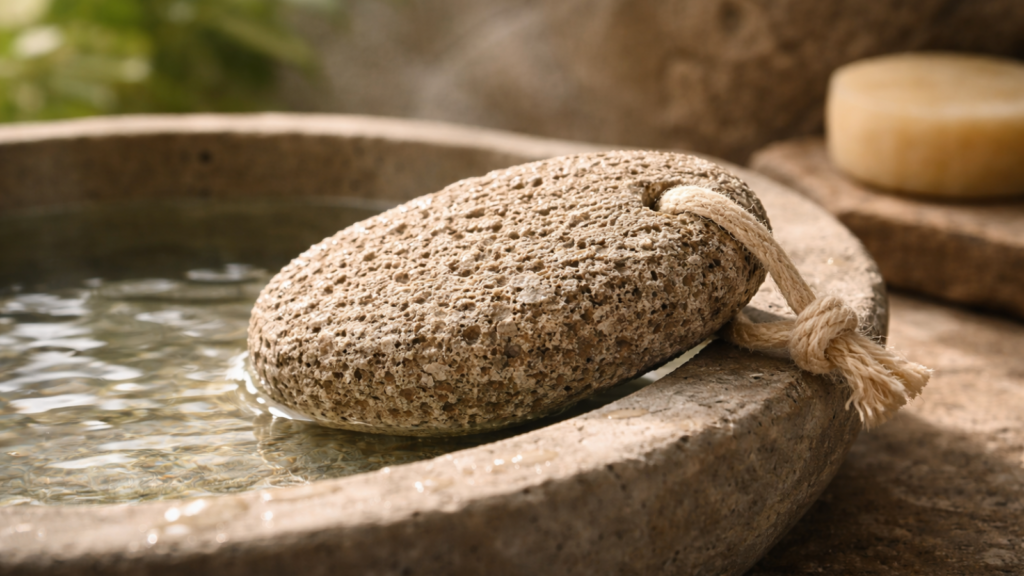
Description
Volcanic pumice provides natural exfoliation for feet and rough skin areas without synthetic materials or microplastic pollution. Formed from volcanic lava, porous pumice gently removes dead skin whilst lasting years with proper care.
Eco Features
Natural volcanic formation requires zero manufacturing. Stones become completely biodegradable returning to earth. Harvesting occurs with minimal environmental disruption. Packaging remains minimal, often just paper wrapping or none at all.
Benefits
Effective exfoliation removes calluses and rough patches through natural abrasive action. Products suit regular use maintaining soft, healthy skin. Economical investment lasts years of consistent use. Antibacterial properties naturally occur in volcanic material.
Tips for Use
Soften feet in warm water before exfoliating, using gentle circular motions avoiding excessive pressure. Rinse stones thoroughly after use, allowing complete drying between applications. Replace stones when becoming excessively smooth or small, composting old pieces in gardens.
Recommended Products
Naturally shaped stones offer ergonomic handling. Some suppliers attach natural rope handles improving grip during use. Avoid pumice products mixed with synthetic materials or adhesives.
Where to Buy
Pharmacies, beauty retailers, health food stores, zero-waste shops, and online sustainable marketplaces stock natural pumice stones affordably.
11. Organic Cotton Towels
Description
Towels woven from certified organic cotton eliminate synthetic fibres releasing microplastics during washing. Grown without toxic pesticides or synthetic fertilisers, organic cotton provides absorbent, durable bathroom textiles respecting environmental and social standards.
Eco Features
Organic cultivation protects soil health and waterways. Fair trade certifications ensure ethical labour practices. Natural fibres biodegrade completely. Chemical-free processing reduces water pollution.
Benefits
Softer feel against skin results from gentle processing methods. Greater absorbency develops after initial washes removing manufacturing residues. Hypoallergenic properties suit sensitive skin better than conventional options. Longevity increases when quality organic cotton receives proper care.
Tips for Use
Wash before first use removing natural oils and improving absorbency. Avoid fabric softeners which coat fibres reducing absorbency permanently. Line dry when possible conserving energy and extending towel lifespan. Rotate multiple towels preventing overuse of single items.
Recommended Products
Global Organic Textile Standard (GOTS) certification ensures comprehensive organic and ethical standards. Unbleached natural colours reduce processing impacts. Turkish and Egyptian organic cotton varieties offer luxury quality.
Where to Buy
Speciality linen retailers, department stores, online sustainable marketplaces, and mainstream retailers stock certified organic cotton towels responding to demand.
12. Refillable Glass Soap Dispensers
Description
Durable glass containers with pump mechanisms replace disposable plastic bottles for liquid soaps and cleansers. Designed for repeated refilling with bulk or homemade products, quality dispensers last indefinitely with occasional pump replacement.
Eco Features
Glass recycles infinitely without quality degradation. Dispensers eliminate single-use plastic bottle consumption. Durable construction prevents frequent replacement needs. Compatibility with bulk purchasing reduces packaging waste.
Benefits
Aesthetic appeal transforms bathroom décor compared to plastic containers. Economical refilling from bulk sources saves money long-term. Customisation options allow personal product creation using simple natural ingredients. Environmental impact decreases through waste reduction.
Tips for Use
Clean dispensers monthly preventing residue buildup affecting pump function. Choose pumps with replaceable mechanisms extending dispenser lifespan. Label containers clearly when storing multiple products. Purchase complementary sets creating cohesive bathroom aesthetics.
Recommended Products
Amber glass protects light-sensitive products like essential oil blends. Clear glass showcases attractive natural product colours. Stainless steel pumps offer durability surpassing plastic mechanisms. Seek wider openings facilitating easy refilling and cleaning.
Where to Buy
Home goods stores, zero-waste retailers, online sustainable marketplaces, and container specialty shops stock glass dispenser options across style preferences and budgets.
Conclusion
Transforming bathrooms into plastic-free sanctuaries represents achievable goals for committed individuals. Starting with manageable swaps builds momentum whilst developing sustainable habits naturally. Remember that progress exceeds perfection. Each positive change matters regardless of pace.
Research products thoroughly before purchasing, ensuring alternatives genuinely deliver environmental benefits claimed. Support businesses demonstrating authentic sustainability commitments through transparent practices and verified certifications.
Share your journey with others, normalising sustainable choices whilst inspiring broader participation. Collective action creates cultural transformation extending far beyond individual bathrooms.
Your choices matter. Every bamboo toothbrush, safety razor, and refillable container prevents plastic pollution whilst supporting sustainable industries. Together, conscious consumers reshape markets, demonstrating demand for products respecting planetary boundaries.
Begin today with single swaps. Build gradually, celebrating successes whilst learning from challenges. Your plastic-free bathroom awaits, sustainable, beautiful, and aligned with values protecting our shared environmental future.
Frequently Asked Questions
Are bamboo products truly sustainable?
Yes, bamboo offers genuine sustainability when properly sourced. This fast-growing grass requires minimal water, zero pesticides, and regenerates rapidly after harvesting. However, verify certifications ensuring responsible farming practices and ethical labour conditions. Transportation impacts matter. Locally produced alternatives may prove more sustainable than imported bamboo depending on location.
How long do natural bathroom products typically last?
Lifespan varies by product and usage patterns. Bamboo toothbrushes last 3 months matching replacement recommendations. Shampoo bars typically provide 50 to 80 washes. Safety razors last decades with proper care, requiring only blade replacements. Natural loofahs remain effective for 4 to 6 weeks whilst pumice stones endure years of regular use.
Can sustainable products handle hard water effectively?
Yes, natural products perform well in hard water with minor adjustments. Shampoo bars may require longer lathering time or vinegar rinses removing mineral buildup. Soap bars benefit from well-draining dishes preventing dissolution. Consider chelating ingredients like citric acid in homemade formulations addressing hard water challenges.
What should beginners prioritise when starting?
Start with high-impact, easy swaps like bamboo toothbrushes, bar soaps, and reusable cotton pads. These products offer straightforward transitions requiring minimal adjustment whilst eliminating significant plastic waste. Build confidence through initial successes before tackling more challenging swaps requiring technique changes or larger investments.
Are DIY bathroom products safe and effective?
Yes, simple DIY products using verified recipes prove safe and effective for most users. Basic formulations like sugar scrubs, oil cleansers, and salt soaks carry minimal risk. However, complex products requiring preservatives or pH balancing need careful research and testing. Start with simple recipes, progressing to advanced formulations gradually whilst prioritising safety.
How do I dispose of natural products properly?
Disposal methods depend on specific materials. Compost bamboo handles, wooden items, and natural fibres in garden systems or municipal composting facilities. Recycle metal components like safety razor blades and glass containers through appropriate streams. Check local guidelines for specific materials ensuring proper waste management.
Will switching save money long-term?
Yes, sustainable products generally deliver significant long-term savings despite higher initial costs. Durable items purchased once replace hundreds of disposables bought repeatedly. Concentrated formats and bulk purchasing further reduce expenses. Calculate lifetime costs rather than initial prices when evaluating economic benefits.
Can sensitive skin tolerate natural products?
Yes, natural products often suit sensitive skin better than synthetic alternatives. Fewer ingredients reduce reaction risks whilst avoiding harsh chemicals common in conventional products. However, natural doesn’t guarantee hypoallergenic. Test new products carefully. Specific botanical ingredients may trigger sensitivities in susceptible individuals.
What certifications should I look for?
Credible certifications include Global Organic Textile Standard (GOTS) for fabrics, Forest Stewardship Council (FSC) for wood products, Leaping Bunny for cruelty-free verification, and B Corporation for comprehensive sustainability. Avoid brand-created seals lacking independent verification. Research certification bodies ensuring robust standards and legitimate auditing.
How do I convince family members to switch?
Lead by example rather than lecturing. Share products for trial, allowing personal experience to demonstrate effectiveness. Discuss environmental impacts conversationally without judgment. Involve family in product selection, respecting preferences whilst suggesting sustainable alternatives. Celebrate small changes rather than demanding complete transformation immediately.