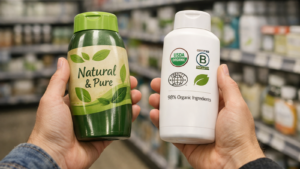
Navigating supermarket aisles today feels like decoding encrypted messages. Green leaf symbols, circular arrows, and sustainability badges plaster every product imaginable. Yet which eco-friendly certifications genuinely represent environmental responsibility, and which exist purely for marketing appeal?
Greenwashing has become rampant across industries. Companies slap “eco” labels on products without meaningful environmental standards backing claims. Distinguishing authentic certifications from superficial marketing requires knowledge and vigilance as eco-conscious consumers.
This comprehensive guide examines 11 eco-friendly certifications you should actually trust, labels backed by rigorous standards, independent verification, and genuine environmental impact. Understanding trustworthy certifications empowers better purchasing decisions, whether shopping for food, clothing, cleaning products, or building materials.
Why Eco-Friendly Certifications Matter
Environmental certifications serve as third-party validations that products or companies meet specific sustainability criteria. Legitimate programmes conduct thorough audits, require compliance with measurable standards, and provide transparency throughout supply chains.
Consumers must blindly trust corporate environmental claims without reliable certifications. Studies show over 40% of corporate green claims may be misleading. Certified products offer necessary assurance given this reality.
Trustworthy eco-labels benefit everyone involved.
For Consumers: Purchases align with environmental values without extensive research into every brand’s practices. Confidence grows with certification.
For Businesses: Competitive differentiation and market access emerge whilst demonstrating genuine commitment to sustainability.
For Planet Earth: Reduced pollution, resource conservation, biodiversity protection, and progress toward climate goals occur through market-driven change.
What Makes Certification Trustworthy?
Understanding what separates credible certifications from greenwashing requires examining several key factors before diving into specific programmes.
Third-Party Verification: Independent auditors assess compliance rather than companies self-certifying products.
Transparent Standards: Clear, publicly available criteria specify measurable environmental requirements.
Regular Audits: Ongoing monitoring ensures continued compliance rather than one-time approval.
Supply Chain Oversight: Comprehensive evaluation covers raw materials, production processes, and distribution—not just final products.
Science-Based Criteria: Standards ground themselves in environmental research and update as scientific understanding evolves.
Consequences for Non-Compliance: Meaningful penalties, including certification revocation, await companies failing to meet requirements.
Programmes exhibiting these characteristics deserve consumer trust. Exploring 11 eco-friendly certifications you should actually trust comes next.
1. B Corporation Certification

B Corp Certification represents one of the most comprehensive sustainability assessments available for businesses. B Lab administers this certification, evaluating companies across 5 impact areas: firstly, governance; secondly, workers; thirdly, community; plus environment and customers.
Why Trust B Corp?
Companies must score at least 80 points on the rigorous assessment of B Lab covering over 200 questions about business practices. Third-party verification confirms all claims. Companies must legally commit to considering stakeholders beyond just shareholders.
Certified B Corporations undergo re-certification every 3 years, ensuring sustained commitment. Over 6,000 certified companies across 80+ countries participate, including Patagonia, Ben & Jerry’s, and Seventh Generation. B Corp status signals genuine dedication to balancing profit with purpose.
What B Corp Covers:
- Carbon footprint and emissions reduction targets
- Waste management and circular economy practices
- Worker welfare, fair wages, and safe conditions
- Community engagement and charitable giving initiatives
- Transparent governance structures with accountability
Look For: Products from B Corp certified companies demonstrate holistic sustainability rather than single-issue environmental improvements.
2. USDA Organic Certification
United States Department of Agriculture (USDA) Organic standards influence global organic agriculture and enjoy international recognition despite being American. This certification prohibits synthetic pesticides, fertilisers, Genetically Modified Organisms (GMOs), and sewage sludge whilst requiring soil health maintenance and animal welfare standards.
Why Trust USDA Organic?
Annual inspections by accredited certifying agents verify compliance. Detailed record-keeping requirements create paper trails validating organic practices. Penalties for violations include fines up to £10,000 and potential criminal prosecution for fraudulent organic claims.
Organic farming practices reduce chemical pollution in waterways, support soil biodiversity, and typically result in lower carbon footprints compared to conventional agriculture. Studies consistently show organic farms harbour 30% more species diversity than conventional counterparts.
What USDA Organic Covers:
- Crops grown without synthetic pesticides or fertilisers
- Livestock raised without antibiotics or growth hormones
- Animals provided outdoor access and humane treatment
- Processed foods containing 95%+ organic ingredients
- GMO-free production methods throughout
Look For: Products labelled “100% Organic” or “USDA Organic” contain 95%+ organic ingredients. Items with “Made with Organic Ingredients” contain 70% to 95% organic content.
3. Fair Trade Certified

Fair Trade Certification addresses both environmental sustainability and social justice throughout global supply chains. This certification proves particularly relevant for coffee, chocolate, tea, sugar, and cotton products. Fair Trade ensures farmers receive fair compensation whilst implementing environmental protections.
Why Trust Fair Trade?
FLOCERT conducts regular audits of producers, traders, and manufacturers across supply chains. Financial transparency requirements ensure fair prices reach farmers. Community development premiums fund local improvements like schools, clean water systems, and healthcare facilities.
Environmental standards prohibit hazardous pesticides, encourage organic practices, protect natural resources, and ban GMOs. Over 1.8 million farmers and workers across 75 countries participate in Fair Trade certification.
What Fair Trade Covers:
- Minimum price guarantees protecting farmers from market volatility
- Additional premiums for community development projects
- Democratic organisation requirements for farming cooperatives
- Safe working conditions with no child or forced labour
- Environmental protections including water conservation and biodiversity preservation
Look For: Fair Trade Certified label appears on coffee, tea, chocolate, bananas, sugar, cotton, and other agricultural products.
4. Forest Stewardship Council (FSC)
Forest Stewardship Council (FSC) Certification ensures wood and paper products come from responsibly managed forests that provide environmental, social, and economic benefits. Deforestation accounts for roughly 10% of global carbon emissions. Forest certification carries significant environmental weight given this impact.
Why Trust FSC?
FSC employs independent third-party auditors to verify forest management practices against 10 principles covering indigenous rights, worker welfare, environmental protection, and sustainable harvesting. Chain-of-custody certification tracks certified materials from forests through production to consumers.
FSC maintains independence through balanced governance including environmental organisations, social groups, and economic interests equally unlike competing programmes with industry ties.
What FSC Covers:
- Protection of rare and endangered species habitats
- Maintenance of forest ecosystem functions and health
- Respect for indigenous peoples’ rights and knowledge
- Workers’ rights, safety, and fair compensation
- Sustainable harvest rates maintaining long-term forest health
- Prohibition of illegal logging and forest conversion
Look For: FSC label comes with 3 categories: firstly, FSC 100% (entirely certified wood); secondly, FSC Mix (certified and controlled sources); thirdly, FSC Recycled (reclaimed materials).
5. Energy Star
Energy Star certification identifies products meeting strict energy efficiency guidelines set by environmental protection agencies. This programme covers 70+ product categories—from appliances to electronics to buildings. Energy Star represents measurable energy savings.
Why Trust Energy Star?
Government backing from US Environmental Protection Agency and Department of Energy provides credibility. Certifications require products to meet specifications typically 10% to 50% more efficient than standard models whilst maintaining performance.
Third-party testing and verification confirm efficiency claims. Energy Star has prevented over 4 billion tonnes of greenhouse gas emissions since 1992 whilst saving consumers billions in energy costs.
What Energy Star Covers:
- Appliances using less electricity and water
- Electronics with efficient power management features
- Heating and cooling systems with superior performance
- Buildings designed for optimal energy efficiency
- Commercial equipment reducing operational costs significantly
Look For: Distinctive blue Energy Star label appears on appliances, electronics, windows, doors, and other products. Buildings earn Energy Star certification too.
6. Leaping Bunny Certification

Leaping Bunny represents gold standard certification for cruelty-free cosmetics and personal care products. Cruelty Free International administers this programme, ensuring no animal testing occurs at any production stage.
Why Trust Leaping Bunny?
Companies must pledge to end animal testing throughout entire supply chains, including ingredient suppliers. Independent audits verify compliance through supplier monitoring systems. Fixed cut-off dates prevent companies from benefiting from past animal testing.
Leaping Bunny requires comprehensive verification covering all ingredients and production stages unlike vague “not tested on animals” claims—closing loopholes companies sometimes exploit.
What Leaping Bunny Covers:
- Zero animal testing for finished products
- No animal testing by ingredient suppliers whatsoever
- Ongoing monitoring of supply chains continuously
- Fixed cut-off date for ending animal testing practices
- Annual compliance verification with detailed review
Look For: Leaping Bunny logo appears on cosmetics, personal care items, and household products. Over 1,500 brands worldwide carry certification.
7. Global Organic Textile Standard (GOTS)
Global Organic Textile Standard (GOTS) provides comprehensive certification for organic textiles covering processing, manufacturing, and labelling. Fashion ranks among the most polluting industries globally. GOTS certification signals genuinely sustainable textile production.
Why Trust GOTS?
Requirements mandate minimum 70% organic fibres in certified products. Strict chemical restrictions prohibit toxic dyes, formaldehyde, and other hazardous substances. Social criteria ensure fair wages and safe working conditions throughout supply chains.
Independent certification bodies conduct on-site inspections annually. Detailed transaction certificates track organic materials from raw fibre to finished garment, preventing fraudulent claims.
What GOTS Covers:
- Organic fibre content requirements at minimum thresholds
- Prohibition of toxic chemicals in processing stages
- Wastewater treatment standards for effluent management
- Energy and water use reduction initiatives
- Worker health, safety, and fair compensation guarantees
- Social compliance throughout entire supply chains
Look For: GOTS label indicates “organic” (70%+ organic fibres) or “made with organic” (minimum 70% organic fibres). Certification covers clothing, bedding, towels, and other textile products.
8. Rainforest Alliance Certified

Rainforest Alliance Certification applies primarily to agricultural products, promoting farming practices that conserve biodiversity, protect natural resources, and improve farmer livelihoods. This certification appears particularly common for coffee, cocoa, tea, and bananas.
Why Trust Rainforest Alliance?
Science-based standards address deforestation, climate change, human rights, and livelihoods comprehensively. Independent audits verify compliance, with annual surveillance ensuring continued adherence. Multi-stakeholder governance includes farmers, civil society, and industry representatives equally.
Recent updates strengthened requirements around deforestation prevention, income assurance for farmers, and supply chain traceability. Over 480,000 certified farms across 60+ countries participate.
What Rainforest Alliance Covers:
- Forest conservation and biodiversity protection measures
- Water and soil conservation practices throughout farms
- Climate-smart agriculture techniques for resilience
- Prohibition of worst pesticides from use
- Worker rights, safety, and fair treatment standards
- Community wellbeing and education investment
Look For: Green frog seal appears on coffee, chocolate, tea, bananas, and other agricultural products.
9. Cradle to Cradle Certified
Cradle to Cradle (C2C) Certification evaluates products across 5 sustainability categories: firstly, material health; secondly, material reutilisation; thirdly, renewable energy; plus water stewardship and social fairness. This comprehensive framework encourages circular economy principles.
Why Trust Cradle to Cradle?
Products earn achievement levels (Basic, Bronze, Silver, Gold, Platinum) based on performance across all 5 categories. Independent assessors evaluate material ingredients, manufacturing processes, and end-of-life scenarios thoroughly.
C2C promotes positive impact through regenerative design unlike certifications focusing solely on reduced harm. Products must demonstrate continuous improvement with re-certification required every 2 years.
What Cradle to Cradle Covers:
- Material safety for human and environmental health
- Design for circularity enabling recycling or composting
- Renewable energy use in manufacturing processes
- Responsible water management throughout production
- Fair labour practices and community engagement initiatives
Look For: C2C Certified label with achievement level appears on building materials, textiles, personal care items, and consumer products.
10. Marine Stewardship Council (MSC)
Marine Stewardship Council (MSC) Certification identifies sustainable seafood from wild-capture fisheries. Overfishing threatens marine ecosystems globally. MSC standards help consumers choose seafood harvested responsibly.
Why Trust MSC?
Independent assessors evaluate fisheries against 3 core principles: firstly, sustainable fish stocks; secondly, minimised environmental impact; thirdly, effective management. Certification requires healthy target species populations, ecosystem protection, and compliance with regulations.
Chain-of-custody certification tracks certified seafood from ocean to plate, preventing fraud effectively. Over 400 fisheries representing 15% of wild-capture seafood carry MSC certification.
What MSC Covers:
- Fish stock health and sustainable harvest levels
- Ecosystem impact including bycatch reduction strategies
- Management systems ensuring long-term sustainability
- Compliance with fishing regulations and laws
- Traceability throughout entire supply chains
Look For: Blue MSC label appears on fresh, frozen, and canned seafood products. Restaurants display MSC certification for menu items too.
11. Certified Vegan
Certified Vegan logo of Vegan Action provides assurance that products contain no animal ingredients or byproducts and weren’t tested on animals. This certification proves particularly valuable since “vegan” remains legally undefined in many jurisdictions.
Why Trust Certified Vegan?
Comprehensive ingredient review verifies absence of animal-derived materials including meat, dairy, eggs, honey, leather, fur, silk, and less obvious animal products like carmine or shellac. Manufacturing process evaluation ensures no animal ingredient cross-contamination occurs.
Certification prohibits animal testing and requires companies to implement monitoring systems preventing animal ingredient use. Annual fees support vegan advocacy and education initiatives.
What Certified Vegan Covers:
- Zero animal ingredients or derivatives in products
- No animal testing for ingredients or finished products
- Prevention of animal ingredient cross-contamination during manufacturing
- Vegan-appropriate processing and manufacturing methods
- Ongoing compliance monitoring with regular verification
Look For: Certified Vegan logo featuring heart with “V” appears on food, cosmetics, clothing, household products, and other consumer goods.
Conclusion
These 11 eco-friendly certifications you should actually trust: B Corporation, USDA Organic, Fair Trade, FSC, Energy Star, Leaping Bunny, GOTS, Rainforest Alliance, Cradle to Cradle, MSC, and Certified Vegan, represent reliable guides through sustainability claim complexity.
Each certification addresses specific environmental or ethical concerns with rigorous standards, independent verification, and meaningful impact. Familiarising yourself with these labels transforms shopping from guesswork into intentional action aligned with environmental values.
Greenwashing will continue as companies exploit growing environmental consciousness relentlessly. Armed with knowledge about trustworthy certifications, eco-conscious consumers distinguish genuine sustainability from marketing spin effectively.
Every certified product purchased votes for environmental responsibility, signalling that consumers value sustainability and will reward companies making authentic efforts. Combined with broader advocacy and systemic change efforts, conscious consumption contributes to urgently needed environmental progress.
Start recognising these trusted certifications during your next shopping trip. Your choices matter more than you might think.
Frequently Asked Questions
Q: Why should consumers trust third-party certifications over company environmental claims?
Third-party certifications involve independent verification by organisations with no financial stake in product sales. Companies making unverified claims face no accountability and may exaggerate environmental benefits significantly. Certified products meet measurable standards audited by external parties, providing assurance that cannot come from self-reporting.
Q: Do eco-friendly certifications significantly increase product costs?
Certification and compliance costs sometimes increase product prices, though differences vary considerably by category and scale of production. Certified products often provide better value through superior quality, durability, and performance over time. Many consumers find modest price increases acceptable given environmental and social benefits delivered, whilst some certified options cost comparably to conventional alternatives.
Q: Can small businesses afford eco-certification?
Certification costs challenge smaller businesses financially, though many programmes offer scaled fees based on company size or revenue levels. Some organisations provide technical assistance helping small producers meet standards successfully. Collaborative certification for cooperatives or producer groups reduces individual costs whilst maintaining rigorous standards across participants.
Q: How frequently do companies undergo recertification audits?
Recertification frequency varies by programme, typically ranging from annual surveillance audits to full recertification every 2 to 3 years. Continuous compliance monitoring, transaction certificates, and surprise audits supplement scheduled assessments regularly. This ongoing oversight ensures companies maintain standards rather than just passing initial certification once.
Q: Are organic certifications worth the premium price?
Organic certification delivers measurable environmental benefits including reduced pesticide pollution, improved soil health, and enhanced biodiversity across farmland. Health benefits remain debated scientifically, though organic foods contain fewer pesticide residues measurably. Whether premiums prove worthwhile depends on individual priorities and budgets, with many consumers choosing organic for specific high-impact products strategically.
Q: What happens if certified companies violate standards?
Violations trigger corrective action requirements, increased audit frequency, public disclosure, certification suspension, or full revocation depending on severity and programme rules. Some certifications impose financial penalties proportionate to violations. Serious or repeated violations typically result in decertification, removing valuable market differentiation and consumer trust permanently.
Q: Do different countries recognise these international certifications?
Most certifications discussed operate internationally with recognition across numerous countries globally, though specific regulations vary by jurisdiction. Some certifications like USDA Organic have equivalency agreements with foreign programmes (EU Organic). Others like FSC and Fair Trade enjoy global recognition regardless of product origin or sales location.
Q: How can consumers verify certification authenticity?
Most certification programmes maintain online databases where consumers search certified companies or products easily. Checking official certification body websites confirms legitimacy and provides detailed information about specific certified items. Examining labels for proper licensing information and avoiding suspiciously broad claims helps identify fraudulent certifications.
Q: Are there reliable certifications for electronics and technology products?
Energy Star covers many electronics for energy efficiency performance. Electronic Product Environmental Assessment Tool (EPEAT) certifies computers, displays, and imaging equipment across lifecycle environmental criteria. TCO Certified addresses sustainability and social responsibility for IT products comprehensively. Fair Trade certifies some electronics addressing conflict minerals and labour conditions too.
Q: Which certifications matter most for reducing climate impact?
B Corporation includes carbon footprint assessment in evaluations. Energy Star directly reduces energy consumption and emissions through efficiency. Organic certifications lower agricultural emissions significantly. FSC protects forest carbon sinks from deforestation. Cradle to Cradle encourages renewable energy use throughout manufacturing. Climate-conscious consumers prioritise these certifications whilst recognising that comprehensive sustainability addresses multiple interconnected environmental challenges beyond just carbon emissions alone.