Living sustainably no longer requires dramatic lifestyle shifts or expensive renovations. A greener household grows through thoughtful product choices that reduce landfill waste, limit greenhouse gas emissions, and support ethical brands. Eco-conscious consumers across worldwide communities now choose sustainable home swaps because everyday actions influence environmental impact more than most people realise.
This guide focuses on 10 Simple Swaps for an Eco-Friendly Home, written for readers seeking practical, product-based improvements rather than abstract advice. Each swap replaces a common household item with environmentally friendly alternatives designed for long-term use, minimal waste, and responsible sourcing. Sustainable lifestyle changes start at home, where plastic-free home products, reusable household items, and renewable materials shape daily habits.
1. Bamboo Toothbrush
Description
Traditional plastic toothbrushes contribute approximately 1 billion units annually to landfills in developed countries alone. Bamboo toothbrushes offer elegant, functional alternatives crafted from one of the fastest-growing renewable resources of nature. These brushes feature naturally antimicrobial bamboo handles with either plant-based or recyclable nylon bristles.
Eco Features
Bamboo grows without pesticides, requires minimal water, and regenerates rapidly after harvesting. This makes it exceptionally sustainable. Unlike petroleum-based plastics requiring centuries to decompose, bamboo handles biodegrade within months when composted properly. Manufacturing bamboo products generates significantly lower carbon emissions compared to conventional plastic production.
Benefits
Bamboo toothbrushes provide excellent oral hygiene performance matching traditional counterparts. Natural bamboo possesses antimicrobial properties that inhibit bacterial growth on handles. Aesthetically pleasing grain patterns bring natural beauty to bathroom counters while demonstrating commitment to sustainable consumption.
Tips for Use
Replace bamboo toothbrushes every 3 months (90 days), identical to conventional recommendations. Remove bristles with pliers before composting handles after useful life concludes. Store brushes in dry areas between uses to maximise longevity. Consider purchasing multi-packs to reduce packaging waste and shipping impacts.
Recommended Products
Look for brands using sustainably harvested bamboo with Forest Stewardship Council (FSC) certification. Products featuring compostable, plant-based nylon-4 bristles offer completely biodegradable solutions. Companies committed to zero waste journey principles often package toothbrushes in recyclable cardboard rather than plastic.
Where to Buy
Natural health stores, zero waste shops, and online eco-friendly retailers stock various bamboo toothbrush options. Ethical brands increasingly offer direct-to-consumer subscriptions delivering replacement brushes quarterly. This eliminates shopping trips and ensures timely replacements.
2. Reusable Water Bottle
Description
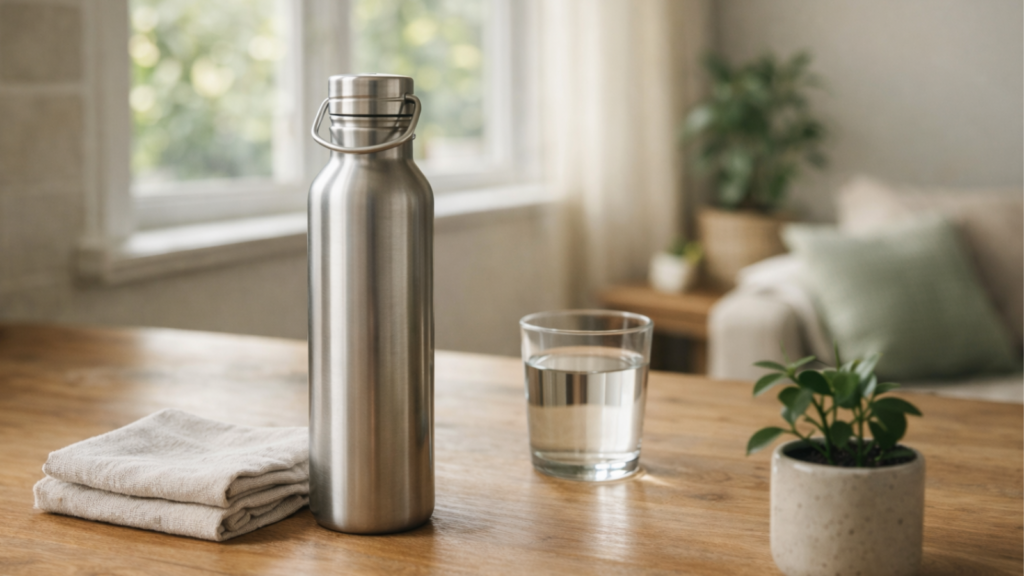
Single-use plastic bottles represent one of the most pervasive environmental challenges of modern society. Reusable water bottles crafted from stainless steel, glass, or food-grade silicone eliminate dependence on disposable containers. They maintain beverage temperature for hours.
Eco Features
Manufacturing 1 reusable bottle requires resources equivalent to producing several dozen disposable bottles. However, over its multi-year lifespan, each reusable bottle prevents hundreds or thousands of single-use containers from entering waste streams. Stainless steel options offer virtually indestructible durability. They often last decades with proper care.
Benefits
Reusable bottles save substantial money compared to purchasing bottled water repeatedly. Insulated models maintain cold drinks refreshingly chilled for 24 hours (1,440 minutes) or hot beverages steaming for 12 hours (720 minutes). Many feature innovative designs with built-in filters, fruit infusers, or measurement markings.
Tips for Use
Clean bottles daily with warm, soapy water to prevent bacterial buildup. Rinse with diluted vinegar or baking soda solution for stubborn odours. Choose appropriate sizes for different activities. Smaller bottles work for commuting. Larger capacities suit hiking or extended outings.
Recommended Products
Stainless steel bottles with powder-coated finishes resist scratching while providing excellent grip. Glass bottles with protective silicone sleeves combine purity of taste with breakage protection. Collapsible silicone bottles offer space-saving convenience for travellers.
Where to Buy
Sporting goods stores, department stores, and outdoor retailers carry extensive reusable bottle selections. Specialty sustainable home products shops often feature unique designs from ethical household products brands. Online marketplaces provide comparison shopping across numerous brands simultaneously.
3. Beeswax Food Wrap
Description
Plastic cling film and disposable sandwich bags dominate conventional kitchens despite their environmental toll. Beeswax food wraps provide sustainable food storage alternatives using organic cotton infused with beeswax, tree resin, and jojoba oil. These pliable wraps naturally adhere to containers and themselves when warmed by hand heat.
Eco Features
Beeswax wraps represent perfect examples of biodegradable products returning safely to Earth after use. Organic cotton cultivation avoids synthetic pesticides and fertilisers. Beeswax serves as renewable, natural preservative extending food freshness. Wraps eventually wear out after approximately 1 year (365 days) of regular use. They can be composted or used as natural fire starters.
Benefits
Beeswax wraps naturally breathe, preventing moisture accumulation that causes premature spoilage. Their antimicrobial properties help preserve food longer than conventional plastic alternatives. Beautiful patterns and colours add visual appeal to refrigerators and lunch bags.
Tips for Use
Wrap cheese, vegetables, bread, and sandwiches confidently. Avoid raw meat, fish, or extremely hot foods. Clean gently with cool water and mild soap. Air-dry completely before storage. Refresh worn wraps by placing between baking paper and briefly ironing on low heat to redistribute wax coating.
Recommended Products
Select wraps made with organic cotton, sustainably harvested beeswax, and plant-based resins. Vegan alternatives using plant waxes accommodate different lifestyle preferences. Variety packs offering multiple sizes provide versatility for different food storage needs.
Where to Buy
Farmers markets frequently feature local artisans handcrafting beeswax wraps. Zero waste stores stock commercial brands alongside do-it-yourself (DIY) kits for home production. Online sustainable lifestyle retailers offer convenient shopping with detailed product information.
4. Stainless Steel Straws
Description
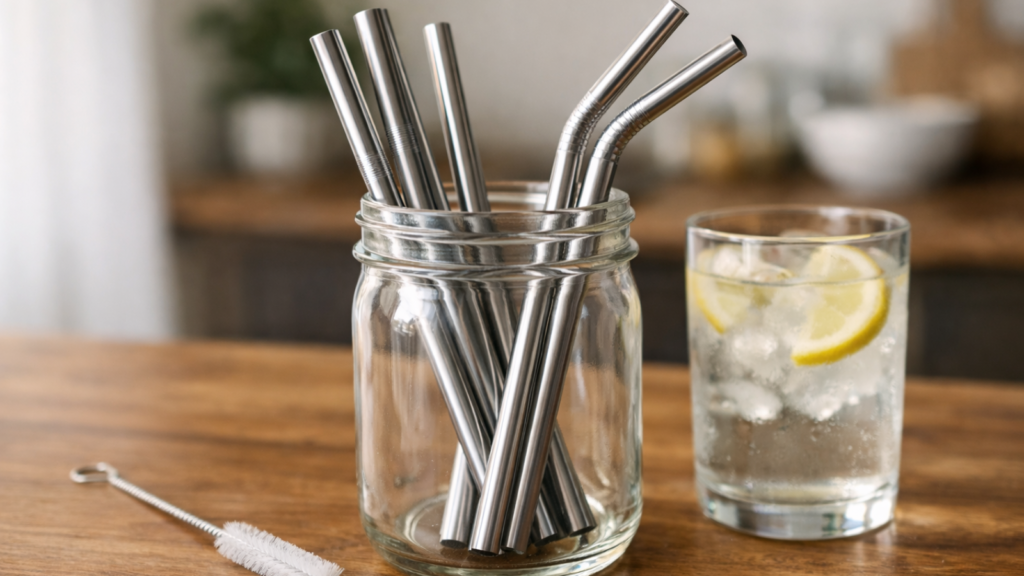
Plastic straws rank among most commonly found ocean pollutants. They devastate marine life through ingestion and entanglement. Stainless steel straws provide durable, reusable alternatives lasting indefinitely with basic care. Available in straight, bent, and various diameter configurations, they accommodate different beverage types and personal preferences.
Eco Features
Manufacturing stainless steel requires energy investment upfront. However, exceptional durability means each straw replaces thousands of disposable versions over its lifetime. Stainless steel is infinitely recyclable without quality degradation. Production generates no toxic byproducts. Material sourcing often involves recycled content.
Benefits
Stainless steel maintains beverage temperatures without imparting metallic tastes. Non-porous surfaces resist bacterial growth and staining. Dishwasher-safe convenience simplifies cleaning. Portable carrying cases make bringing personal straws everywhere practical. This supports zero waste lifestyle principles.
Tips for Use
Use included cleaning brushes to thoroughly remove residue from interior surfaces. Inspect straws regularly for damage. Stainless steel rarely deteriorates. Keep sets in multiple locations: home, office, and car. This ensures availability whenever needed. Consider extra-wide diameter straws for smoothies and bubble tea.
Recommended Products
Food-grade 18/8 stainless steel ensures safety and quality. Silicone tips protect teeth and lips for those preferring softer mouthfeel. Collapsible designs fold compact for ultimate portability. Rainbow finishes and laser engravings add personalisation.
Where to Buy
Coffee shops increasingly sell branded stainless steel straws. Department stores stock various brands in kitchenware sections. Eco-conscious shopping websites feature curated collections with detailed specifications and customer reviews.
5. Cloth Napkins
Description
Paper napkins epitomise disposable culture. They are used once and discarded despite the resource intensity of manufacturing. Cloth napkins crafted from organic cotton, linen, or hemp provide elegant, reusable alternatives. They elevate dining experiences while dramatically reducing waste.
Eco Features
Producing paper napkins consumes substantial water, energy, and trees while generating chemical pollutants during bleaching processes. Quality cloth napkins last years. They wash hundreds of times before replacement. Organic cotton products and linen avoid pesticide exposure and soil degradation. Natural fibres biodegrade completely at end-of-life.
Benefits
Cloth napkins feel luxurious, adding sophistication to everyday meals. Superior absorbency handles spills more effectively than paper alternatives. Diverse colours, patterns, and textures complement any décor style. Economic savings accumulate quickly when comparing ongoing paper purchases to one-time cloth investments.
Tips for Use
Purchase sufficient quantities for your household size plus extras for guests. Typically, 20 to 30 napkins accommodate most families comfortably. Pre-treat stains promptly with natural stain removers before washing. Line drying conserves energy while sunlight naturally bleaches and sanitises. Keep casual sets for everyday use and fancier versions for special occasions.
Recommended Products
Look for certified organic cotton or European linen from sustainable sources. Vintage cloth napkins from secondhand shopping offer unique character with proven durability. Dark colours and patterns hide stains better than white. This reduces washing frequency.
Where to Buy
Home goods stores stock napkin sets year-round. Thrift stores and antique markets offer excellent deals on vintage linens. Online textile retailers provide extensive selections. Often they include matching tablecloths and placemats.
6. Silicone Food Bags
Description
Disposable plastic bags dominate kitchens despite brief useful lives and centuries-long decomposition periods. Silicone food bags offer crystal-clear, flexible alternatives suitable for refrigeration, freezing, microwave heating, and even sous vide cooking.
Eco Features
Platinum silicone, derived from sand (silicon dioxide), represents more sustainable material than petroleum-based plastics. Durable silicone withstands temperature extremes and repeated use for years. Silicone does not leach harmful chemicals into food even when heated. The longevity of silicone means far less frequent replacement.
Benefits
Airtight seals prevent freezer burn and maintain food freshness longer. Transparency allows easy content identification without opening. Stand-up designs maximise refrigerator space efficiency. Dishwasher, microwave, and boiling water safe convenience simplifies both use and cleaning.
Tips for Use
Turn bags inside-out for thorough cleaning after storing raw meat or strong-smelling foods. Ensure complete drying before storage to prevent mildew. Use freezer-safe markers to label contents and dates. Store flat or rolled to minimise kitchen drawer space.
Recommended Products
One hundred percent (100%) platinum food-grade silicone ensures safety and quality. Multiple size options accommodate sandwiches, snacks, meal prep, and bulk storage. Brands offering lifetime warranties demonstrate confidence in product durability.
Where to Buy
Kitchen supply stores increasingly feature silicone storage options prominently. Zero waste alternatives sections in mainstream retailers reflect growing consumer demand. Online specialty shops provide detailed comparisons and customer testimonials.
7. Glass Storage Containers
Description
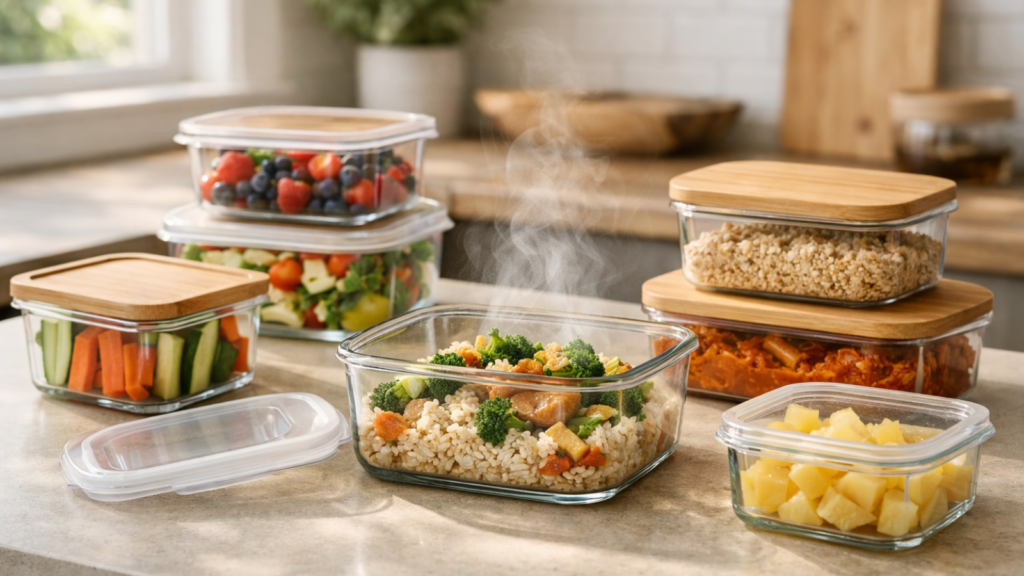
Plastic food storage containers stain, absorb odours, and deteriorate over time. They potentially leach chemicals into food. Glass storage containers with airtight lids provide transparent, versatile alternatives for refrigeration, freezing, reheating, and direct oven use.
Eco Features
Glass manufacturing requires high temperatures but produces inert material lasting indefinitely with proper care. Glass is infinitely recyclable without quality loss. This represents truly circular materials. Chemical-free composition ensures no substance migration into stored food. Tempered borosilicate glass resists thermal shock and breakage better than standard glass.
Benefits
Non-porous glass never retains food odours or stains. Microwave and oven safe versatility (without lids) streamlines cooking workflows. Transparent walls display contents clearly. This reduces food waste from forgotten items. Stackable designs with nesting capabilities maximise storage efficiency.
Tips for Use
Allow hot containers to cool before placing in cold water to prevent thermal shock damage. Remove lids before reheating to prevent warping. Inspect regularly for chips or cracks compromising safety. Choose square or rectangular shapes over round for space-efficient refrigerator organisation.
Recommended Products
Borosilicate glass offers superior durability for temperature changes. Silicone or bamboo lids provide eco-friendly sealing options. Modular sets with various sizes accommodate different storage needs. Look for lifetime warranties covering glass bodies.
Where to Buy
Department stores, kitchen retailers, and home goods shops stock diverse glass container options. Eco-friendly product swaps sections highlight sustainable choices. Online shopping facilitates comparing features, prices, and customer experiences across brands.
8. Safety Razor
Description
Disposable razors and multi-blade cartridge systems generate enormous plastic waste while costing consumers substantially over time. Safety razors feature durable metal handles accepting inexpensive, recyclable double-edge blades. They combine superior shaving performance with minimal environmental impact.
Eco Features
Quality safety razors crafted from stainless steel, brass, or chrome-plated metals last decades or even lifetimes with basic care. Replacement blades contain only metal. They are fully recyclable through appropriate channels. Eliminating plastic cartridges, packaging, and frequent handle replacement dramatically reduces landfill contributions.
Benefits
Safety razors provide exceptionally close, smooth shaves with less irritation than multi-blade systems. Single blades cut cleanly without pulling or tugging. Replacement blade costs prove dramatically lower. They often cost under 10% (one-tenth) of cartridge expenses annually. Weighted handles and precision engineering create satisfying, controlled shaving experiences.
Tips for Use
Expect short learning curves as technique differs from cartridge razors. Use light pressure, allowing blade weight to do work. Shave with grain initially. Progress to against-grain passes for closer results. Rinse blades frequently during use. Replace blades every 5 to 7 shaves for optimal performance.
Recommended Products
Adjustable safety razors allow customising blade exposure for different skin sensitivities and hair types. Butterfly-opening designs simplify blade changes. Chrome-plated brass offers excellent durability with attractive finishes. Consider starter kits including razor, blades, brush, and soap.
Where to Buy
Specialty shaving shops provide expert guidance and product demonstrations. Grooming sections for men increasingly include safety razor options. Online retailers offer extensive selections with detailed specifications and instructional videos.
9. Reusable Shopping Bags
Description
Single-use plastic shopping bags rank among most visible symbols of disposable culture. Reusable shopping bags crafted from canvas, recycled materials, or organic cotton eliminate dependence on disposable carriers. They offer superior strength and capacity.
Eco Features
Each reusable bag replaces hundreds or thousands of disposable bags over its lifespan. Manufacturing uses renewable or recycled materials with lower environmental footprints. Durable construction withstands years of regular use carrying heavy loads. Natural fibre bags biodegrade or recycle appropriately at end-of-life.
Benefits
Sturdy construction safely transports heavy items without tearing or handle breakage. Larger capacities reduce trip numbers carrying groceries. Many designs fold compactly for convenient vehicle or handbag storage. Diverse styles, colours, and patterns express personal aesthetics while demonstrating environmental commitment.
Tips for Use
Keep multiple bags in vehicles, near doors, and in everyday carry bags ensuring availability. Wash periodically using washing machines to maintain hygiene. Designate separate bags for raw meat to prevent cross-contamination. Return bags to storage locations immediately after unpacking purchases. This creates automatic habits.
Recommended Products
Organic cotton bags from ethical brands support sustainable agriculture. Recycled plastic bottles transformed into sturdy fabric demonstrate circular economy principles. Insulated bags maintain temperature-sensitive food safety during transport. Produce-specific mesh bags eliminate needs for plastic produce bags.
Where to Buy
Most grocery stores sell branded reusable bags at checkout areas. Farmers markets feature locally crafted options. Environmental organisations often offer attractive designs supporting conservation causes. Online retailers provide extensive choices across price points and styles.
10. Bamboo Toilet Paper
Description
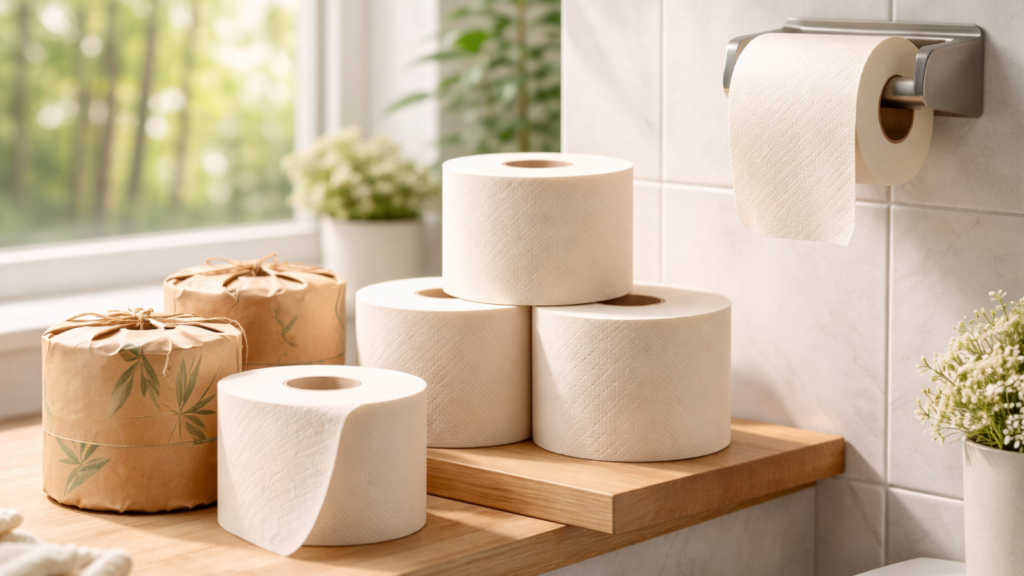
Conventional toilet paper production drives deforestation. It consumes virgin trees for disposable products. Bamboo toilet paper utilises rapidly renewable grass requiring no replanting after harvesting. Soft, strong, and biodegradable, bamboo varieties match or exceed the performance of traditional options.
Eco Features
Bamboo grows up to 91 centimetres (35.8 inches) daily. It matures within 3 to 5 years versus decades for hardwood trees. Cultivation requires no pesticides, minimal water, and naturally regenerates from root systems. Processing uses fewer chemicals than traditional paper manufacturing. Products often feature plastic-free packaging and compostable wrapping.
Benefits
Comparable softness and strength to premium conventional brands satisfy user preferences. Biodegradable composition breaks down rapidly in septic systems and composting toilets. Naturally hypoallergenic properties suit sensitive skin. Subscribing to bamboo household products delivery services ensures supplies never run low.
Tips for Use
Transition gradually, starting with 1 bathroom to evaluate preferences. Bamboo varieties vary in softness and thickness. Sample different brands finding optimal matches. Store in dry locations maintaining quality. Consider bulk purchasing reducing packaging waste and per-unit costs.
Recommended Products
Look for 100% bamboo composition without mixed wood pulps. Fragrance-free, dye-free options minimise chemical exposure. Forest Stewardship Council (FSC)-certified sustainable harvesting practices ensure responsible sourcing. Brands offsetting carbon emissions demonstrate comprehensive environmental commitments.
Where to Buy
Health food stores and zero waste shops stock bamboo toilet paper locally. Online sustainable retailers offer subscription services delivering directly to homes. Large retail chains increasingly feature eco-friendly options in personal care aisles.
Understanding True Sustainability
Genuine eco-friendly product swaps require examining entire product lifecycles. This spans from raw material extraction through manufacturing, transportation, use, and disposal. Sometimes seemingly “green” products carry hidden environmental costs.
Consider production locations and shipping distances. Locally produced items often have smaller carbon footprints than imported alternatives. This occurs despite potentially less “exotic” materials. Evaluate durability. Products lasting longer ultimately prove more sustainable regardless of composition.
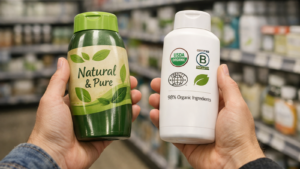
Question greenwashing claims by researching company practices beyond marketing messages. Truly ethical household products companies demonstrate transparency about sourcing, manufacturing conditions, and environmental initiatives.
Conclusion
Transforming homes into eco-friendly havens requires neither perfection nor sacrifice. These 10 simple swaps demonstrate how small, intentional changes create meaningful environmental impacts while enhancing daily life quality.
Every bamboo toothbrush chosen, reusable bottle filled, beeswax wrap used, and cloth napkin washed represents conscious participation in planetary stewardship. Millions making similar choices shift markets, influence policies, and protect ecosystems for future generations collectively.
Begin wherever feels most manageable. Perhaps start with reusable shopping bags or stainless steel straws. Build gradually. Celebrate progress rather than fixating on remaining steps. Share experiences with others. This creates ripples of positive change extending far beyond individual households.
Sustainable living celebrates mindful consumption, quality over quantity, and thoughtful relationships with the resources of Earth. Your zero waste journey starts with single steps. We are all taking these steps together toward healthier, more sustainable futures.
Frequently Asked Questions
How do bamboo products compare to traditional materials environmentally?
Bamboo grows exceptionally fast without requiring replanting, pesticides, or extensive irrigation. This makes it significantly more sustainable than hardwood trees or petroleum-based plastics. Bamboo cultivation actually improves soil quality and absorbs more carbon dioxide than equivalent tree plantations. Products biodegrade naturally unlike plastics persisting for centuries.
Are reusable products truly better when considering manufacturing impacts?
Yes, reusable products dramatically outperform disposables environmentally. Lifecycle analyses consistently show this. Quality reusable water bottles offset their production impacts after just weeks of regular use. They then continue providing benefits for years. Durability and longevity determine overall sustainability advantages.
What should beginners prioritise when starting eco-friendly swaps?
Focus on items you use most frequently and those easiest to replace without disrupting routines. Reusable shopping bags and water bottles typically offer straightforward starting points with immediate waste reduction. Choose swaps matching your budget and lifestyle. Build sustainable habits gradually rather than attempting everything simultaneously.
How can families with children implement sustainable swaps practically?
Involve children in selections and transitions. Teach environmental values through participation. Start with fun items like colourful reusable bottles or patterned cloth napkins. Create family challenges tracking plastic reduction together. Children often enthusiastically embrace sustainability when engaged appropriately. They become household eco-champions.
Do eco-friendly alternatives really save money long-term?
Yes, quality reusable products consistently prove more economical over time. This occurs despite higher initial costs. Calculate current annual spending on disposables: plastic bags, paper towels, bottled beverages, and razors. These often total several hundred pounds yearly. Reusables purchased once serve for years. They generate substantial cumulative savings while reducing waste.
Where can people find sustainable products in areas with limited options?
Online retailers provide access to extensive eco-friendly selections regardless of location. Many sustainable brands offer direct-to-consumer purchasing with reasonable shipping. Consider bulk orders reducing transportation impacts. Advocate with local retailers requesting sustainable options. Consumer demand influences stocking decisions significantly.
How do you maintain motivation during sustainable lifestyle transitions?
Track tangible progress: waste reduced, money saved, and positive environmental impacts. Connect with online communities sharing similar values for encouragement and practical advice. Focus on benefits beyond environmentalism: improved health, simplified living, and financial savings. Remember sustainability represents ongoing journeys requiring patience and self-compassion.
Are all products labelled “eco-friendly” genuinely sustainable?
No, greenwashing remains prevalent. Companies make misleading environmental claims. Research brands thoroughly. Examine certifications, transparency about sourcing and manufacturing, and third-party verification. Genuine sustainable companies demonstrate comprehensive commitments beyond superficial marketing. Question vague claims and demand specifics.
Can individual actions meaningfully impact environmental challenges?
Yes, individual actions create crucial foundation. Systemic changes remain essential for addressing climate change and pollution comprehensively though. Millions making sustainable choices shift market demand, influence corporate practices, and demonstrate political will for environmental policies. Personal transformations inspire others. This creates multiplying effects. Collective individual actions generate substantial impacts.
What happens to sustainable products at end-of-life?
Properly designed eco-friendly products either biodegrade safely, compost completely, or recycle infinitely without quality degradation. Bamboo, organic cotton, and similar natural materials return nutrients to soil. Stainless steel and glass recycle perpetually. Research appropriate disposal methods for specific items. This ensures environmental benefits extend through entire lifecycles.