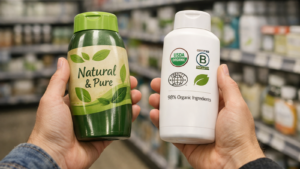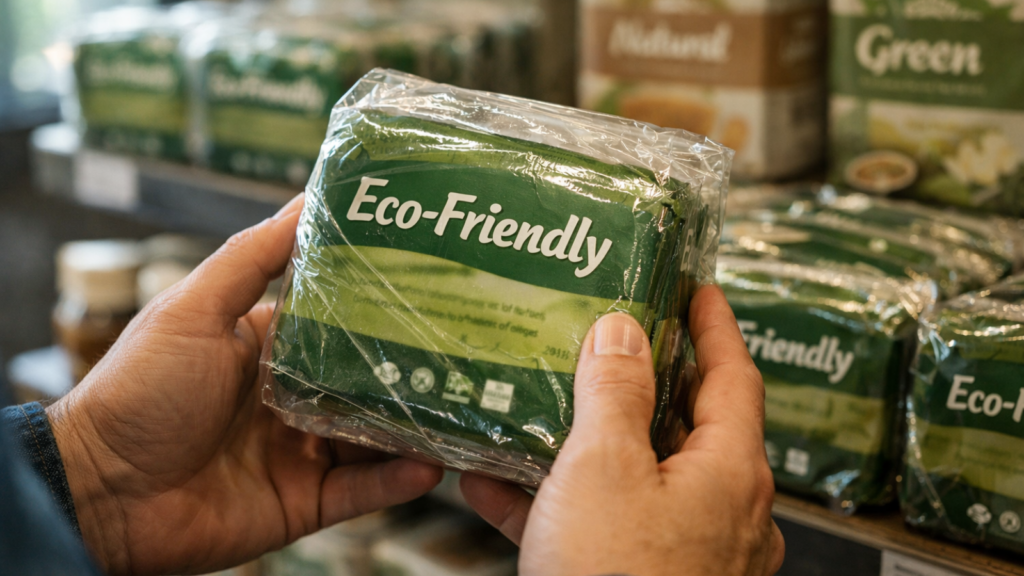
Eco-conscious shopping has become more challenging than ever. Countless brands exploit our environmental concerns through misleading marketing tactics known as greenwashing, while genuine sustainable products exist. Understanding how to identify products not truly eco-friendly protects both your wallet and our planet.
This comprehensive guide reveals 10 critical warning signs that indicate products failing to deliver on environmental promises. You’ll make purchasing decisions aligned with genuine sustainability values by learning to recognise deceptive practices.
Understanding Greenwashing and Why Recognition Matters
Greenwashing occurs when companies present misleading environmental claims to appear more sustainable than reality reflects. This deceptive practice undermines authentic sustainability efforts and confuses consumers trying to make responsible choices.
Market research shows that over 40% of environmental claims made by companies contain misleading information. False advertising wastes consumer money on products that don’t deliver promised benefits. False advertising damages trust in legitimate eco-friendly alternatives.
Recognising greenwashing empowers you to support brands genuinely committed to environmental responsibility. Companies face pressure to improve actual practices rather than simply improving marketing messages when consumers demand transparency and authenticity.
Sign 1: Uses Vague Terms Like “Green” or “Eco-Friendly” With No Proof
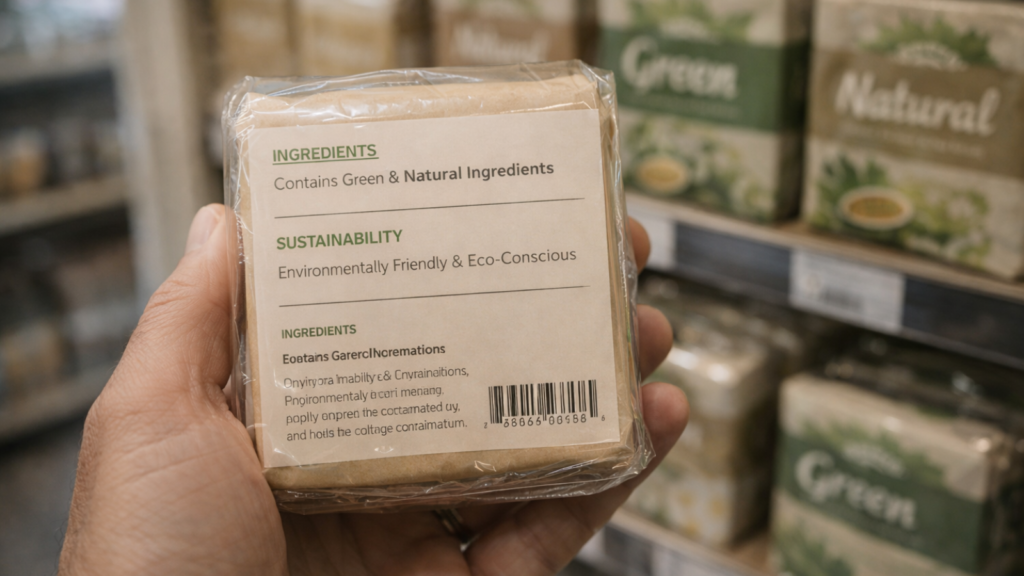
Marketing buzzwords dominate product packaging. Many lack substantive meaning. Terms such as “natural,” “green,” “eco-friendly,” “sustainable,” or “earth-conscious” appear everywhere without accompanying evidence or specific explanations.
Why Vague Language Signals Problems
Legitimate sustainable products provide concrete details about environmental benefits. Brands committed to genuine sustainability eagerly share specific information about three key areas (manufacturing processes, material sourcing, and measurable impact reductions).
Marketing departments default to ambiguous feel-good language designed to trigger emotional responses rather than informed decision-making when companies cannot provide specifics. Vague terminology often masks lack of authentic environmental credentials.
What to Look For Instead
Seek products explaining precisely how environmental benefits occur. Quality eco-friendly items describe four elements (specific materials used, percentage of recycled content, carbon footprint reduction metrics, and detailed manufacturing improvements).
Transparent brands specify “packaging made from 100% post-consumer recycled cardboard, printed with water-based inks, fully recyclable in standard kerb-side programmes” rather than simply stating “eco-friendly packaging.”
Sign 2: Lacks Credible Third-Party Certifications
Independent verification provides crucial validation of environmental claims. Third-party certifications from recognised organisations confirm that products meet established sustainability standards through rigorous testing and auditing processes.
Understanding Certification Value
Reputable certification bodies maintain strict criteria. Reputable certification bodies conduct regular inspections to ensure ongoing compliance. Organisations such as Fair Trade, Forest Stewardship Council (FSC), USDA Organic, EU Ecolabel, Cradle to Cradle, and B Corporation undergo extensive evaluation before granting certification.
Products displaying these certifications have undergone independent scrutiny. Products provide assurance that environmental claims rest on verified practices rather than marketing creativity.
Beware of Self-Created Labels
Some brands create official-looking seals or badges that mimic legitimate certifications. These self-awarded labels lack independent verification. These self-awarded labels essentially mean whatever manufacturers want them to mean.
Verify legitimacy by researching certifying organisations before trusting any certification mark. Genuine certifiers maintain public websites explaining three things (standards, listing certified products, and providing verification systems for consumer checking).
Sign 3: Doesn’t Fully Disclose Ingredients or Materials

Transparency forms the foundation of authentic sustainability. Brands genuinely committed to environmental responsibility willingly share comprehensive information about three aspects (product composition, including raw materials, processing chemicals, and manufacturing additives).
Why Ingredient Secrecy Raises Concerns
Suspicion naturally arises about what companies are concealing when companies hide ingredient lists or provide only partial disclosure. Complete transparency builds consumer trust. Secrecy suggests potentially problematic components or practices.
Environmental sustainability extends beyond final products to encompass entire supply chains. Toxic chemicals, unsustainably harvested materials, or environmentally destructive processing methods hide behind incomplete disclosure.
Demanding Full Transparency
You deserve complete information about products entering your home and life. Look for brands providing three key details (detailed ingredient breakdowns, explaining material sources, and disclosing manufacturing processes).
Many truly sustainable companies go beyond regulatory requirements. Many truly sustainable companies voluntarily share supply chain information through detailed websites, product inserts, or QR codes linking to comprehensive databases. This level of openness demonstrates confidence in environmental credentials.
Sign 4: Highlights One “Green” Feature While Ignoring Bigger Impacts
Selective disclosure represents a common greenwashing tactic. Brands spotlight single positive environmental attributes whilst concealing significant negative impacts elsewhere in product lifecycle or company operations.
Recognising the Hidden Trade-Off
A cleaning product might emphasise plant-based ingredients whilst ignoring massive water consumption during manufacturing. Clothing brands highlight organic cotton whilst overlooking three problems (synthetic dyes, exploitative labour practices, and carbon-intensive shipping methods).
This cherry-picking approach, sometimes called “hidden trade-off,” misleads consumers into believing overall environmental impact is positive. Holistic assessment reveals different reality.
Evaluating Complete Life Cycle Impact
Genuine sustainability requires considering entire product lifecycles. Genuine sustainability covers six stages (raw material extraction through manufacturing, transportation, use, end-of-life disposal, and recycling).
Ask questions about aspects brands don’t highlight. Research company-wide environmental practices beyond specific product claims. Look for lifecycle assessments or carbon footprint calculations covering all production stages.
Truly sustainable products minimise environmental harm across all impact categories rather than optimising one area whilst creating problems elsewhere.
Sign 5: Uses Excessive or Non-Recyclable Packaging

Packaging choices reveal much about genuine environmental commitment. Four packaging issues indicate disconnect between marketing messages and actual sustainability practices (excessive wrapping, unnecessary layers, difficult-to-recycle materials, and misleading recyclability claims).
The Packaging Sustainability Test
Evaluate whether packaging serves essential protective or informational purposes. Evaluate whether packaging exists primarily for marketing appeal. Multi-layered packaging combining different materials becomes nearly impossible to recycle effectively, despite technical recyclability claims.
Labels stating “recyclable” mislead consumers when materials require specialised facilities unavailable in most areas. Check whether your local recycling programme actually accepts packaging materials before assuming environmental benefits.
What Sustainable Packaging Looks Like
Truly eco-conscious brands follow four principles (minimise packaging volume, use mono-materials easily recycled in standard programmes, incorporate high percentages of post-consumer recycled content, and design for easy material separation).
Many innovative companies now use three approaches (compostable packaging, reusable containers, and circular packaging programmes where customers return containers for refilling). These approaches demonstrate serious environmental commitment beyond superficial green marketing.
Sign 6: Claims “Biodegradable” Without Explaining Conditions
“Biodegradable” has become one of the most abused environmental terms in marketing. This claim often misleads consumers about realistic environmental outcomes whilst technically accurate in many cases.
The Biodegradable Confusion
Nearly everything biodegrades eventually under specific conditions. Decomposition timeframes and required conditions vary dramatically. Materials might require four specific factors (industrial composting facilities, specific temperature ranges, presence of particular microorganisms, and decades to centuries for breakdown).
Plastic products labelled “biodegradable” often require industrial composting facilities most consumers cannot access. Some “biodegradable plastics” fragment into microplastics without truly breaking down at molecular level. Some “biodegradable plastics” potentially cause more environmental harm than conventional plastics.
Questions to Ask About Biodegradability
Legitimate biodegradability claims specify two key details (decomposition timeframes and required conditions). Quality products explain three things (whether home composting works or industrial facilities are necessary, describe what remains after biodegradation, and provide relevant certification from organisations like BPI (Biodegradable Products Institute) or TÜV Austria).
“Biodegradable” claims become meaningless marketing buzz rather than actionable environmental information without this context.
Sign 7: Provides No Transparency About Sourcing or Manufacturing
Supply chain opacity often conceals environmental and social problems. Brands genuinely committed to sustainability eagerly share information about three critical areas (where materials originate, how manufacturing occurs, and working conditions throughout production networks).
Why Supply Chain Matters
Environmental impacts extend far beyond final assembly. Five stages carry environmental footprints (raw material extraction, processing, component manufacturing, transportation, and final assembly). Labour exploitation and unsafe working conditions frequently accompany environmentally destructive practices.
Companies hiding supply chain information often do so for a specific reason. Transparency reveals practices contradicting environmental marketing messages. Distance and complexity of global supply chains provide convenient excuses for maintaining secrecy.
Demanding Traceability
Technology now enables unprecedented supply chain transparency. Three systems allow companies to document product journeys from source to consumer (blockchain systems, detailed supplier audits, and digital tracking).
Forward-thinking brands follow four transparency practices (publish supplier lists, share factory audit results, provide material origin documentation, and welcome independent verification). This transparency demonstrates confidence in environmental and social practices throughout operations.
Sign 8: Designed to Be Disposable or Short-Lived
True sustainability prioritises longevity and durability over disposability. Products designed for brief use and rapid replacement fundamentally contradict environmental stewardship principles, regardless of “eco-friendly” materials.
The Problem With Disposable Culture
Manufacturing any product requires four resources (energy, water, raw materials, and generates pollution). Disposable products multiply environmental impact through constant replacement cycles, even when made from sustainable materials.
Planned obsolescence represents particularly egregious environmental irresponsibility. Planned obsolescence deliberately designs products to fail or become outdated quickly. This approach prioritises profit maximisation over planetary health.
Seeking Durability and Repairability
Genuinely sustainable products emphasise three qualities (quality construction, long functional life, and repairability). Companies offer three support options (spare parts, repair services, and detailed instructions enabling users to extend product lifespan).
Consider cost per use rather than initial price. Higher-quality, longer-lasting items typically deliver better value and lower environmental impact than repeatedly purchasing cheap replacements. Higher-quality items deliver these benefits even when replacements carry “eco-friendly” labels.
Sign 9: Relies on Nature Imagery Instead of Evidence
Four visual elements dominate packaging for products with questionable environmental credentials (green leaves, pristine landscapes, fluffy clouds, and nature scenes). This visual greenwashing exploits psychological associations between nature imagery and environmental responsibility.
The Power of Visual Manipulation
Human brains process images faster than text. Human brains create immediate emotional responses before critical thinking engages. Marketers exploit this by surrounding products with nature imagery, regardless of actual environmental impact.
Studies show consumers perceive products with green packaging and nature imagery as more environmentally friendly. Studies show this perception occurs even when identical products in different packaging perform identically. This cognitive bias makes visual greenwashing particularly effective and insidious.
Looking Beyond Aesthetics
Judge products by substance rather than aesthetic presentation. Ignore two superficial elements (packaging colour schemes and imagery). Focus instead on concrete information about four key factors (materials, certifications, manufacturing practices, and measurable impact).
Genuinely sustainable brands certainly use nature imagery. Genuinely sustainable brands always accompany nature imagery alongside substantive environmental information. Scepticism is warranted when pretty pictures substitute for evidence.
Sign 10: Makes No Measurable or Data-Backed Impact Claims

Quantifiable impact metrics separate genuine environmental progress from vague aspirational statements. Brands truly committed to sustainability follow three practices (track, measure, and publicly report specific environmental performance indicators).
Why Measurement Matters
Management wisdom teaches “what gets measured gets managed.” Companies serious about environmental responsibility follow three steps (establish baseline metrics, set improvement targets, and transparently report progress toward goals).
Measurable claims might include four types of data (specific percentages of recycled content, carbon footprint reduction compared to previous versions, water consumption per unit manufactured, and renewable energy powering specific production percentage).
Recognising Meaningful Data
Look for specific numbers with context explaining significance. “Reduces carbon emissions by 30% (30 out of 100 units) compared to conventional alternatives” provides actionable information. “Better for environment” remains meaningless.
Credible brands often publish annual sustainability reports detailing environmental performance across multiple metrics. Third-party verification of reported data adds additional credibility. Third-party verification confirms numbers aren’t simply creative accounting.
Conclusion
Recognising these 10 signs helps you navigate crowded marketplaces filled with environmental claims ranging from genuine to completely fabricated. Ten warning signals indicate products failing to deliver authentic environmental benefits (vague terminology, missing certifications, incomplete disclosure, selective highlighting, excessive packaging, misleading biodegradability claims, supply chain opacity, disposable design, nature imagery without substance, and lack of measurable impact).
Developing critical evaluation skills protects you from greenwashing whilst supporting brands genuinely committed to planetary health. Your purchasing power, combined with millions of other eco-conscious consumers, creates market forces pushing companies toward authentic sustainability rather than superficial marketing tactics.
Every purchase represents a vote for the kind of world we want to create. You contribute to environmental protection extending far beyond individual transactions by rejecting products displaying these warning signs and supporting transparent, certified, measurable sustainable alternatives.
Remember that perfect sustainability remains aspirational. Meaningful progress requires honest assessment and genuine effort. Demand transparency, seek evidence, question claims, and support brands demonstrating measurable environmental commitment through actions rather than words alone.
Frequently Asked Questions
Q: What is greenwashing and how common is it?
Greenwashing is a deceptive marketing practice where companies mislead consumers about environmental benefits through false claims or imagery. Research indicates over 40% (40 out of 100) of environmental claims contain misleading elements. Greenwashing is extremely prevalent across industries. Recognising deceptive tactics helps consumers support genuinely sustainable products.
Q: Are all products claiming to be “natural” truly eco-friendly?
No, products claiming to be “natural” are not truly eco-friendly automatically. “Natural” carries no regulated definition and often misleads consumers. Many toxic substances occur naturally, whilst some synthetic ingredients offer environmental advantages over natural alternatives. Genuine eco-friendly products provide specific information about three key areas (materials, processing, and environmental impact) rather than relying solely on vague “natural” claims.
Q: How can I verify if a product certification is legitimate?
Visit certification organisation websites to verify authenticity. Check three verification methods (listed certified products, understand standards required for certification, and confirm product certifications). Legitimate certifiers maintain transparent verification systems allowing consumers to confirm product certifications. Be wary of official-looking seals created by companies themselves without independent oversight.
Q: Why does packaging matter for environmental impact?
Packaging requires four resources (raw materials, energy, water, and generates waste) even when recyclable. Excessive packaging unnecessarily multiplies environmental footprint. Non-recyclable materials end in landfills or incinerators. Sustainable brands follow three principles (minimise packaging volume, use readily recyclable mono-materials, and design for easy recycling or composting).
Q: What does “biodegradable” really mean?
Biodegradable is a term meaning materials break down through biological processes. Conditions, timeframes, and completeness vary dramatically. Some products require industrial composting facilities unavailable to most consumers. Others fragment into microplastics without true decomposition. Legitimate claims specify two critical factors (conditions and timeframes required for biodegradation).
Q: How important are third-party certifications?
Yes, third-party certifications are extremely important for environmental verification. Third-party certifications provide crucial independent verification that products meet established environmental standards. Reputable certifiers conduct rigorous testing and regular audits. Reputable certifiers offer assurance claims rest on verified practices rather than marketing. Multiple recognised certifications strengthen credibility significantly.
Q: Can a product be sustainable if it’s designed for single use?
No, single-use products cannot truly be sustainable. Single-use products fundamentally contradict sustainability principles regardless of materials. Manufacturing requires resources and energy. Manufacturing makes disposable culture inherently wasteful even with “eco-friendly” materials. Genuinely sustainable approaches prioritise three qualities (durability, reusability, and longevity) over convenience-driven disposability.
Q: Should I trust products with nature imagery on packaging?
No, nature imagery alone provides no evidence of environmental responsibility. Marketers exploit psychological associations between nature scenes and sustainability regardless of actual impact. Judge products by concrete information about four key metrics (materials, certifications, manufacturing practices, and measurable environmental metrics) rather than aesthetic presentation.
Q: What questions should I ask companies about their environmental claims?
Ask for eight specific details (specific materials used, percentage of recycled content, relevant certifications, manufacturing location and practices, supply chain transparency, product lifespan expectations, end-of-life disposal options, and measurable environmental impact data). Genuine brands welcome detailed questions. Genuine brands provide comprehensive transparent answers.
Q: Does buying eco-friendly products really make a difference?
Yes, buying eco-friendly products makes a measurable difference through collective action. Individual purchasing decisions collectively drive market transformation by creating economic incentives rewarding genuine sustainability. Companies adapt practices to meet demand when consumers consistently reject greenwashing and support authentic alternatives. Conscious consumer choices contribute meaningfully to environmental protection, combined with advocacy for stronger regulations.