Indoor air pollution poses significant health risks. Levels often exceed outdoor pollution by two to five times. Eco-conscious consumers seeking healthier living spaces face both challenge and opportunity in finding products that purify air without harming our planet. This comprehensive guide explores 10 sustainable solutions that enhance respiratory wellness whilst protecting environmental integrity.
1. Natural Beeswax Candles
Description
Natural beeswax candles purify air through negative ion emission. Petroleum-based paraffin candles release toxins during burning. Beeswax burns cleanly. Negative ions bind with airborne pollutants. Pollutants fall from breathing zones onto surfaces. Regular cleaning removes pollutants effectively.
Eco Features
Beeswax represents a completely renewable resource. Harvesting occurs from bee colonies without harming insects. Production requires minimal processing. Chemical additives present in conventional candles are absent from beeswax. Cotton wicks eliminate lead concerns whilst providing clean combustion. Supporting beekeepers contributes to pollinator conservation efforts crucial for ecosystem health.
Benefits
Beeswax candles emit subtle honey fragrance without synthetic perfumes. Burn times exceed paraffin alternatives by 30 to 50 percent. Natural golden glow creates ambiance whilst neutralising odours from cooking, pets, or dampness. Allergy sufferers particularly benefit from reduced airborne irritants.
Tips for Use
Position candles away from draughts to prevent uneven burning and soot production. Trim wicks to 6 millimetres (0.24 inches) before each lighting to maintain optimal flame height. Burn candles for minimum 2-hour periods. This allows complete wax pool formation across surface diameter. Never leave burning candles unattended. Extinguish flames before leaving rooms.
Recommended Products
Look for 100 percent pure beeswax candles from certified organic beekeepers. Avoid blends containing paraffin or soy. Brands offering refillable containers maximise sustainability. Bulk purchasing options reduce packaging waste. Local apiaries often provide highest quality whilst supporting community economies.
Where to Buy
Farmers’ markets stock authentic beeswax candles. Artisan craft fairs feature local beekeepers. Local beekeeping cooperatives offer quality products. Online platforms specialising in sustainable home goods provide curated selections. Health food stores typically carry reputable brands. Zero-waste shops stock eco-friendly options. Always verify ingredient lists to ensure 100 percent beeswax composition.
2. Activated Bamboo Charcoal Air Purifying Bags
Description
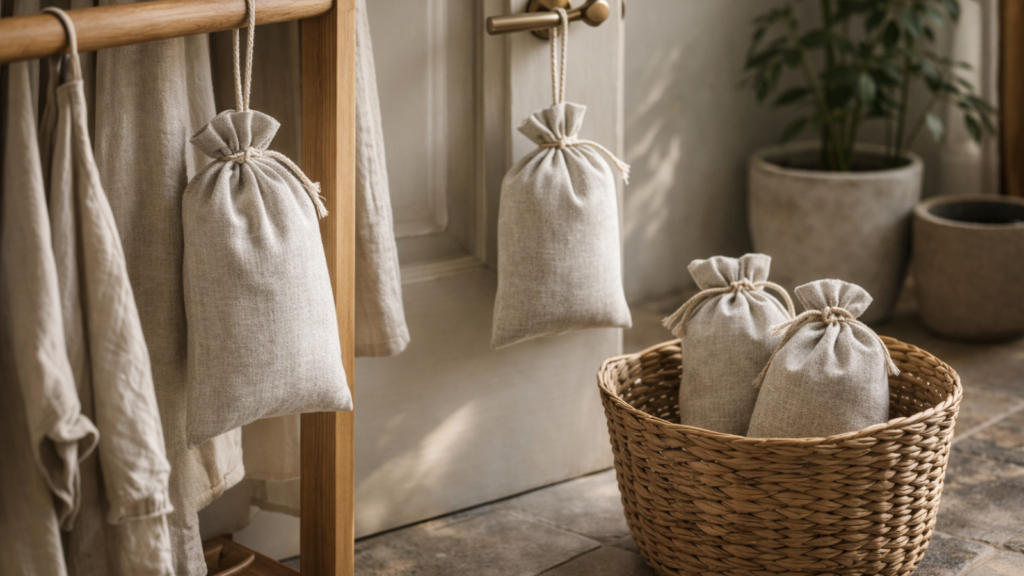
Activated bamboo charcoal functions as a natural air filter. Millions of microscopic pores absorb odours, allergens, moisture, and pollutants. This ancient purification method requires no electricity. Zero waste gets produced. Bags work continuously for up to 2 years.
Eco Features
Bamboo grows rapidly without pesticides or fertilisers. Regeneration occurs from roots after harvest. Activation processes use high temperatures rather than chemical treatments. Charcoal enriches garden soil as nutrient-rich amendment after useful life ends. Linen bags holding charcoal decompose naturally. Bags can be repurposed for other household uses.
Benefits
Odour elimination occurs without masking scents with artificial fragrances. Moisture absorption prevents mould growth in damp areas like bathrooms, basements, or wardrobes. Allergen reduction benefits asthma sufferers and those with respiratory sensitivities. Silent operation suits bedrooms, nurseries, and quiet spaces where mechanical purifiers prove disruptive.
Tips for Use
Place bags near pollution sources. These include litter boxes, rubbish bins, shoe storage areas, or refrigerators. Monthly rejuvenation through direct sunlight exposure for 1 to 2 hours restores absorption capacity. Distribute multiple smaller bags throughout rooms rather than relying on single large bag. Replace every 24 months. Replace sooner when rejuvenation no longer restores effectiveness.
Recommended Products
Select bags containing 100 percent activated bamboo charcoal. Avoid additives or fragrances. Linen or cotton covers ensure breathability whilst providing durability. Various sizes accommodate different spaces. These include 50-gram bags for small areas, 200-gram for standard rooms, and 500-gram for larger spaces or vehicles.
Where to Buy
Eco-friendly home stores stock quality bamboo charcoal bags. Online sustainable marketplaces offer various options. Natural living retailers provide certified products. Zero-waste shops often carry bulk options. Asian supermarkets sometimes offer authentic products at competitive prices. Read reviews to verify charcoal quality and bag construction.
3. Himalayan Salt Lamps
Description
Himalayan salt lamps are carved from ancient salt deposits. These lamps emit warm amber glow whilst releasing negative ions. Negative ions neutralise electromagnetic radiation and airborne contaminants. Heat from internal bulb causes hygroscopic salt to attract water molecules from surrounding air. Pollutants get trapped within crystalline structure.
Eco Features
Salt extraction employs traditional hand-mining techniques. Geological formations remain preserved through careful extraction. Lamps require minimal energy, typically 15 to 25 watts for standard sizes. Natural material requires no chemical processing or synthetic components. Long lifespan potentially extends for decades with proper care. This reduces replacement needs.
Benefits
Gentle illumination promotes relaxation without disrupting circadian rhythms. Lamps prove ideal for bedrooms. Electromagnetic Field (EMF) reduction benefits those sensitive to electronic device emissions. Respiratory improvement occurs through reduced airborne allergens and increased negative ion concentration. Aesthetic appeal complements various interior design styles from rustic to contemporary.
Tips for Use
Position lamps on moisture-resistant surfaces. Salt attracts humidity naturally. Keep lamps illuminated several hours daily to maintain drying and ion emission. Clean surface monthly with damp cloth. Avoid excessive water exposure. Replace bulbs with similar wattage to prevent overheating or inadequate warming.
Recommended Products
Choose authentic Himalayan salt lamps from Khewra Salt Mine in Pakistan. Verify natural colouring. Deep pink to orange hues indicate authenticity. Uniform white or red suggests artificial dyes. Dimmer switches allow brightness adjustment. Wooden bases provide stability and complement natural aesthetic.
Where to Buy
Wellness stores stock genuine Himalayan salt lamps. Yoga studios often carry authentic products. Holistic health centres provide quality options. Online retailers specialising in natural home products offer various sizes and styles. Import stores carrying South Asian goods may provide competitive pricing. Inspect certificates of authenticity to avoid artificial imitations.
4. HEPA Air Purifiers with Energy Star Certification
Description
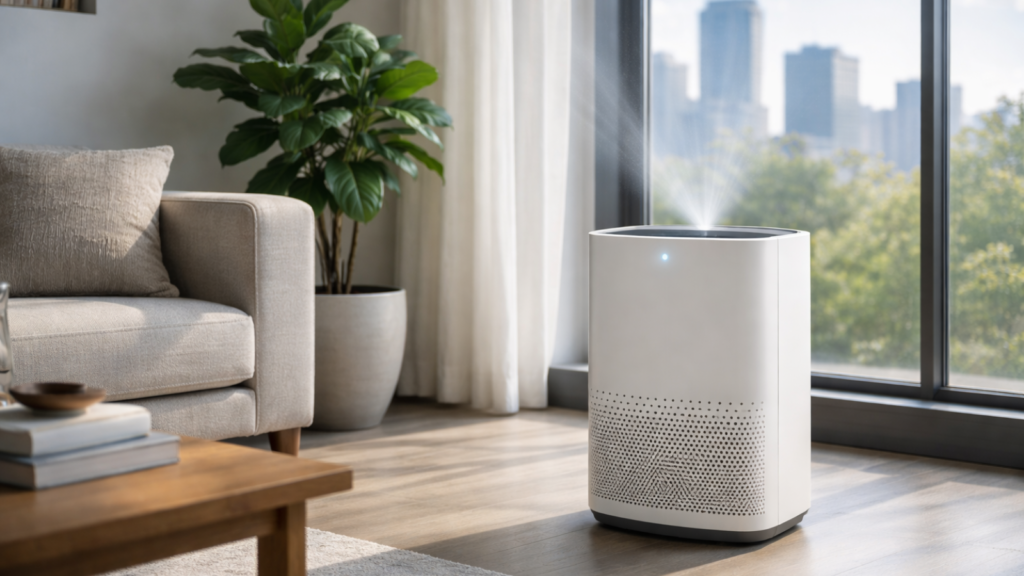
High-Efficiency Particulate Air (HEPA) purifiers capture 99.97 percent of particles 0.3 microns or larger. These include pollen, dust mites, pet dander, and mould spores. Energy Star certified models meet strict efficiency standards. Electricity consumption reduces by 40 percent compared to standard purifiers whilst maintaining superior performance.
Eco Features
Energy-efficient motors minimise carbon footprint associated with operation. Models featuring washable pre-filters reduce disposable waste. Durable construction extends product lifespan to 10 to 15 years with proper maintenance. Some manufacturers offer filter recycling programmes. Biodegradable filter options exist from select brands. Low noise levels reduce sound pollution.
Benefits
Comprehensive filtration addresses multiple pollutant categories simultaneously. Programmable timers optimise operation schedules. Energy gets conserved during unoccupied periods. Air quality indicators provide visual feedback. Users make informed decisions about ventilation needs. Reduced allergen exposure improves sleep quality and respiratory function for sensitive individuals.
Tips for Use
Position purifiers where airflow remains unobstructed. Keep units away from walls or furniture. Calculate room size to select appropriately rated models. Undersized units work inefficiently. Oversized models waste energy. Replace HEPA filters according to manufacturer schedules, typically every 12 to 18 months. Clean washable pre-filters monthly to maintain optimal airflow.
Recommended Products
Prioritise brands offering filter recycling programmes. Replacement part availability ensures long-term usability. Look for models with automatic sensors. These adjust fan speed based on air quality. Quiet operation modes suit bedrooms. Higher settings address acute pollution events. Certifications beyond Energy Star, such as AHAM Verified, confirm performance claims.
Where to Buy
Speciality appliance stores provide knowledgeable staff assistance for model selection. Online retailers offer extensive reviews and competitive pricing. Environmental organisations sometimes recommend specific eco-friendly brands. Consider refurbished models from reputable sellers to further reduce environmental impact.
5. Indoor Plants (NASA-Approved Air Purifiers)
Description
NASA research identified specific houseplants capable of removing VOCs, formaldehyde, benzene, and carbon monoxide from indoor environments. Plants naturally filter air through leaf absorption and root-zone microbial processes. Continuous purification occurs without electricity or replacement parts.
Eco Features
Living organisms create oxygen whilst sequestering carbon dioxide. This directly combats climate change. Minimal resource requirements include water, occasional fertiliser, and appropriate light. Plants are exceptionally sustainable. Propagation allows indefinite expansion without purchasing new specimens. End-of-life composting returns nutrients to earth, completing natural cycles.
Benefits
Psychological benefits accompany physical air quality improvements. Plants reduce stress, enhance productivity, and improve mood. Humidity regulation through transpiration combats dry air common in heated or air-conditioned spaces. Biophilic design elements strengthen human connection to nature, promoting overall wellbeing. Aesthetic versatility suits any décor preference.
Tips for Use
Select plants matching available light conditions. Snake plants and pothos thrive in low light. Peace lilies prefer bright, indirect illumination. Group multiple plants to amplify purification effects. NASA recommends 1 plant per 100 square feet (9.3 square metres). Rotate plants quarterly to ensure even growth. Monitor soil moisture rather than adhering to rigid watering schedules.
Recommended Products
Spider plants excel at formaldehyde removal whilst tolerating neglect. English ivy reduces airborne faecal matter particles. This benefits homes with pets. Boston ferns eliminate formaldehyde and xylene whilst adding lush texture. Rubber plants remove VOCs whilst requiring minimal maintenance. Snake plants convert carbon dioxide to oxygen nocturnally. This makes them bedroom-appropriate.
Where to Buy
Local nurseries provide healthiest specimens and expert advice tailored to regional conditions. Plant swaps within communities offer free options whilst building social connections. Online plant retailers deliver mature specimens nationwide. Garden centres often discount plants seasonally, providing budget-friendly opportunities.
6. Essential Oil Diffusers (Ultrasonic Models)
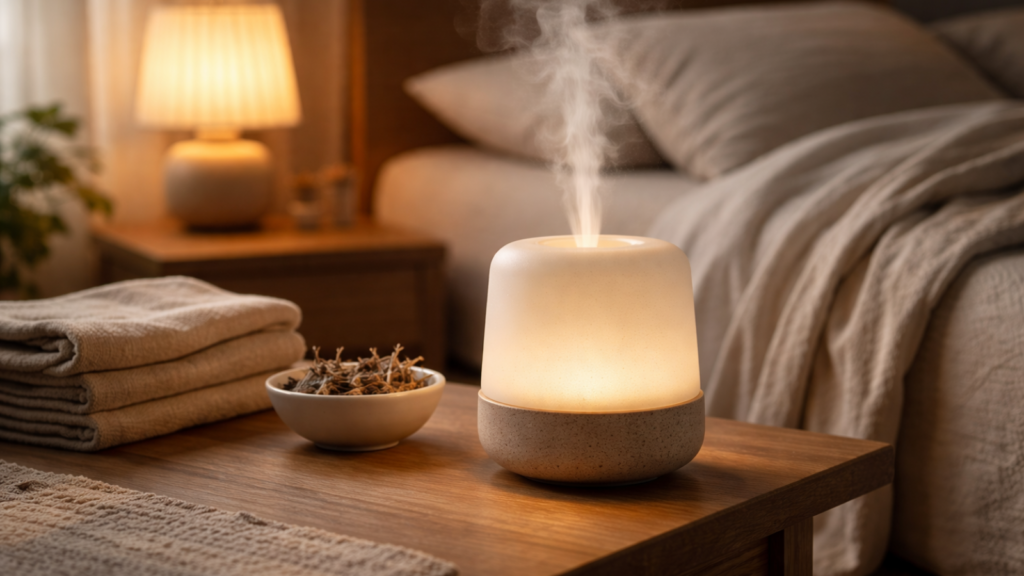
Description
Ultrasonic diffusers disperse essential oils as fine mist through high-frequency vibrations. Air gets purified whilst therapeutic aromatics are added. Heat-based diffusers degrade oil compounds. Ultrasonic technology preserves beneficial properties whilst humidifying dry indoor environments.
Eco Features
Low energy consumption of typically 12 to 15 watts rivals night lights rather than appliances. Durable construction with minimal moving parts extends lifespan to 5 years or more. BPA-free materials prevent chemical leaching. Reusable design eliminates disposable components. Operation occurs without aerosol propellants or synthetic air fresheners.
Benefits
Antimicrobial properties of essential oils actively combat airborne bacteria, viruses, and fungi. Customisable scent profiles address specific needs. Lavender promotes relaxation. Eucalyptus provides respiratory support. Tea tree offers antimicrobial action. Humidity addition alleviates dry skin, irritated sinuses, and static electricity. Timer functions and auto-shutoff features ensure safe, convenient operation.
Tips for Use
Clean diffusers weekly with white vinegar solution to prevent oil residue buildup and maintain misting efficiency. Use pure essential oils rather than synthetic fragrances or diluted blends. Start with 3 to 5 drops per 100 millilitres (3.4 fluid ounces) water. Adjust based on room size and scent preference. Diffuse intermittently with 30 minutes on and 30 minutes off. This prevents olfactory fatigue.
Recommended Products
Choose diffusers with at least 300-millilitre (10.1-fluid-ounce) capacity for extended operation between refills. Wood grain finishes complement natural décor whilst hiding wear. Colour-changing LED lights offer ambiance options. Models with light-off settings prevent sleep disruption. Silent operation suits light sleepers and nurseries.
Where to Buy
Wellness boutiques curate quality diffusers and pure essential oils. Online aromatherapy specialists provide extensive selections with detailed specifications. Home goods stores increasingly stock eco-friendly models responding to consumer demand. Health food shops often carry trusted brands alongside organic essential oils.
7. Natural Fibre Air Filters (Hemp or Cotton)
Description
Conventional HVAC filters contain fibreglass and synthetic materials. These contribute to landfill waste every 30 to 90 days. Natural fibre alternatives made from hemp or organic cotton provide comparable filtration. Biodegradable disposal occurs naturally. Reduced manufacturing environmental impact benefits ecosystems.
Eco Features
Hemp cultivation requires no pesticides and minimal water. Soil health improves through hemp growth. Organic cotton production avoids toxic chemicals harming ecosystems and farmworkers. Biodegradable materials decompose naturally within months rather than persisting for centuries. Some natural filters are washable. Usable life extends to 6 months or longer.
Benefits
Effective particle capture maintains HVAC efficiency and indoor air quality. Reduced chemical exposure benefits chemically sensitive individuals. Supporting sustainable agriculture through purchasing decisions encourages broader industry shifts. Lower total cost of ownership occurs when considering extended filter life and reduced environmental remediation needs.
Tips for Use
Check furnace specifications to ensure natural filter compatibility. Some systems require specific dimensions or filtration ratings. Mark installation dates on filter frames to track replacement schedules. Wash reusable filters according to manufacturer guidelines, typically monthly. Allow complete drying before reinstallation to prevent mould growth.
Recommended Products
MERV ratings between 8 to 11 balance air quality improvement with system efficiency. Pleated designs increase surface area for enhanced particle capture. Reinforced frames prevent warping during washing. Certifications from organisations like OEKO-TEX verify chemical-free production.
Where to Buy
HVAC speciality retailers increasingly stock eco-friendly filter options. Online sustainable home goods marketplaces offer subscription services for automatic replacement delivery. Green building suppliers cater to environmentally conscious renovators and builders. Websites of manufacturers provide direct purchasing for specific model requirements.
8. Natural Cork Boards and Panels

Description
Cork naturally absorbs VOCs, odours, and sound whilst regulating humidity. Installing cork panels on walls provides passive air purification. Cork boards offer acoustic dampening and thermal insulation. Cellular structure traps airborne particles. Particles get released only during cleaning.
Eco Features
Cork harvesting involves stripping bark from living cork oak trees. Felling trees is unnecessary. Trees regenerate bark and continue growing for centuries. Carbon sequestration by cork forests exceeds most woodland types. Production requires minimal processing without chemical treatments. Cork biodegrades at end-of-life. Material can be recycled into new products.
Benefits
Sound absorption reduces noise pollution in home offices, rooms for children, or media spaces. Thermal properties decrease heating and cooling energy requirements. Antimicrobial and hypoallergenic characteristics prevent mould growth and dust mite colonisation. Tactile texture adds visual interest whilst providing functional bulletin board surfaces.
Tips for Use
Install panels using low-VOC adhesives to maintain air quality benefits. Position cork in high-traffic areas where sound dampening provides greatest value. Clean surfaces with dry microfibre cloth or vacuum attachment. Avoid excessive moisture. Consider cork underlayment for flooring to extend benefits throughout homes.
Recommended Products
Natural cork tiles without vinyl backing provide maximum air quality benefits. Synthetic finishes reduce effectiveness. Various thicknesses accommodate different applications. Thinner options suit walls. Thicker options work for floors. Pre-sealed products reduce installation time whilst maintaining eco-friendly profiles. Mixed grain patterns add visual dimension.
Where to Buy
Flooring specialists stock both decorative and functional cork products. Green building suppliers provide bulk quantities for whole-room applications. Online retailers offer sample packs for testing colours and textures before committing. Portuguese manufacturers produce highest quality cork with verified sustainable forestry practices.
9. Zeolite Rock Air Purifiers
Description
Zeolite minerals feature porous crystalline structures. Gases, chemicals, and odours get trapped through molecular sieving. These volcanic minerals work indefinitely when periodically rejuvenated. Zero-waste air purification solution emerges from this natural material. Zeolite pouches or containers placed strategically throughout homes continuously filter indoor air.
Eco Features
Natural mineral extraction avoids synthetic production processes. No energy requirements exist for operation. Rejuvenation through heating at 200 degrees Celsius (392 degrees Fahrenheit) for 2 hours restores full capacity indefinitely. Complete recyclability occurs at end of functional life. Crushed zeolite improves soil drainage and nutrient retention in gardens.
Benefits
Chemical odour elimination occurs without masking fragrances. This benefits chemically sensitive individuals. Pet odour control works in litter areas, bedding, or carriers. Moisture absorption prevents mildew in cupboards, closets, or storage areas. Formaldehyde and ammonia capture protects against common household pollutants.
Tips for Use
Distribute smaller quantities throughout spaces rather than concentrating in single location. Rejuvenate monthly in conventional ovens or dedicated toaster ovens. Replace pouches every 3 to 5 years. Replace sooner when rejuvenation no longer restores effectiveness. Combine with activated charcoal for comprehensive odour and pollution management.
Recommended Products
Clinoptilolite represents most effective zeolite variety for residential air purification. Food-grade specifications ensure safety around children and pets. Mesh bags allow airflow whilst containing mineral granules. Various sizes accommodate cars, closets, refrigerators, or whole rooms.
Where to Buy
Pet supply stores stock zeolite products marketed for litter odour control. Same material works for general air purification. Online mineral suppliers provide bulk quantities at competitive prices. Aquarium shops carry zeolite for water filtration, equally effective for air applications. Garden centres sometimes stock zeolite as soil amendment.
10. Mechanical Ventilation with Heat Recovery (MVHR) Systems
Description
Mechanical Ventilation with Heat Recovery (MVHR) systems continuously exchange stale indoor air with fresh outdoor air. Heat energy that would otherwise be lost gets recovered. Counter-flow heat exchangers transfer warmth between outgoing and incoming airstreams. Comfortable temperatures remain maintained without excessive energy consumption. Advanced filtration removes outdoor pollutants before air enters living spaces.
Eco Features
Energy recovery efficiency of 85 to 95 percent dramatically reduces heating and cooling costs. Continuous air exchange eliminates humidity problems and concentrations of indoor pollutants. Opening windows becomes unnecessary. Long-term durability ensures properly maintained systems function for more than 20 years. Reduced HVAC load decreases overall carbon footprint.
Benefits
Consistent fresh air supply prevents carbon dioxide buildup and maintains optimal humidity levels. Filtered outdoor air protects against pollen, dust, and urban pollution. Balanced ventilation eliminates draughts and cold spots. Reduced condensation prevents mould growth and structural damage. Lower energy bills offset installation costs within 5 to 10 years.
Tips for Use
Clean or replace filters quarterly to maintain efficiency and air quality. Annual professional servicing ensures optimal performance. Balance airflow between rooms according to usage patterns. Higher rates suit kitchens and bathrooms. Monitor control panels for alerts indicating maintenance needs.
Recommended Products
Decentralised systems suit retrofitting existing homes without extensive ductwork. Centralised whole-house systems provide comprehensive coverage for new builds or major renovations. Silent operation models prevent noise disturbance. Smartphone controls enable remote monitoring and adjustment.
Where to Buy
Certified MVHR installers provide assessment, specification, and installation services. Green building specialists stock various system types with expert guidance. Direct purchasing from manufacturers offers warranties and support. Building regulations increasingly require mechanical ventilation, expanding supplier networks.
Conclusion
Improving indoor air quality through eco-friendly products protects both personal health and planetary wellbeing. Sustainable solutions address every budget and living situation. Simple bamboo charcoal bags offer entry-level improvement. Sophisticated MVHR systems provide comprehensive coverage. Combining multiple approaches tailored to specific needs creates healthiest indoor environments whilst minimising environmental impact.
Begin with straightforward implementations. Add NASA-approved plants to living spaces. Replace conventional candles with beeswax alternatives. Try bamboo charcoal bags in problem areas. Progress toward comprehensive strategies incorporating mechanical filtration, natural building materials, and whole-house ventilation systems. Each step improves breathing environments whilst supporting sustainable manufacturing and circular economy principles.
Breathing clean air represents a fundamental right, not luxury. Achieving this without compromising environmental integrity demonstrates that personal wellbeing and ecological responsibility need not conflict. Your choices matter for your family’s health today and our shared future of the planet.
Frequently Asked Questions
Q: How many plants are needed to effectively purify air in an average-sized room?
NASA research suggests 1 plant per 100 square feet (9.3 square metres) provides measurable air quality improvements. Typical bedrooms measuring 120 to 150 square feet (11.1 to 13.9 square metres) benefit from 2 to 3 plants. Larger living areas benefit from 5 to 10 plants strategically distributed to maximise coverage and aesthetic appeal.
Q: Can eco-friendly air purifiers remove viruses and bacteria from indoor air?
Yes, eco-friendly purifiers remove many airborne pathogens. HEPA filters effectively capture airborne bacteria and some viral particles attached to droplets. Essential oils like tea tree, eucalyptus, and thyme possess antimicrobial properties reducing pathogen viability. However, no air purification method eliminates all pathogens.
Q: How often should bamboo charcoal bags be replaced for optimal effectiveness?
Quality bamboo charcoal bags function effectively for 18 to 24 months with monthly rejuvenation through sunlight exposure. Effectiveness gradually diminishes over time. Pores become saturated beyond recovery eventually. Charcoal can be broken apart and mixed into garden soil as beneficial amendment after useful life ends.
Q: Are Himalayan salt lamps scientifically proven to improve air quality?
Rigorous scientific studies remain limited regarding Himalayan salt lamps. Anecdotal evidence supports benefits observed by users. Hygroscopic properties of salt demonstrably attract moisture and associated airborne particles. Negative ion production occurs but at levels lower than marketed claims suggest.
Q: Do natural fibre HVAC filters perform as well as synthetic alternatives?
Yes, natural fibre filters with appropriate MERV ratings of 8 to 11 provide comparable particle capture to synthetic equivalents. Performance depends more on filter design, pleating, and maintenance schedule than material composition. Regular replacement or washing ensures optimal function regardless of construction material.
Q: What essential oils are safest for homes with pets?
Lavender, chamomile, and frankincense generally prove safe for dogs and cats when diffused in well-ventilated spaces. Avoid tea tree, eucalyptus, peppermint, and citrus oils around cats due to potential toxicity. Always research specific oils before use. Observe pets for adverse reactions like lethargy or respiratory distress.
Q: Can cork panels be installed in bathrooms or other high-humidity areas?
Yes, cork panels work well in bathrooms when properly sealed. Cork naturally resists moisture, mould, and mildew. Apply water-resistant coating to cork surfaces exposed to direct water contact. Adequate ventilation prevents prolonged humidity exposure that compromises any material.
Q: How does MVHR compare to simply opening windows for ventilation?
MVHR provides superior efficiency and air quality control compared to opening windows. Consistent air exchange occurs regardless of weather conditions. Heat energy gets recovered, reducing heating costs by 25 to 40 percent. MVHR filters incoming air and maintains comfortable temperatures. Window ventilation allows unfiltered outdoor pollutants inside and causes significant heat loss during cold months.
Q: Are zeolite rock purifiers safe around children and pets?
Yes, food-grade zeolite poses no toxicity risk. Small quantities prove harmless even with accidental ingestion, though ingestion ought to be discouraged. Place zeolite pouches securely to prevent curious children or pets from accessing contents. Zeolite proves safer than chemical air fresheners or plug-in devices containing synthetic fragrances or volatile compounds.
Q: What represents the most cost-effective starting point for eco-friendly air quality improvement?
Houseplants offer exceptional value, combining air purification with aesthetic benefits at minimal cost. Spider plants, pothos, and snake plants cost £5 to £15 each and propagate easily for free expansion. Bamboo charcoal bags priced at £8 to £20 provide immediate odour control without ongoing costs. These low-investment options deliver noticeable improvements whilst planning for more comprehensive solutions.